
The first thing you notice, standing close enough to matter, is that a Spitfire smells of oil before it smells of anything else. Not the clean mineral smell of a modern lubricant but something older and denser, something that seems to belong to the metal itself rather than to what was poured into it. I was at Duxford for a late-season event when a Mk IX came past the static line under its own power, and the man beside me, who had been quiet and still for the previous hour in the way that serious people are quiet at airshows, simply said: there it is. No more than that. There it is.
I have been thinking about that moment in relation to something I find genuinely puzzling about the American airshow circuit, which is the extraordinary degree to which it is still organised, in 2025, around aircraft that were built between 1939 and 1945. Walk the flight line at EAA AirVenture in Oshkosh and you will find B-17s and B-29s and P-51 Mustangs and Corsairs and Hellcats, maintained at extraordinary expense, flown by pilots who have dedicated significant portions of their lives to keeping eighty-year-old machinery in the air, and drawing crowds that modern fast jets struggle to match. The warbirds section is not a heritage corner. It is often the main event.
Britain has its own version of this. The Battle of Britain Memorial Flight, the Duxford collection, the various privately operated Spitfires that appear at events from Biggin Hill to grass strips in the Midlands, and which reliably produce the particular silence in a crowd that I have come to think of as the clearest measure of a display’s genuine impact. I know this culture. I respect it without apology.
But the American version is different in scale and, I think, in what it is actually doing, and spending time with it has made me think harder about what the British version is doing as well.
The thing that shifted my thinking was not at an American show. It was a conversation I had after a British event, with someone who had spent years working on warbird restorations on both sides of the Atlantic. He made a distinction I had not heard articulated quite so plainly before. British warbird culture, he said, tends to be about the aircraft. American warbird culture tends to be about the war. Not universally, not in every case, but as a general orientation: in Britain, the Spitfire is preserved because the Spitfire is an extraordinary object that represents an extraordinary achievement in engineering and in human courage and in the particular way that necessity and genius occasionally meet. In America, the P-51 is displayed because the P-51 represents America winning something, and the winning is as important as the aircraft, possibly more so.
I sat with that for a while. Then I thought about the crowds at Oshkosh, and the veterans’ ceremonies, and the way the commentary at American warbird displays tends to frame every aircraft within a narrative of sacrifice and victory that is coherent and emotionally satisfying and, as history, somewhat selective. Britain was fighting this war for two years before America joined it. The aircraft on the American flight line include types that were built to defeat an enemy that had already been significantly worn down by the time American pilots flew against it in numbers. None of that diminishes what American airmen did or what these aircraft represented. But the story being told at American airshows is not primarily a historical story. It is a national story, and national stories are always edited.
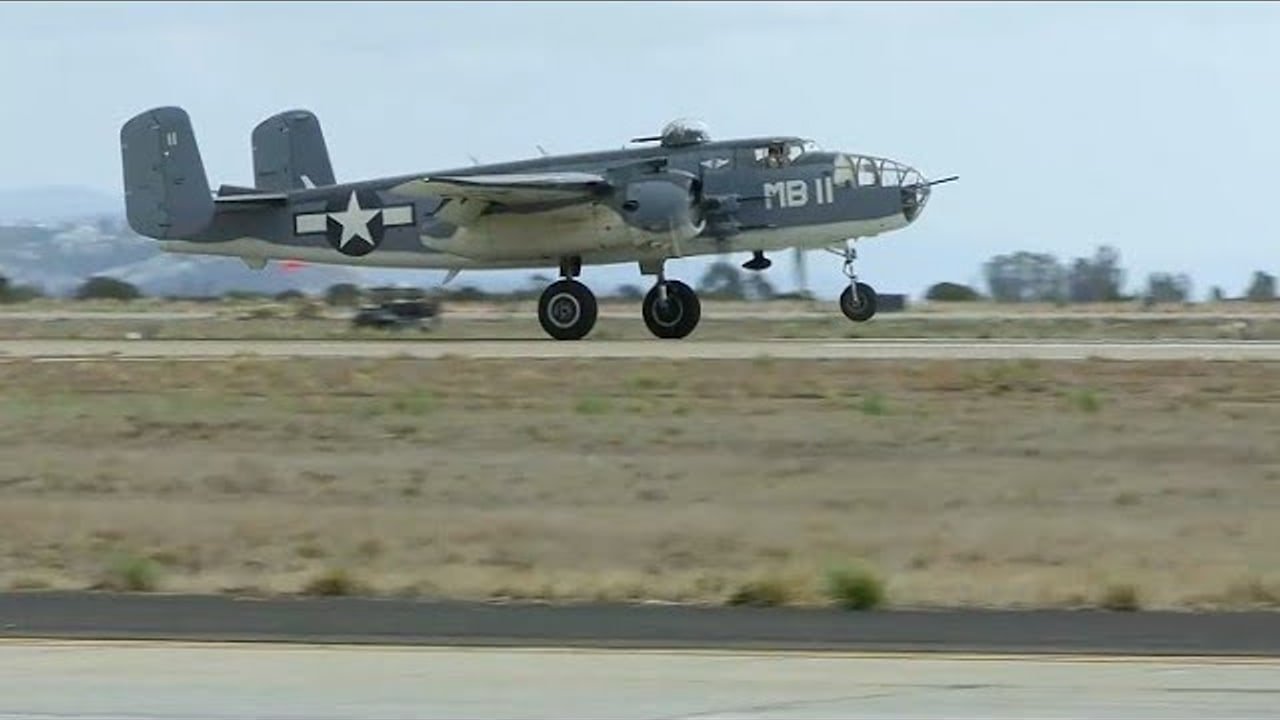
Here is the thing I cannot resolve, and I am not sure I want to: the aircraft themselves are innocent of all of this. A P-51 Mustang flying at low level in clean air is one of the most beautiful things I have ever seen at an airshow, anywhere, in any country. The sound of a Merlin, which powers several of the most significant warbirds on both sides of the Atlantic, does not carry with it the ideology of whoever is operating the aircraft or the narrative being built around it. It is just a Merlin, doing what Merlins do, which is to make a noise that seems to come from somewhere below the ordinary register of hearing and to produce in people who have never cared about aviation a sudden and total interest in the aircraft attached to it.
That is not nostalgia. Or it is not only nostalgia. It is the recognition of craft at a level that most of the aircraft built since 1960 cannot match in front of an audience, because modern capability is expressed in ways that are not visible to the naked eye. A Typhoon’s performance envelope is incomprehensible from a field boundary. A Spitfire’s performance envelope is right there, in the bank angle and the prop disc and the particular way the wings carry the aircraft through a turn.
The persistence of WWII machinery at airshows is not, I think, simply about sentiment. It is about what display flying can actually communicate to a person standing in a field, and the honest answer is that the old aircraft communicate it better.
That is worth taking seriously, separate from whatever story is being told around them.

Alex Bradley is a UK-based aviation writer and airshow circuit regular who has spent years attending displays from RIAT at Fairford and the Biggin Hill Festival of Flight to small fly-ins that drew two hundred people and a hot dog van, and values both for entirely different reasons.
He is not a pilot. He is not a PR man for the aviation industry. He is the person in the crowd who has been coming long enough to notice when something has quietly changed, when an organiser is papering over a problem, and when a display is genuinely worth the drive.
His writing on Redhill Airshow covers the British airshow circuit, safety, display team politics, CAA regulations, and the quiet contraction of grass airfield culture that nobody in the industry wants to discuss plainly.
He has stood at Redhill Aerodrome in every kind of English summer weather, watched Tiger Moths bank low over Surrey farmland, and carries strong opinions about what this country is slowly losing one cancelled event at a time.