
About Redhill Airshow
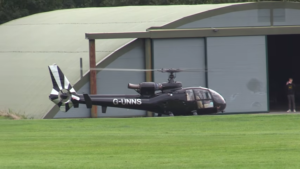
On a calm August morning, the English countryside produces a distinct sound: a low drone that threads through the tree line and gets progressively louder until a Tiger Moth emerges over the ridge in a flash of yellow cloth and lived-in memories. That sound is somewhat of a seasonal tradition at Surrey’s Redhill Aerodrome. By any headline metric, the airshow that takes place here every summer is a minor affair. No typhoons. There are no red arrows. There are no champagne-serving corporate hospitality tents at eleven in the morning. It does, however, possess something more difficult to create: a true sense of place.
Tucked beneath the North Downs, Redhill Aerodrome is located 1.5 nautical miles southeast of the town center, where Surrey still has a somewhat rural atmosphere before the commuter belt reemerges. The fact that it is a grass airfield already distinguishes it from the vast bulk of British aviation events, and it has the slightly messy appeal of a place that has been operating covertly since the war years. The boundary doesn’t stand out. The café is operational. If there is any tarmac at all, it appears to have withstood numerous winters. As soon as the planes start moving, none of it matters.
| Quick Facts | |
|---|---|
| Event Name | Redhill Airshow & Vintage Fly-In |
| ICAO Code | EGKR |
| Location | 1.5 NM south-east of Redhill, Surrey, England |
| Type | General aviation airshow, vintage fly-in, aerojumble |
| Typical Date | August (Sunday) |
| Organiser | Cubair Flight Training |
| Runway | Grass airfield |
| Notable Aircraft | Robinson Redwing II (unique survivor), Tiger Moths, Piper Cubs |
| Based Operators | Bristow Helicopters (historical) |
| Atmosphere | British garden party; relaxed; family-friendly |
| Side Events | Aerojumble, East Surrey Wing Museum, tea tent |
| Reference | air-shows.org.uk – Flightline UK Reviews |
“A hidden gem on the airshow circuit” refers to the candid opinions of people who have really stood at that crowdline rather than polished marketing material. — Airshow Review, Flightline UK
Cubair, a flight training school that operates out of the airport, has traditionally organized the event. Over the years, the display has evolved into what may be best described as a very British garden party with aircraft. Vintage types arrive from all over the area and park on the grass next to Redhill’s more regular traffic during the delightfully casual morning session. The actual exhibition starts in the afternoon with a brief but thoughtful flying program that includes aerobatics, warbirds, and occasionally military guests traveling via the neighboring Eastbourne Airshow. It’s likely that no two years have ever looked exactly the same.
There isn’t a single aircraft or particularly impressive maneuver that makes Redhill worth writing about. It’s the thing’s condensed intimacy. Aircraft fly over the crowdline at a distance that the large shows just cannot match. The crowdline is actually short, in the sense that only small airfields can manage it. It feels more like you are witnessing actual aviation than a show put on from a secure, bureaucratic distance. The light is caught by old propellers. From open cockpits, pilots wave. With facial expressions that imply they are storing something for a very long time, children press against the rope line.
There are some subtle differences within the airport itself. The only surviving Robinson Redwing II, a British biplane from the early 1930s that most aviation fans will never see anywhere else, is said to be located there. Additionally, there is a collection of Tiger Moths, those incredibly delicate de Havilland trainers that manage to stay airworthy decades after they were meant to be retired. The Piper Cubs, who are based here, provide an American touch, but by the time they line up on the lawn with everything else, it seems more like a living collection – airplanes that are still flown, maintained, and appear at events like this one – than a museum.
It should be noted that not every year has gone exactly as planned. A fly-in and aerojumble in September took the place of the August show that was originally planned in 2019. Cancellations occur because Surrey’s weather isn’t always favorable and a tiny community event’s logistical balance might suddenly break. However, the show has returned time and time again, which speaks much about the people that support it. Given the increasing demand on small airfields around the nation, it is still unclear if the full show format will be maintained in the coming years. Like other places similar to Redhill, there is a noticeable but not overwhelming sense of unease.
It is worth mentioning the aerojumble, a fixture that, depending on the year, either runs alongside or in substitute of the main display. A devoted following spanning generations attends these unofficial swap-meets for aviation artifacts, parts, vintage photos, instruments, and other oddities. For those who are interested, the Wing Museum of the East Surrey Aviation Group offers more historical context. The entire event feels less like a formal airshow and more like a neighborhood get-together that just so happens to incorporate airplanes, which may be the reason it continues. The airfield has an industrial legitimacy that coexists with the pastime of flying with surprising ease thanks to Bristow Helicopters, which has been based here for many years.
It’s difficult to ignore how little of this feels set up for effect when observing the afternoon show from near the hedge line, with a paper cup of tea becoming cold and a Chipmunk banking low overhead. The enjoyment that results from devotees doing what they love in a field that has been doing the same thing for the greater part of a century is practically accidental. There is a role for major airshows, and no sane person would disagree. However, Redhill reminds you once a year that this is what aviation has always been at its most humane: a grass strip, a clear morning, and something with wings.
Latest Posts

Operation Epic Fury and the Airshow Calendar — What Happens When a Military Base Goes to War Mid-Season
The Midlands Air Festival Is Running This Weekend, and It Is the Quietly Serious One Nobody Talks About Enough
Airshow in Oshkosh 2026: Dates, Performers, and 8 Key Facts About EAA AirVenture

Ten Years of the English Riviera Airshow — What a Decade Over Torbay Actually Proves About Coastal Aviation Events

Paignton Airshow 2026: Dates, Aircraft Lineup, 10th Anniversary, and 5 Key Facts
Shoreham Airshow Disaster: Causes, the 11 Victims, Legal Proceedings, and 5 Safety Changes That Followed
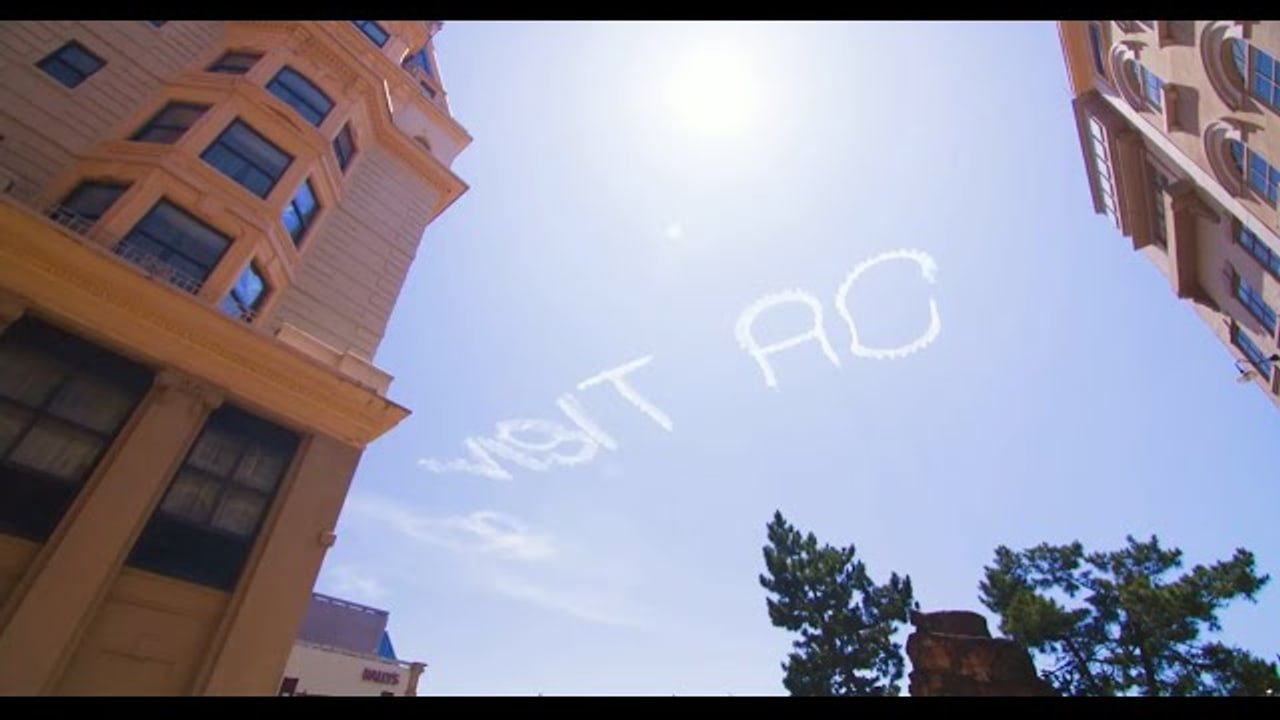
Atlantic City Goes Three Days — What the Soar & Shore Rebranding Tells Us About Where Airshows Are Heading
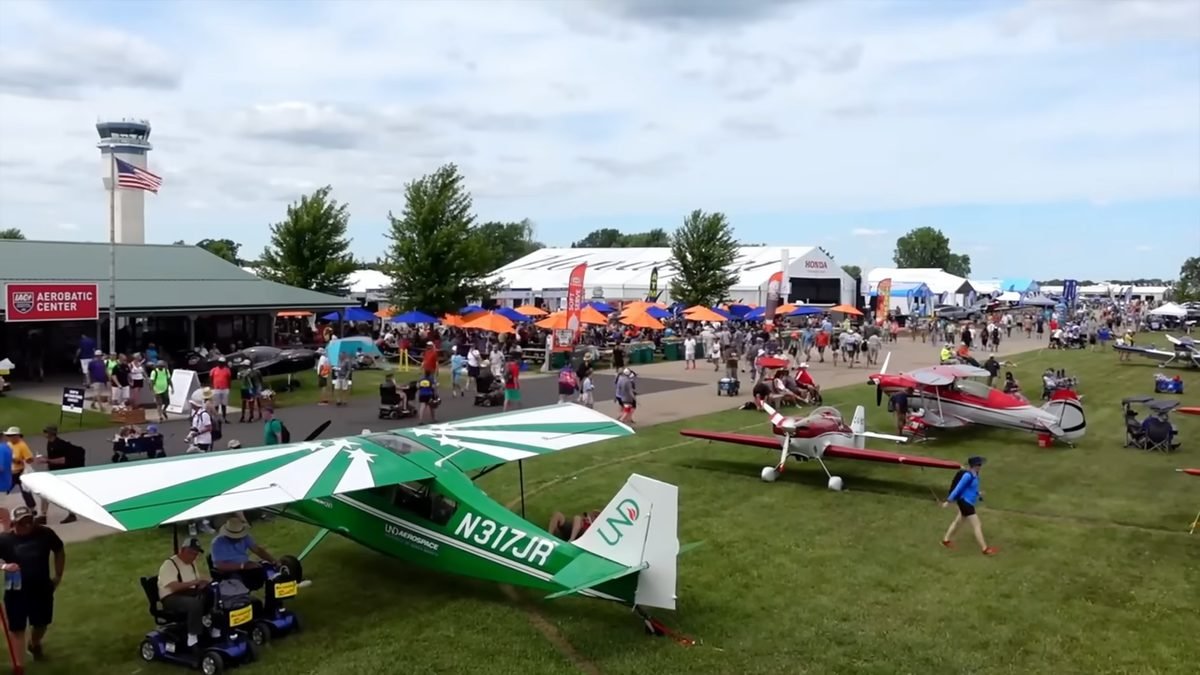
Shuttleworth Airshow 2026: 7 Shows, Full Season Dates, Aircraft, and Everything Visitors Need to Know
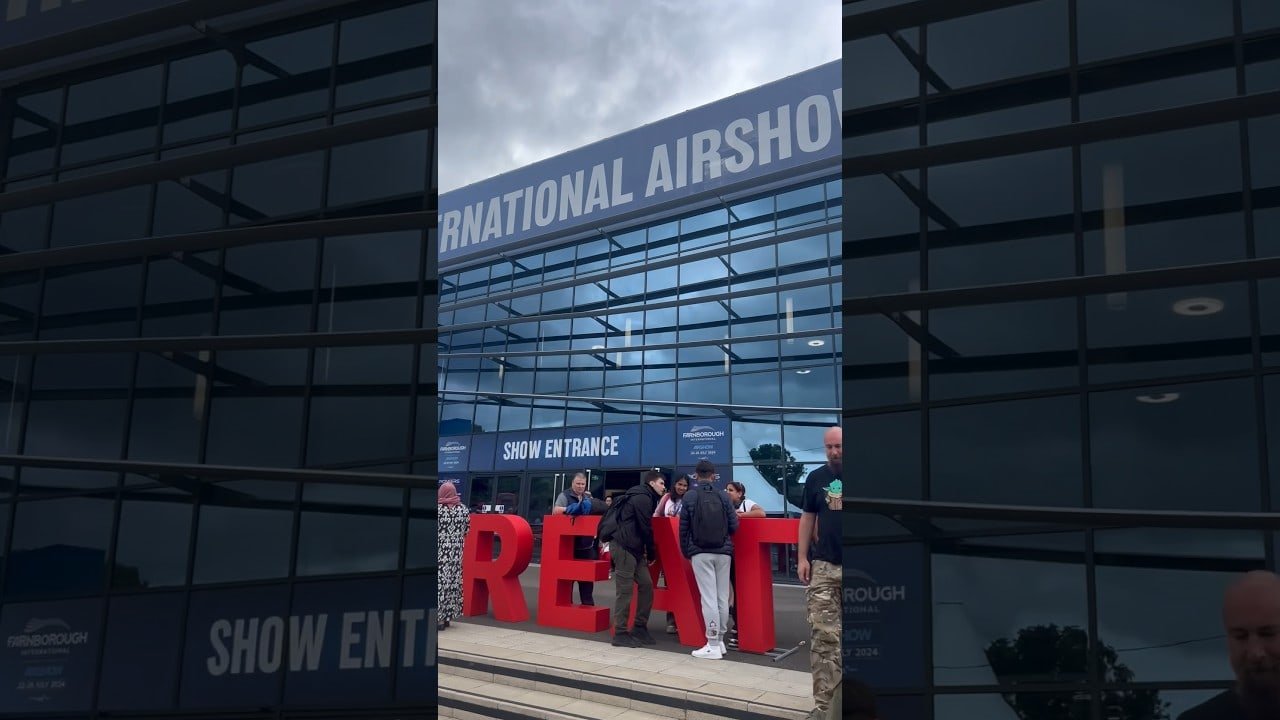
Farnborough 2026 — Why Britain’s Airshow Season Now Rests on a Single Event It Was Never Designed to Carry Alone
- 1
- 2
Best Airshow in The UK
Every year, sometime in mid-July, the skies over a peaceful area of Gloucestershire’s countryside cease to follow the normal course of events. Sixty thousand faces are turned upside down as a B-2 Spirit stealth bomber, built to be undetectable by radar, slides overhead. No one ever fully adjusts to it. That’s most likely the point. Since 1971, the Royal International Air Tattoo, or RIAT as it is known to those who follow these events, has been creating moments like that and is still the biggest military airshow on the planet by practically all standards.
In everyday life, RAF Fairford is not a very dramatic location. Situated near the market towns of the Thames Valley, this operational military airfield in the Cotswold fringe feels almost unremarkable on a Tuesday in February. All of that changes in July. Days before the gates open, the perimeter roads are packed. In the nearby fields, caravans can be seen. Squinting at the taxiways with the focused patience of those who have done this numerous times and intend to continue, enthusiasts with long lenses and folding chairs mark out their spots the night before. It seems as though the event builds up gradually and unavoidably, much like the weather.
| Quick Facts | |
|---|---|
| Event Name | Royal International Air Tattoo (RIAT) |
| Established | 1971 |
| Location | RAF Fairford, Gloucestershire, England |
| 2026 Dates | 17-19 July 2026 |
| Type | Military airshow, international flying display |
| Aircraft | 200+ from nations worldwide |
| Display Duration | 7.5-hour flying display per day |
| Attendance | Hundreds of thousands over three days |
| Tickets | Under-16s free with adult ticket holder |
| Organiser | Air Tattoo charity (Royal Air Force benevolent fund) |
| Status | World’s largest military airshow |
| Reference | airtattoo.com – Official RIAT Website |
It must be acknowledged that the statistics underlying RIAT are truly challenging to comprehend. Typically, over 200 aircraft from air forces in Europe, North America, the Middle East, and beyond attend. A seven-and-a-half-hour daily flying show that includes solo aerobatic sequences, formation cycling, and low-level passes that register in the chest before the ears. Nations that rarely share a runway in peacetime line up at Fairford in a way that feels, at its best, like something more than spectacle. Whether that diplomatic symbolism is intentional or incidental is probably a question worth asking, though the answer is likely both.
RIAT began, modestly enough, as a fundraising effort for RAF charities, growing from a single-site display into an event that now attracts aviation professionals, defence industry figures, and ordinary families in roughly equal measure. That mixture can feel slightly strange – the same afternoon might offer a child riding on a replica fighter cockpit and a senior military attache examining the wing configuration of an aircraft his country is considering purchasing. It’s possible that no other public event in Britain contains quite that range of simultaneous purposes. The Farnborough Airshow comes close, though it leans considerably more toward the trade and industry side of things.
What the sheer scale of RIAT occasionally obscures is how well the individual moments land. Standing near the crowdline as a pair of F-16s rolls into a tight formation break, the noise arriving a half-second after the aircraft, it’s hard not to notice that the crowd reacts not as a mass but as individuals – some stepping back instinctively, some leaning forward, children covering their ears while refusing to look away. The flying display is, in the end, a series of very human reactions to something moving very fast and very loud just above eye level. That part hasn’t changed since the beginning.
The static displays, which run throughout all three days, carry their own appeal. Aircraft that are ordinarily sealed behind security perimeters or museum glass sit here in the open air, walkable and photographable, attended by their own ground crews who will, if approached at the right moment, answer questions with a directness that no official exhibition usually permits. It is, for anyone genuinely curious about military aviation, something close to the best available access outside of an actual base visit.
There are competitors, of course, in the broader sense. The Duxford Battle of Britain Airshow draws significant crowds and offers a depth of historic aviation that RIAT rarely matches. RAF Cosford delivers a strong military programme in the West Midlands. Eastbourne Airbourne manages the particular trick of an airshow above a beach, which produces its own kind of memorable. Each of these events has a loyal following and a distinct identity. None of them brings 200 aircraft from 40 nations to a single grass-edged runway in the English summer.
It’s still unclear what the airshow circuit will look like in another decade, given the cost of operating military aircraft, the shifting priorities of defence budgets, and the complicated logistics of international participation in a changed geopolitical climate. RIAT has navigated those pressures before – cancellations, funding squeezes, the occasional diplomatic tension between participating nations – and come back each July looking, if anything, larger than the year before. For now, Fairford still fills. The skies above it still produce sounds that have no real equivalent anywhere else in the country, three days a year, and that seems like enough.
Red Arrows Swansea Airshow 2026
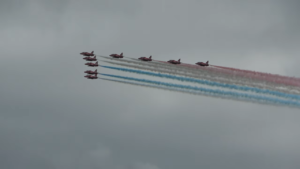
There’s a moment when the roar comes before you’re prepared for it, and if you’ve ever stood on Swansea Prom when the Red Arrows come in low over the water, you’ll know precisely which one. Somehow, 200,000 people react in unison when nine jets fly in close formation, trailing red, white, and blue smoke over a Welsh summer sky. Necks crane. The number of phones increases. Youngsters seize the person closest to them. It’s one of those seldom public gatherings that nonetheless seems authentically communal, which is more difficult to come by than it might seem.
| Detail | Information |
|---|---|
| Event Name | Wales Airshow 2026 |
| Dates | Saturday 25 – Sunday 26 July 2026 |
| Location | Swansea Bay, Wales, UK |
| Headline Act | RAF Red Arrows |
| Other Acts | Battle of Britain Memorial Flight + additional displays TBC |
| Admission | Free |
| Expected Attendance | 200,000+ across both days |
| Ground Events | Food trucks, live music, VR experiences, family activities, rides |
| Road Closures | Oystermouth Road closed during event |
| Parking | Park & Ride options available |
| Official Website | www.walesnationalairshow.com |
The announcement in January that the Wales Airshow would return to Swansea Bay on July 25 and 26, 2026, was met with the kind of calm relief that frequent spectators will recognize. Until they are, these things are never totally assured. Although the complete 2026 schedule won’t be announced until closer to the event, the Red Arrows’ anticipated comeback has already sparked the kind of early enthusiasm that organizers often gauge in terms of website traffic and social media reach. By all accounts, both have been important.
The intentional change in time is what makes the 2026 dates noteworthy. The event has been rescheduled to begin the school summer vacation, which is a minor but significant alteration that implies the organizers are carefully considering who will attend and why. In the past, families with school-age children had sometimes found the scheduling inconvenient. It appears that this friction has been taken into consideration, which is not usually the case when major public events are managed by local council infrastructure.
Every year, Swansea’s relationship with this weekend is complex. The city manages to accommodate a quarter of a million people over the course of two days, despite the fact that most Saturdays feel leisurely and even quiet at times. Oystermouth Road shuts. With food trucks parked along the waterfront, live music playing in the background, and virtual reality aircraft experiences that would have appeared unthinkable just ten years ago, the promenade becomes more akin to a festival venue. It’s essentially organized anarchy, and the fact that it works is a small yearly miracle that deserves recognition.
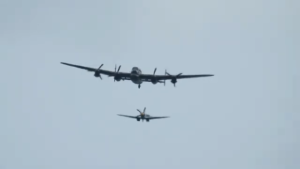
The Lancaster, Spitfire, and Hurricane, which have been performing at British air shows for decades and continue to elicit genuine emotion from audiences who have, in many cases, seen them dozens of times, are also anticipated to be featured on the Battle of Britain Memorial Flight. The precision aerobatics seem to bear a different weight than the older planes. They are older than nearly everything in the sky at any contemporary airshow, slower, and noisier in a different way. On a clear day, you can see the Gower Peninsula in the distance as you watch them cross Swansea Bay, and you can’t help but notice how the throng becomes a little quieter. Not quiet, but distinct.
The official Wales Airshow website and the RAF’s own display calendar, which is released every January, are worth keeping a watch on as the whole display schedule is finalized in the coming months. The RAF Events Team is already putting together the Red Arrows’ 2026 season, adding confirmed dates throughout the spring. Although nothing is really inked until it is, Swansea has made frequent appearances in recent years, so there’s little reason to think things will change.
It’s still unknown how many more performers will be revealed or if the show will feature anything truly new in 2026. The organizers have stated that new concepts are being planned, but they haven’t said what they are, which might imply nearly anything. Maybe something to do with the ground displays on the promenade. A new flying squad, perhaps. Maybe nothing at all dramatic.
Tens of thousands of people will undoubtedly swarm the beach and prom on the final weekend of July, squinting into the light and staring up. Some will have been arriving for twenty years. Some will be bringing kids who have never witnessed a jet plane fly up close. That initial meeting usually sticks. Anyone who can recall theirs should be asked.
What Date is Eastbourne Airshow 2026?
On a Wednesday night in early August, there’s a certain silence along the Eastbourne waterfront. The pier lights are turning on, the deckchairs are still outside, and the promenade moves at the leisurely pace of a town that hasn’t quite realized what is going to happen. All of that is altered by Thursday morning. The masses follow, dispersing along the two-mile seashore between the Western Lawns and the Bandstand until there is hardly a space left.
The planes come first in sound, a low frequency rumble rolling in off the Channel. Airbourne is back for 2026, and after everything the event has navigated in recent years, there is something quietly satisfying about it.
| Event | Airbourne: Eastbourne International Airshow 2026 |
|---|---|
| Edition | 32nd year |
| Dates | Thursday 13 August – Sunday 16 August 2026 |
| Location | Eastbourne Seafront, East Sussex, England |
| Display Line | 2 miles along the seafront |
| Admission | Free |
| Key Displays | RAF Red Arrows, RAF Typhoon, MiG-17, F-86 Sabre, P-51 Mustang, Battle of Britain Memorial Flight |
| New for 2026 | Mélanie Astles Extra 330, P-51 Mustang ‘Marinell’, MiG-17 debut |
| Fireworks | Sunday evening finale |
| Award | Voted Best Free UK Airshow 2025 |
| Contact | 01323 415415 |
| Reference Link | www.visiteastbourne.com/airshow |
The 32nd Eastbourne International Airshow will take place this year from August 13–16 along one of the most naturally stunning display corridors in British aviation. For airshows, the Sussex coastline is helpful because it places the aircraft against both the wide sky and the open water at the same time, giving even a little pass-by a scale that is difficult for sites designed specifically for that purpose. Depending on your perspective on how these things typically operate, the fact that attendance is still completely free continues to feel like either a civic miracle or an unlikely act of hope. The 2026 event has confirmed funding and what looks to be its best roster in a number of years, following a crowdfunded, cost-neutral 2025 edition that was named the nation’s Best Free UK Airshow.
The range of the 2026 flying program is impressive. Regardless of what else is on the schedule, the RAF Red Arrows are the main attraction for the majority of attendees. There’s a reason why 11 Hawks in close formation over a coastline still interrupt people in the middle of their sentences. The RAF Typhoon returns for the same three days, bringing the kind of boom that is felt as much as heard, the sort that makes youngsters clutch their parents and adults reflexively look up from their phones. The Dakota, Spitfire, and Hurricane — airplanes that carry a weight of history that no briefing note can really prepare you for when you see them pass low over the water — will be part of the RAF Battle of Britain Memorial Flight, which will take place across all four days.
The addition of a number of acts that have never performed at Eastbourne before makes 2026 more intriguing to watch. On Saturday and Sunday, Europe’s last surviving MiG-17 will make its Airbourne premiere. This Cold War-era aircraft, which most British airshow viewers will never have seen in person, performs quick maneuvers and tight spins that are strangely made more remarkable by the aircraft’s age rather than less. Its natural rival from the same era, the F-86 Sabre, makes an appearance on Thursday, bringing up the kind of historical symmetry that aviation historians like to value more than they admit. Mélanie Astles, a six-time French aerobatic champion and current British champion, takes her Extra 330 to the show from Thursday through Sunday, while a P-51 Mustang named “Marinell” makes its premiere during the course of the four days. Watching her earlier show film makes it difficult to avoid wondering how that aircraft manages to accomplish its goals without just disintegrating.
For families and ground-level guests, the program expands significantly beyond the flight. The airshow lasts much longer than the daily display windows thanks to military exhibition zones, flight simulators, kid-friendly beach play areas, food vendors, and the Bandstand tribute acts that start at 8 p.m. every night. All four days, the Royal Navy Black Cats put on helicopter shows. Before a pair performance on Saturday, the Aerosuperbatics Wingwalkers — pilots tethered to the top of a biplane performing precisely as their name implies — appear alone on Thursday and Friday. These are activities that look great on camera but look different in person. For those who would rather have a fixed view over the moving crowd, the Bandstand seating area offers reserved spots in the middle of the display line.
At Eastbourne in August, practical issues are important. The town fills up quickly, and not everyone has the patience to deal with the seaside parking problem on busy days. Since the event was confirmed in October 2025, hotels in the region have been selling out, indicating the level of demand this show creates even before the complete flying schedule is made public. Every year, attendees reiterate the greatest advice, which is simple: get there early, carry earplugs for younger kids, and wait between the Western Lawns and the Bandstand before the first exhibition slot. The vista from there, with the white cliffs visible to the east and airplanes banking hard over the Channel, is the kind of spectacle that draws people back each year without much more explanation.
Torbay Airshow 2026 Dates
For any free public event, ten years is a significant number, and the English Riviera Airshow will approach that milestone in 2026 with what looks to be its most eagerly awaited edition to date. The dates have been confirmed: displays will fly over Paignton Green along the South Devon coast from Friday, May 29 to Sunday, May 31. It’s worth pausing for an event that began in 2016 with little local ambition and no precedent to celebrate ten years of continuous operation. The event is free to attend and is financed by business partnerships and the council rather than ticket sales. Perhaps no one who worked on the initial edition anticipated that it would continue to expand ten years later.
| Event | English Riviera Airshow 2026 |
|---|---|
| Edition | 10th Anniversary |
| Dates | Friday 29 May – Sunday 31 May 2026 |
| Location | Paignton Green, Paignton Seafront, Devon, TQ4 6AG |
| Admission | Free |
| Opening Night | Friday 29 May — “Take Off” dusk flying display and fireworks |
| Key Displays | RAF Red Arrows, Battle of Britain Memorial Flight |
| Full Display Days | Saturday 30 and Sunday 31 May |
| Organised By | Torbay Council and English Riviera BID |
| Parking | Pre-booking strongly recommended |
| Reference Link | www.englishrivieraairshow.co.uk |
For an airshow, Torbay provides something that is hard to produce anywhere. The harbour itself is broad and open, curving between Berry Head to the south and Hope’s Nose to the north, providing arriving aircraft with a natural amphitheatre that simultaneously positions them against the sky and the sea. The river behind the display line catches light in the afternoon in a way that makes even a standard flypast appear thoughtful, and Paignton Green runs along the front with enough level ground to accommodate big audiences without feeling cramped. The English Riviera in late May has a certain characteristic that contributes to the event’s atmosphere: summer hasn’t quite arrived, and the sea is still rather chilly. Not the August peak-season craze, but something a little more doable and possibly more pleasurable as a result.
The 2026 performance begins on Friday night with a format that has grown to be one of its more unique features. As the sun sets over the harbour, the “Take Off” opening night celebration combines aerial displays with a spectacular finale. There is a sense that it rewards those who make the effort to attend a day early, and it is a different experience from the full afternoon programs that follow on Saturday and Sunday. It is somewhat quieter, the throng is less, and the mood is less hectic. For many guests, the first show of the 2026 season will be a Spitfire and a Hurricane enjoying the last of the evening sun over Torbay, as the Red Arrows are confirmed to open on Friday alongside the Battle of Britain Memorial Flight. That is a particular type of moment that is truly hard to duplicate.
The announced roster for 2026 features acts covering a wide variety of aviation history and modern precision flying, with the Saturday and Sunday programs carrying the entire show schedule. The event’s position on the national airshow calendar is reflected in the RAF Red Arrows’ commitment to perform on all three days. The Dakota, Spitfire, and Hurricane, which the RAF operates to preserve airworthy examples of Second World War aircraft, are part of the Battle of Britain Memorial Flight, which takes place throughout the weekend. The crowd’s reaction suggests that most viewers have not fully come to terms with the fact that these aircraft are still in operation. In the months leading up to the event, further performances will be gradually revealed to complete the roster, which goes beyond these confirmed acts.
The English Riviera Airshow in particular is noteworthy for its ability to expand without the revenue from admission that other similar events rely on. The event is funded by Torbay Council and the English Riviera Business Improvement District through a cooperation approach that maintains the seafront free and open, something that should not be taken for granted given the current state of public entertainment funding. Recent years have seen difficulties for other free beach airshows. Torbay hasn’t, and it’s difficult not to ask how much of that is due to the specific venue, timing, and the obvious fact that the planes are worth observing and the event is well-run.
Here, as everywhere else, practical planning is crucial. The approach roads from the A380 and the seaside route from Torquay both slow significantly on exhibition days, and Paignton fills up more quickly in late May than the town’s typical capacity permits. Since the dates were confirmed in September 2025, reservations for lodging within a suitable distance of the seaside have been rapidly increasing, and the organizers strongly advise pre-booking parking. On Saturday and Sunday, the best viewing spots on the Green, which are in the middle of the display line and provide an unhindered sightline over the water, usually fill up by midmorning. There is a good chance of getting a front position if you arrive by 11 a.m. on either day. The throng arrives later on Friday night, but the ambiance makes the somewhat longer drive into dusk worthwhile.
