There is a particular position that experienced airshow photographers take up at the rope line that I have come to recognise over the years, a kind of settled stillness that looks like patience and is actually something closer to readiness. They have already done the light calculation, already picked the focal length, already decided which section of sky they are going to commit to. They are not looking at the aircraft the way the rest of the crowd is looking at it. They are looking through something, at a frame that does not yet contain what they are waiting for. I find it genuinely interesting to watch, partly because it is craft being practised in plain sight, and partly because the best of them see things in a display that I miss entirely until I find the photograph later.
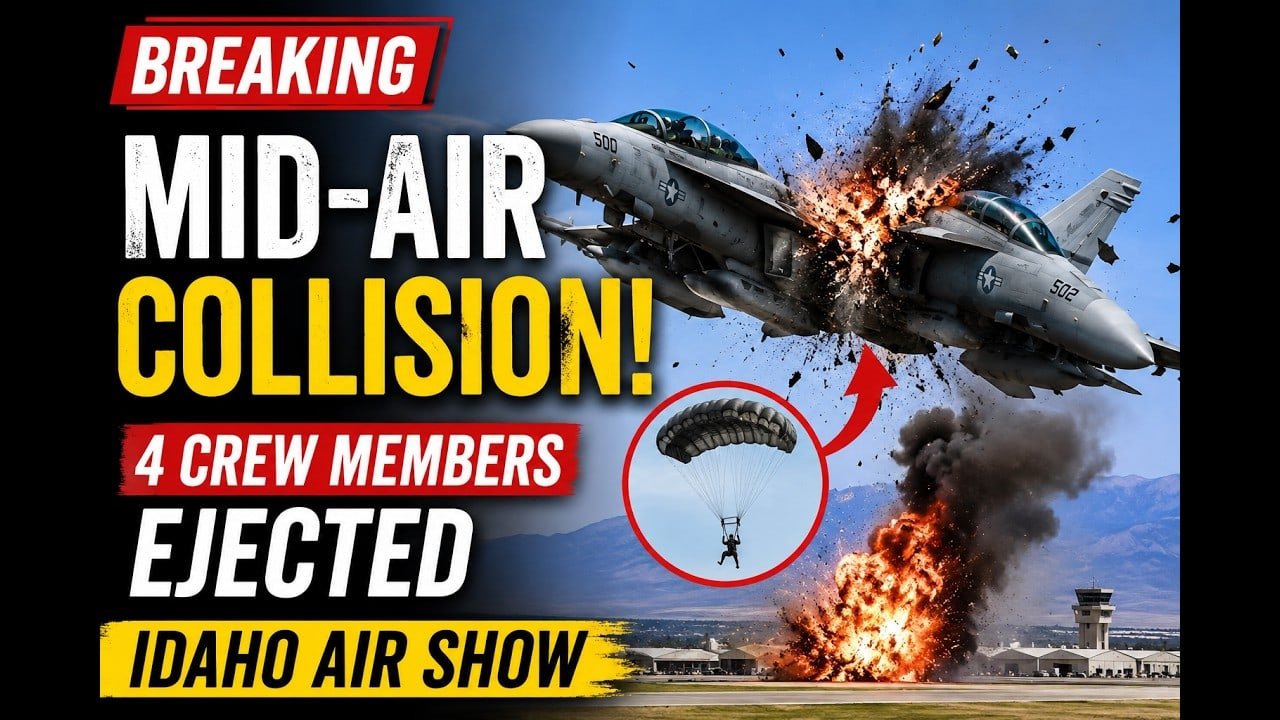
I have been thinking about that particular kind of seeing since I read about a photographer who has covered more than two hundred airshows across fourteen countries and who, at an event in Idaho, put her camera down and did not pick it up again.
Not because the light was wrong. Not because she was in the wrong position. Because something happened that she had been adjacent to risk for twenty years without ever being inside, and being inside it was different from everything she had prepared for.
I want to be careful about how I write this, because the Idaho incident is still being formally investigated and because the people involved deserve more than being turned into a lesson. But the photographer’s account of what she did and did not do in those seconds has been circulating in the airshow community in the way that honest accounts always circulate, quietly and with the weight of something people recognise even if they have not experienced it themselves. She said, in the version I read, that she had always believed the camera was a way of managing proximity to difficult things. The lens was distance. The frame was a container. You could be present at something terrible and the act of photographing it meant you were also, simultaneously, not quite inside it.
Idaho was the first time that did not work.
I have been going to airshows since I was a child and I have never photographed one in any serious sense. I carry a phone like everyone else, and I take the occasional picture that proves I was there, but the relationship I have with a display is different from the relationship a working photographer has with it, and I have always understood that difference without being able to fully account for it. What the Idaho story made me think about is what we are all doing, collectively, when we stand in a field and watch an aircraft do something that sits at the edge of what aircraft and pilots can actually do. We are witnesses. That is the role. And witnessing carries a weight that the industry around airshows does not discuss very much, because discussing it honestly would require discussing the thing that is being witnessed, which is controlled risk performed in public, and the control is real but it is not absolute, and the public knows this at some level and comes anyway.
The moment that I keep returning to from my own experience is not dramatic. It was a small event in the south of England, a few years back, where a display aircraft had a mechanical issue on approach, recovered without incident, and landed without the crowd fully understanding what had nearly occurred. The commentator moved on smoothly. The programme continued. I knew enough to understand what I had seen, and I stood there for a moment with a particular feeling that I have not been able to name satisfactorily since, something between relief and the realisation that the gap between what just happened and what could have happened was narrower than the event’s presentation was going to acknowledge.
There was no photographer near me at that moment. Or if there was, they had their camera pointed somewhere else.
The photographer in Idaho has given the airshow community something uncomfortable and valuable. Not the photographs she did not take, which exist only as absence, but the account of why she did not take them, which asks a question that the industry’s communication machinery is poorly designed to answer: what are we asking of the people who bear witness to this, and have we thought about what it costs them when the thing they are witnessing stops being performance and becomes something else?
Organisers are good at talking about safety in the language of procedure and compliance and CAA frameworks and display authorisation categories. What they are less good at is talking about what airshow culture asks of its participants, including the photographers and writers and regulars who make the community coherent, and what those people carry home from events that do not go as planned.
The camera as distance. The frame as container. The idea that witnessing can be managed by the quality of your equipment and the sureness of your position.
Idaho put a question mark against all of that, and the honest answer is that no lens was ever quite the protection it appeared to be.

Alex Bradley is a UK-based aviation writer and airshow circuit regular who has spent years attending displays from RIAT at Fairford and the Biggin Hill Festival of Flight to small fly-ins that drew two hundred people and a hot dog van, and values both for entirely different reasons.
He is not a pilot. He is not a PR man for the aviation industry. He is the person in the crowd who has been coming long enough to notice when something has quietly changed, when an organiser is papering over a problem, and when a display is genuinely worth the drive.
His writing on Redhill Airshow covers the British airshow circuit, safety, display team politics, CAA regulations, and the quiet contraction of grass airfield culture that nobody in the industry wants to discuss plainly.
He has stood at Redhill Aerodrome in every kind of English summer weather, watched Tiger Moths bank low over Surrey farmland, and carries strong opinions about what this country is slowly losing one cancelled event at a time.