
I was at Redhill last week. The usual Tuesday quiet, a PA-28 doing circuits, someone’s thermos cooling on the bonnet of a Land Rover. I found myself trying to work out what was overhead at Fairford at the same moment.
The answer, based on publicly available tracking data, was probably a B-52H on preflight. That is not a calculation I ever expected to make from a grass strip in Surrey. Fairford is currently a working USAF strategic bomber base, and has been since early March.
Operation Epic Fury, the US-led air campaign against Iran, began on the 28th of February. By early March, B-1Bs and B-52Hs were staging from Fairford at a scale the base had not seen operationally for years. At peak deployment, more than twenty strategic bombers were positioned there simultaneously.
RIAT 2026, scheduled for the 17th to 19th of July, has been cancelled. The runway, ramp space, and munitions handling facilities at Fairford remain operationally committed. The organisers had been scouting alternative locations since Epic Fury began, but could not relocate an event of that scale within the available window.
To be clear about what this means: RIAT in 2024 hosted 248 aircraft from nearly thirty countries. It is not simply an airshow. It is a functioning international aviation trade and diplomatic event, and losing it leaves a gap that Farnborough alone cannot fill.
The thing that stopped me when I first heard the announcement was not the cancellation itself. It was realising I had been treating RIAT’s presence at Fairford as a permanent fixture, when it was never that. Fairford is a USAF forward operating location first. It has always been that.
A fragile ceasefire came into effect on the 8th of April. The uncertainty about whether hostilities may resume has not resolved the base’s operational status. Fairford’s facilities remain committed in a way that makes July planning impossible. This is not a story with a clean ending yet.
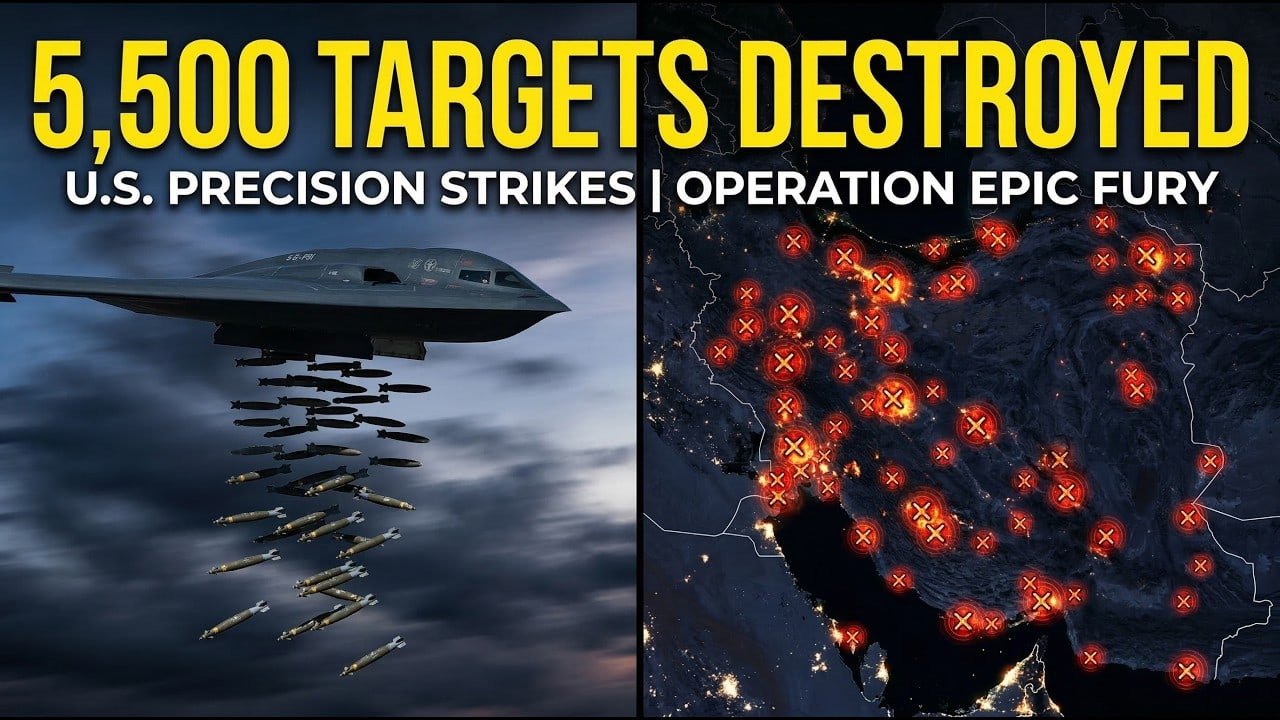
The airshow industry has built its biggest annual event on a location contingent on American military priorities. Nobody in the events planning apparatus treated that contingency seriously enough. Operation Epic Fury has made that reality visible in the most direct possible way.
I have attended events at both ends of the scale for long enough to know something. Fairford and Redhill are connected, even when they do not feel it. When the flagship event disappears, the atmosphere changes across the whole circuit. Smaller events feel slightly less secure, and people who were considering coming are slightly less likely to bother.
Farnborough is now effectively the only major UK military aviation event of the year. That is a strange position for it to occupy, because Farnborough’s identity is commercial rather than display-focused. It will not provide what RIAT provides for the people who attend RIAT. The crowds will need to go somewhere, and I am not certain Farnborough is that place.
I sat at the Redhill cafe last month watching a Chipmunk do something elegant in the late afternoon light, and the conversation turned to RIAT. The person next to me had already booked hotels in Cirencester. They had to cancel, and were not sure they would bother booking for next year. That is the damage a cancellation does that does not appear in any headline.
There is a particular quality to standing at Fairford in July. The avgas smell on warm air, the grass packed flat by a hundred and seventy thousand visitors, a Lancaster and a B-2 sharing the same static line. That specific experience does not happen elsewhere. The scale of it is part of what it is.
I overheard something at a fly-in last month that has stayed with me. Someone was explaining the RIAT situation to another spectator, and the second person said with genuine surprise that they had not known Fairford was an active military base. They had been attending RIAT for eight years. That is the gap I am trying to describe.
RIAT will return to Fairford when the base allows it, or it will not, and if it does not, nobody should be surprised. The British airshow calendar has been treating borrowed infrastructure as owned infrastructure for decades. That is the lesson Epic Fury is teaching, and it is an expensive one to learn from a cancelled July.

Alex Bradley is a UK-based aviation writer and airshow circuit regular who has spent years attending displays from RIAT at Fairford and the Biggin Hill Festival of Flight to small fly-ins that drew two hundred people and a hot dog van, and values both for entirely different reasons.
He is not a pilot. He is not a PR man for the aviation industry. He is the person in the crowd who has been coming long enough to notice when something has quietly changed, when an organiser is papering over a problem, and when a display is genuinely worth the drive.
His writing on Redhill Airshow covers the British airshow circuit, safety, display team politics, CAA regulations, and the quiet contraction of grass airfield culture that nobody in the industry wants to discuss plainly.
He has stood at Redhill Aerodrome in every kind of English summer weather, watched Tiger Moths bank low over Surrey farmland, and carries strong opinions about what this country is slowly losing one cancelled event at a time.