
I was standing at Redhill last summer when someone mentioned that Thunder Over the Boardwalk had simply stopped in 2025. No announcement that explained it properly, just a gap where twenty-three years of Atlantic City display history had been. Then the 2026 news arrived, and the name was gone along with the August dates.
The rebranding to Soar & Shore Festival presented by Visit Atlantic City tells you something precise. This is not primarily an airshow that a city hosts. It is a tourism product that uses an airshow as one of its central components.
That distinction is not trivial.
The 2026 lineup is genuinely strong. It includes the F-22 Raptor Demo Team, F-35B Lightning II, F-16C Fighting Falcons, a MiG-17F, Paul Bennet in a Wolf Pitts Pro, and Wingwalker Sam. Free admission from anywhere on the beach means the crowd numbers will be substantial. But the structure around all of that is now explicitly a summer season opener, integrated with Hard Rock Hotel concerts and a nearby LPGA Classic.
Moving from August to Memorial Day Weekend is the most telling signal in the whole rebranding. August heat along the Jersey Shore is real, and that was cited as a reason. But Memorial Day is also when hotels fill at premium rates and the tourism economy needs something to announce the season has started.
The Wingwalker and the MiG-17F are interesting programming choices in this context. They are crowd-legible acts, immediately readable to someone who has never been to an airshow before. That is not a criticism of the acts. It is an observation about who the show is being designed to reach.
I have watched British airshows work through versions of this same negotiation. The ones that survived the last decade mostly did so by becoming something broader than a flying display. Cosford expanded its public programming. The events that held the line on being purely about aircraft are, several of them, no longer running.
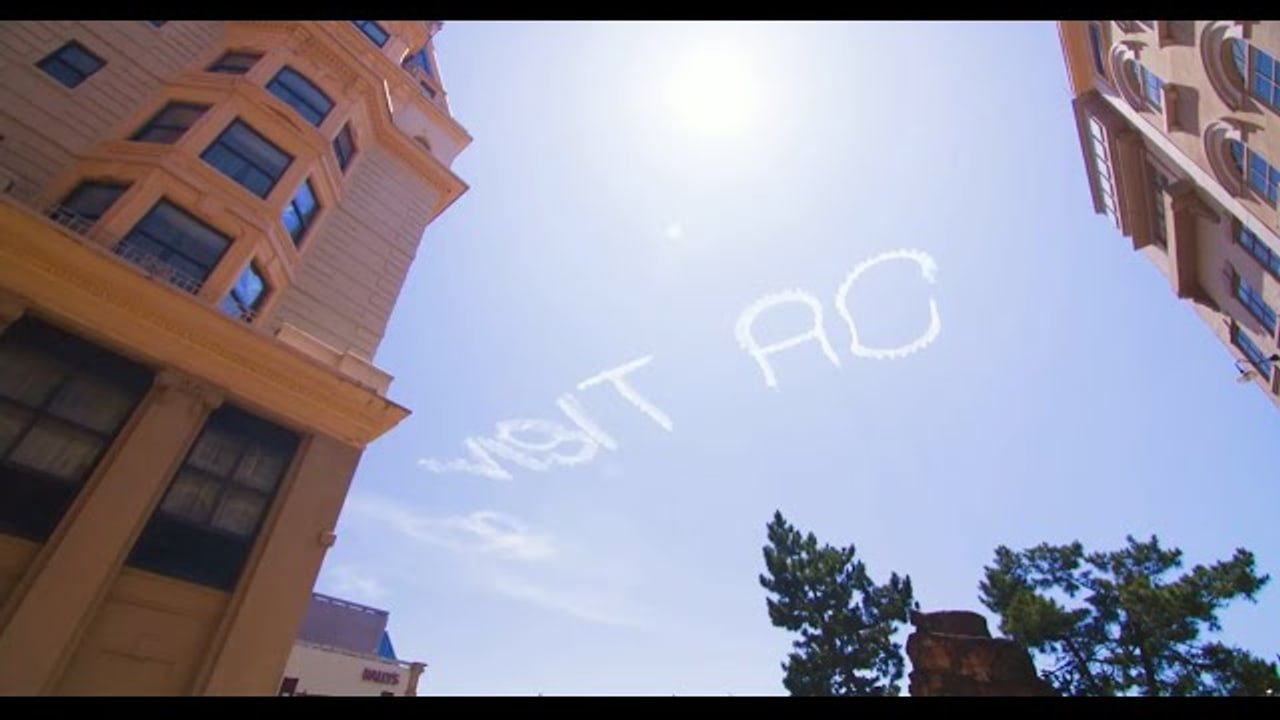
There is nothing dishonest about what Atlantic City is doing. What I find interesting is the decision to run three consecutive days. A single afternoon of military fast jet displays requires a specific quality of audience attention. Three days multiplies both the opportunity and the programming challenge.
Across three days you are not programming for the same crowd each time. You are programming for a rotating population who might catch one afternoon between other festival activities. That is a different audience from someone who drove three hours and has a preferred spot on a printed site map. The displays need to be self-explanatory, which is a constraint that changes what gets programmed.
At Redhill the crowd on any fly-in day is almost entirely the latter type. People who know what they are looking at, who notice when a sequence is cut short, who remember what was here before. The light going flat at four in the afternoon, the grass underfoot after overnight rain — these are part of the event for them in a way that requires no explanation.
There is a smell you get at events like Redhill on a warm morning. Avgas and cut grass and something indefinably mechanical, the air quality of a working airfield. You will not get that on a beach boardwalk in New Jersey, and the events are not in competition for it. They are just doing different things, for different reasons, in different places.
What I keep coming back to is the pause in 2025. The show ran from 2003 to 2024, stopped without a public explanation, and returned with a new name. When I first read the 2026 announcement, I assumed it was a different show entirely. That was the point.
The equivalent conversations in Britain tend to produce a different kind of standstill. Ours are more often about airspace fees, display authorisation costs, and whether gate receipts can cover what fast jets now cost to bring in. The strategic reset, taken on purpose with room to plan, is less available here because most event organisations cannot absorb a fallow year. That financial thinness is something very few event directors will say publicly, but it shapes every programme decision they make.
The Soar & Shore rebranding is not a warning that airshows are in decline. It is a signal that the events which survive will do so by becoming useful to something larger than themselves. The ones that have not worked that out are, increasingly, not on the calendar anymore.

Alex Bradley is a UK-based aviation writer and airshow circuit regular who has spent years attending displays from RIAT at Fairford and the Biggin Hill Festival of Flight to small fly-ins that drew two hundred people and a hot dog van, and values both for entirely different reasons.
He is not a pilot. He is not a PR man for the aviation industry. He is the person in the crowd who has been coming long enough to notice when something has quietly changed, when an organiser is papering over a problem, and when a display is genuinely worth the drive.
His writing on Redhill Airshow covers the British airshow circuit, safety, display team politics, CAA regulations, and the quiet contraction of grass airfield culture that nobody in the industry wants to discuss plainly.
He has stood at Redhill Aerodrome in every kind of English summer weather, watched Tiger Moths bank low over Surrey farmland, and carries strong opinions about what this country is slowly losing one cancelled event at a time.