
The first time I understood that a display could be two entirely different events happening simultaneously, I was standing at Fairford watching an F-15E work through its routine. The crowd around me was reacting to the noise, the speed, the afterburner lighting up against a grey Gloucestershire sky. The man beside me, who had been coming to RIAT since the early nineties and had the lanyard collection to prove it, was watching something else entirely. He was timing the transitions. Counting the seconds between manoeuvres. Muttering figures to himself that I didn’t have the context to understand. I asked him afterwards what he’d been looking at. He said: “Not what they want you to look at.” He didn’t mean anything sinister by it. He just meant that a military flying display is always, underneath the spectacle, a technical document addressed to a specific audience that is not standing in the public enclosure.
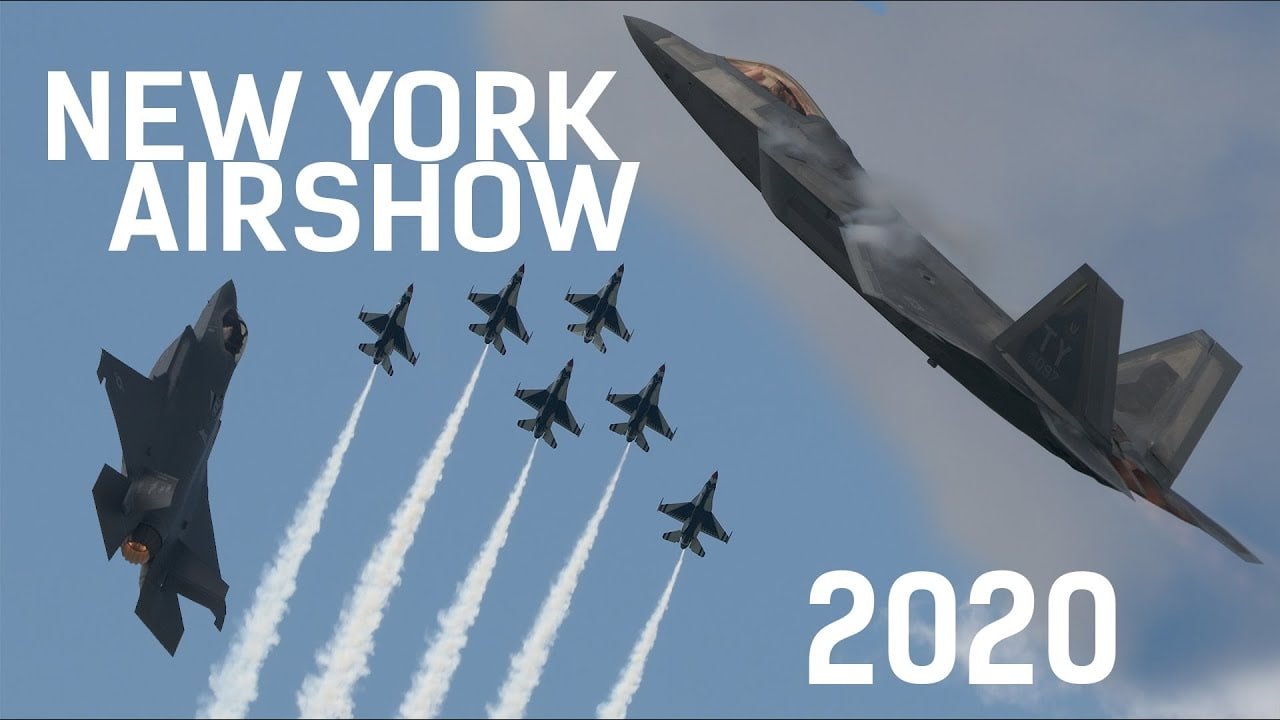
I’ve been thinking about that afternoon since reading about the F-22 Raptor demonstration team’s recent appearance over Miami. The coverage, predictably, focused on what the crowd experienced: the thrust vectoring that makes the aircraft appear to defy the normal relationship between speed and attitude, the low-speed passes that seem to contradict everything you think you know about what a fighter jet requires to remain in the air, the noise that arrives after the aircraft has already moved somewhere else. All of that is real and all of it is genuinely extraordinary. The F-22 is, by any measure, a remarkable piece of engineering, and watching one fly aggressively at low level produces an impression that no photograph or video has ever come close to replicating.
But the Miami display, like every F-22 demo team appearance, was not primarily designed for the crowd on the beach.
What the Air Force was demonstrating — and I use that word in its precise sense — was a set of capabilities to an audience that included foreign military observers, defence journalists with the technical background to understand what they were seeing, and the domestic defence establishment, which periodically needs reminding of what the programme it spent an extraordinary amount of money on actually produces. The F-22’s agility at low speed is not a party trick. It is a tactical capability with specific implications for within-visual-range combat that the display routine, carefully choreographed as it is, communicates in a language that the relevant audience reads without difficulty.
The crowd sees a spectacular airshow. The other audience sees a capability brief conducted at four hundred feet over a Florida beach.
I find this duality genuinely interesting rather than troubling, but it does raise a question I’ve been sitting with for a while now. At what point does the gap between what an audience is shown and what is actually happening become something that warrants more honest public discussion? I’m not reaching for anything conspiratorial here. The F-22 demo team is not deceiving anyone by flying a carefully designed routine. Display flying always involves selection, emphasis, the highlighting of certain capabilities and the quiet omission of others. Every Spitfire display I’ve ever watched at Duxford or Goodwood or here at Redhill, engines crackling, the aircraft banking low enough to see the undercarriage doors, has been a curated version of what that aircraft was and is. Nobody objects to that. The curation is part of the form.
What gives me mild pause is something different. I was at a show some years ago — a British event, smaller than Fairford, the kind that fills a car park with people who arrived before eight in the morning and know exactly what they came to see — when a fast jet display was cancelled mid-afternoon and the replacement programme made up of slower heritage types. The official explanation cited airspace. I happened to overhear, between the public address announcements, a brief conversation between two people who were clearly not in the public enclosure and clearly were not happy about whatever decision had just been made above their pay grade. The gist, without the specifics I wasn’t entitled to, was that the display had been cancelled for reasons that had nothing to do with airspace and a certain amount to do with what the aircraft had and hadn’t been cleared to demonstrate publicly following a recent evaluation. The crowd was told one thing. Something else had happened.
That is the version of this that concerns me. Not the Miami display, which is operating entirely legitimately within a tradition of capability demonstration that is as old as military aviation itself. What concerns me is when the gap between public explanation and actual decision-making is used not to protect genuine operational security but to avoid an uncomfortable conversation about what is and isn’t working.
The F-22 over Miami is a display of genuine, extraordinary capability, and the crowd who watched it saw something real, even if they weren’t seeing everything that was being communicated. That is fine. That is, in some ways, how public military display has always functioned.
The problem comes when the gap runs the other way — when the display promises something the programme can no longer honestly deliver, and the crowd is left reading an advertisement for a product that has quietly changed.
The aircraft overhead is always telling the truth about itself. It’s the narrative around it that occasionally needs watching.

Alex Bradley is a UK-based aviation writer and airshow circuit regular who has spent years attending displays from RIAT at Fairford and the Biggin Hill Festival of Flight to small fly-ins that drew two hundred people and a hot dog van, and values both for entirely different reasons.
He is not a pilot. He is not a PR man for the aviation industry. He is the person in the crowd who has been coming long enough to notice when something has quietly changed, when an organiser is papering over a problem, and when a display is genuinely worth the drive.
His writing on Redhill Airshow covers the British airshow circuit, safety, display team politics, CAA regulations, and the quiet contraction of grass airfield culture that nobody in the industry wants to discuss plainly.
He has stood at Redhill Aerodrome in every kind of English summer weather, watched Tiger Moths bank low over Surrey farmland, and carries strong opinions about what this country is slowly losing one cancelled event at a time.