
There is a particular quality of silence that follows something going wrong in the air. I’ve experienced it twice at displays — once at a small grass strip event in the Midlands where an aircraft clipped a wingtip on landing and the crowd simply stopped, collectively, in a way that had nothing to do with any instruction, and once at Biggin Hill where a display was abandoned mid-sequence without explanation and the commentator went quiet for long enough that you understood something had happened that nobody was yet ready to describe. Both times, the silence lasted perhaps ten seconds. Both times, what followed was the careful, slightly too-composed language of people managing information in real time. You learn, after enough of these moments, to listen not to what is said but to the shape of what isn’t.
I’ve been thinking about that quality of silence while watching the aftermath of what’s being called the Idaho collision. The video, by now, has accumulated a viewing figure that places it somewhere in the cultural category of things everyone has seen whether they went looking or not. The footage itself is striking in the particular way that real incidents are striking — not cinematic, not composed, not edited for impact, but with the specific texture of something that happened without anyone’s permission. Forty million views and counting. The Navy’s explanation, at time of writing, remains materially incomplete.
That gap is the thing I keep returning to.
I want to be careful here, because I am not a pilot, I have no military background, and I am not in a position to assess the technical specifics of what occurred or why. What I do have is a reasonable familiarity, built over many years of standing in public enclosures and occasionally being admitted to the margins of briefing conversations, with the way aviation institutions manage information following incidents. And what I recognise in the Navy’s handling of this is a pattern I have seen, in less dramatic form, many times closer to home.
The pattern works like this. An incident occurs. Initial statements are brief, factually conservative, and structured to foreclose speculation rather than inform it. The phrase “under review” appears. Time passes. The review concludes, or is said to conclude, in language that is technically specific enough to satisfy internal processes and general enough to tell the public very little. If the video evidence is sufficiently compelling and the public attention sufficiently sustained, a more detailed account eventually emerges. If it isn’t, the file closes quietly and the forty million people who watched the footage are left with the visual fact of what happened and no reliable account of why.
I have sat with this dynamic in the British context often enough to find it genuinely frustrating. I’ve been at shows where something has clearly not gone to plan, where a display has been curtailed or an aircraft has returned to the flight line in a condition that suggested a more interesting afternoon than the programme indicated, and where the public explanation — airspace, weather, a technical precaution — has been so demonstrably at a distance from what actually occurred that the people around me, most of them experienced enough to know what they were looking at, simply stopped listening to the commentary and started talking to each other instead. The CAA’s incident reporting culture has improved considerably over the years. Military aviation, on both sides of the Atlantic, has been slower to follow.
The Idaho footage raises a specific question that the Navy’s communications have not addressed, which is whether the airspace management and deconfliction procedures that were in place were adequate, and if not, why not, and what has changed. These are not unreasonable questions. They are the questions that anyone responsible for public airspace ought to be able to answer, if not immediately then within a timeframe that still means something to the public attention.
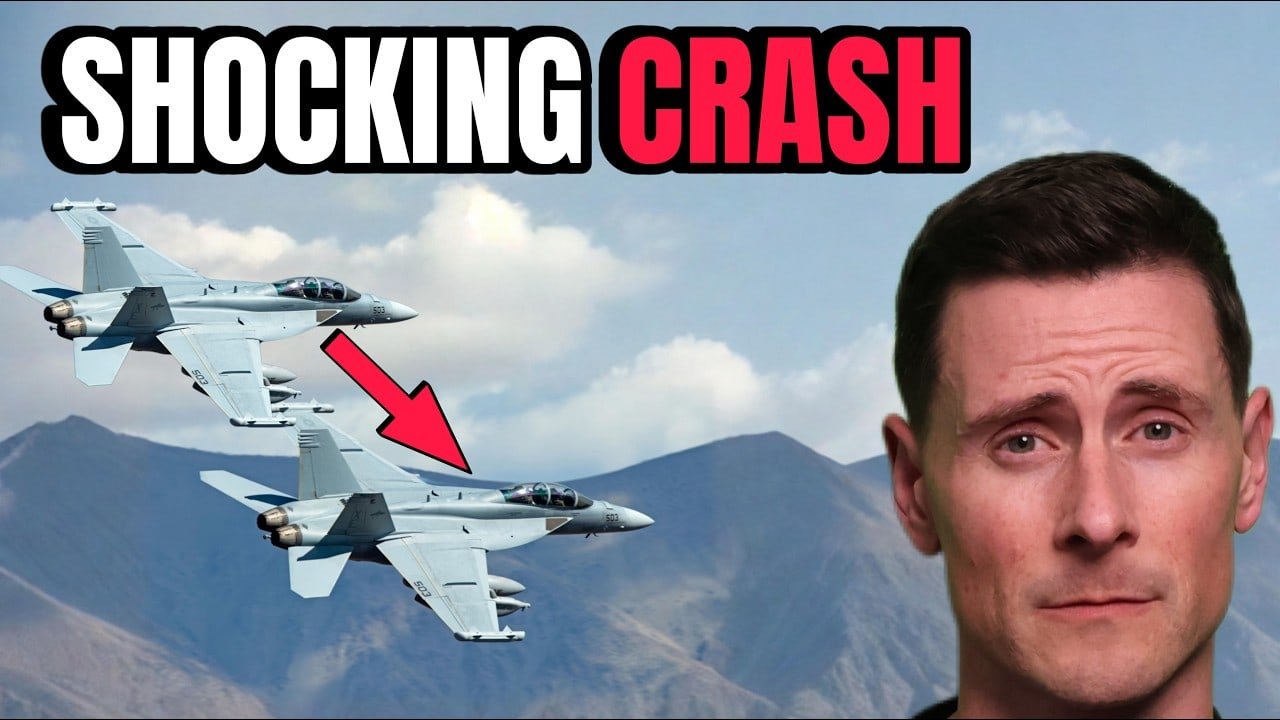
Forty million views is not simply a media metric. It is a measure of how many people now carry a visual understanding of an incident without any corresponding institutional account of what produced it. That is not a stable situation. What fills the gap — speculation, partial reporting, confident claims from people with no more access than the rest of us — is generally worse than a carefully constructed but honest explanation would have been.
The thing that changed my thinking on institutional communication after incidents was a conversation I had at Redhill, of all places, with a former display pilot who had been involved in a serious incident earlier in his career and who had spent considerable time afterwards engaging with the formal review process. He said that the hardest part was not the review itself. It was the period before the review concluded, when he knew what had happened and why, and watched a public narrative develop around the incident that was wrong in ways that mattered, and felt unable to correct it because the process required him to wait. “The silence isn’t dishonest,” he said. “But it isn’t honest either.”
The Navy has its processes. The review, presumably, is ongoing. All of that is understood.
But forty million people watched something happen, and the institution responsible for explaining it has, so far, chosen a silence that is neither dishonest nor honest.
That distinction used to be easier to sustain before everyone had a camera and a connection. It is getting harder, and the institutions that haven’t noticed yet are the ones this will matter most to, eventually.

Alex Bradley is a UK-based aviation writer and airshow circuit regular who has spent years attending displays from RIAT at Fairford and the Biggin Hill Festival of Flight to small fly-ins that drew two hundred people and a hot dog van, and values both for entirely different reasons.
He is not a pilot. He is not a PR man for the aviation industry. He is the person in the crowd who has been coming long enough to notice when something has quietly changed, when an organiser is papering over a problem, and when a display is genuinely worth the drive.
His writing on Redhill Airshow covers the British airshow circuit, safety, display team politics, CAA regulations, and the quiet contraction of grass airfield culture that nobody in the industry wants to discuss plainly.
He has stood at Redhill Aerodrome in every kind of English summer weather, watched Tiger Moths bank low over Surrey farmland, and carries strong opinions about what this country is slowly losing one cancelled event at a time.