
The programme said the display would start at half past two. By three o’clock the commentator was explaining, with the particular strained cheerfulness that airshow commentators develop as a professional survival mechanism, that there had been a slight delay due to airspace coordination. By half past three, with the English summer light already losing its conviction and the grass underfoot gone soft from the morning’s rain, about a third of the crowd had quietly decided they had somewhere else to be. I was at a show in the south-east — I won’t say which one — and I watched an event that had cost its organisers considerable effort and its attendees a not-inconsiderable amount of money slowly decompress into a kind of polite disappointment. Nobody shouted. Nobody demanded a refund at the gate. People just left, the way British crowds do, with a kind of dignified resignation that the organisers probably counted as a mercy.
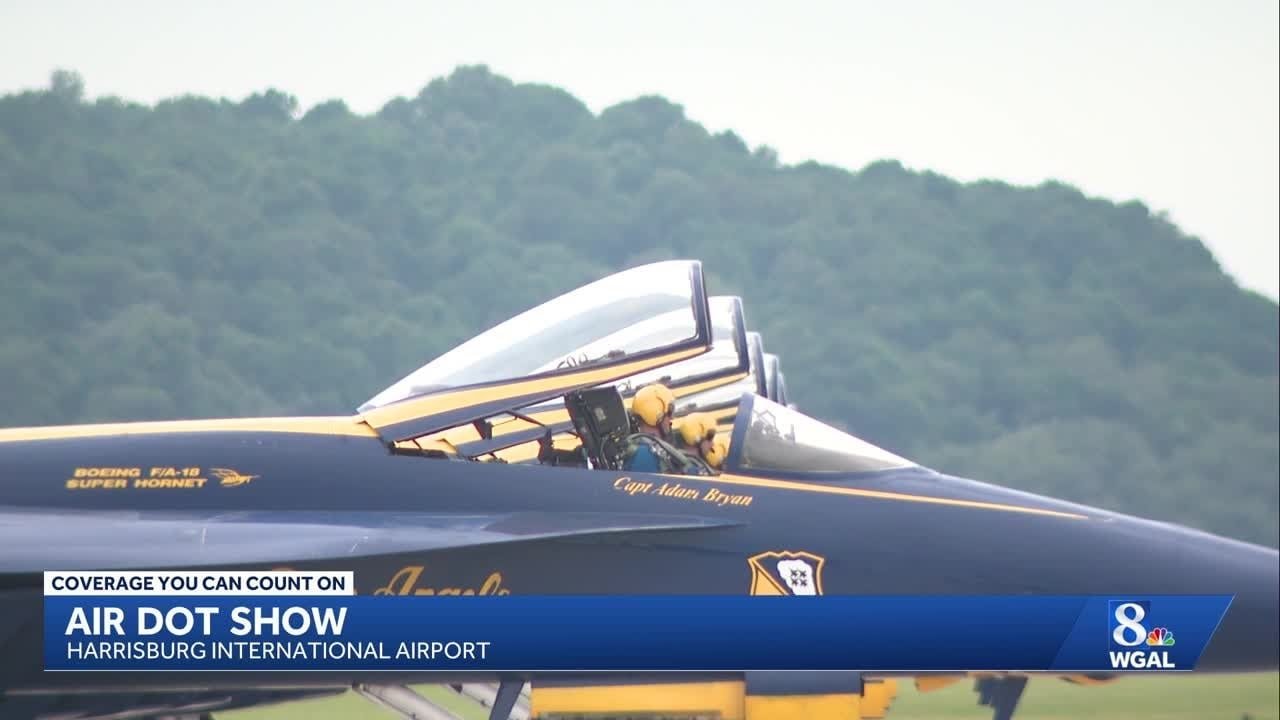
I thought about that afternoon recently when I came across the figures being cited for the Harrisburg Air Show in Pennsylvania. Forty million dollars of annual economic impact. Hotels, restaurants, fuel stops, the accumulated spending of tens of thousands of people who travel to a mid-size American city specifically because there is going to be something significant happening in the sky above it. The show has been rained on, delayed, partially rescheduled, and subjected to the full range of meteorological indignities that anyone who attends outdoor events in the northern hemisphere will recognise. And it keeps producing that number. Year after year, with the reliability that British airshow organisers would find either inspiring or deeply depressing, depending on their temperament.
There is something worth sitting with in the contrast. Not because America does everything better — it plainly doesn’t, and American airshow culture has its own set of structural problems that I’ve written about elsewhere — but because the Harrisburg model illuminates something that the British conversation about airshow economics tends to avoid confronting directly.
The forty million dollar figure is not magic. It is the product of scale, consistency, and the particular quality of institutional commitment that makes an event feel, to the people who plan their year around it, like something that will actually happen. Harrisburg has that quality. It has built, over years, the kind of reputation that survives a rained-out Saturday and a rescheduled headline act, because the audience has learned that the event itself is reliable even when the weather is not. People book hotels in advance. They drive from several states away. They do this because the show has earned a species of trust that is, in the events business, genuinely hard to build and surprisingly easy to destroy.
The moment that shifted my thinking on this wasn’t a disappointment. It was the opposite, and it caught me off guard. I was at a small fly-in at Redhill — maybe two hundred people, which is a generous estimate, and a hot dog van that was doing better business than the display schedule perhaps warranted — when I got talking to a man who had driven down from Birmingham specifically to see a particular vintage type he’d been waiting two years for an opportunity to view at close quarters. He’d checked the weather the night before. He’d left at half six in the morning. The aircraft was grounded, in the end, with a minor snag that nobody had anticipated. He was not upset in any meaningful way. He just said: “I’ll come back. I always come back.” And I realised that what he was describing was not loyalty to a specific event, but to a specific place and a specific atmosphere that had, over the years, made him feel that turning up was worth it regardless of what the sky produced.
That is an economic relationship, even if neither of us would have framed it that way standing beside a grass strip in Surrey.
What Harrisburg understands, and what a number of British shows have either forgotten or never quite learned, is that the economic case for an airshow is not built on a single spectacular display or a famous headline act. It is built on the accumulated decisions of thousands of people who decide, year after year, that the event is worth their time and money. Those decisions are made on the basis of trust, which is built on consistency, which requires the kind of sustained organisational commitment that is not always reflected in how British airshow funding is structured, discussed, or defended to the people who hold the budget.
I have sat in briefings — not many, I’m not that embedded, but enough — where the economic contribution of a local airshow was raised and then quietly set aside because the figures were difficult to attribute with precision. Difficult to attribute is doing a lot of work in that sentence. The truth is that the figures are difficult to argue for by people who have not made the case clearly enough for long enough, and who often lack the data infrastructure that would let them make it at all.
Harrisburg has the data. It has the consistency. It has forty million reasons, annually, to keep making the argument.
The rain still comes. The delays still happen. The crowds still return.
That is not an accident of geography or luck. It is what happens when an event earns the right to be relied upon, and the people running it understand that the economic case and the attendee experience are not separate arguments.
They are the same argument. They always were.

Alex Bradley is a UK-based aviation writer and airshow circuit regular who has spent years attending displays from RIAT at Fairford and the Biggin Hill Festival of Flight to small fly-ins that drew two hundred people and a hot dog van, and values both for entirely different reasons.
He is not a pilot. He is not a PR man for the aviation industry. He is the person in the crowd who has been coming long enough to notice when something has quietly changed, when an organiser is papering over a problem, and when a display is genuinely worth the drive.
His writing on Redhill Airshow covers the British airshow circuit, safety, display team politics, CAA regulations, and the quiet contraction of grass airfield culture that nobody in the industry wants to discuss plainly.
He has stood at Redhill Aerodrome in every kind of English summer weather, watched Tiger Moths bank low over Surrey farmland, and carries strong opinions about what this country is slowly losing one cancelled event at a time.