
There is a moment in a close-formation display when the aircraft are near enough that you stop thinking about the spectacle and start thinking about the margin. Not consciously. Your brain does it without permission, some primitive calculation running underneath the enjoyment, measuring the separation between wingtips against the speed at which everything could change. I first noticed this at Fairford, watching a formation pass that was tight enough to make the man beside me exhale sharply and look away. I did not look away. But I understood the impulse differently after that.
I came across the interview with the former Blue Angels pilot through a link someone posted in a forum I read more than I contribute to. The pilot, who flew with the team for two seasons before resigning and has since spoken at some length about the conditions inside the programme, was not doing anything so simple as airing grievances. What he was describing, with a specificity that felt earned rather than performed, was the gap between what a precision display team presents to a crowd of a hundred thousand people and what the people inside that team are managing, privately, on any given display day.
The things he described were not secrets, exactly. Anyone who has spent serious time around military display flying knows that the culture inside these teams runs on a particular combination of extreme competence and enforced silence about anything that might qualify as doubt. What was unusual was hearing it said plainly by someone who had been inside it, who had worn the uniform and flown the aircraft and stood at the fence afterwards signing programmes for children, and had decided that the plainness was more important than the omission.
He talked about the internal pressure not to report concerns through formal channels, because formal channels created paper trails and paper trails created questions and questions created the kind of institutional friction that a team managing a forty-date display season could not easily absorb. He talked about the specific loneliness of knowing something was not right and having no mechanism to say so that would not also be understood as a statement about your commitment to the team, your nerve, your suitability to be there at all. He talked about flying a display in conditions he would not have chosen, because the choice had already been made by the schedule and the crowd and the television cameras and the long, complicated momentum of an event that had been advertised six months in advance.
I sat with that for a while. Then I thought about a display I had watched at an event I will not name specifically, where an aircraft came through on a pass that seemed wrong before I could explain why it seemed wrong, slightly low, slightly fast, the angle not quite matching the geometry of the previous run, and the crowd around me made a noise that was not quite appreciation and not quite alarm, and then it was past and the moment resolved and everyone cheered and moved on. I have never written about that moment. I have thought about it more times than I can usefully count.
The thing that British airshow culture does not discuss honestly is the degree to which the spectacular is subsidised by the unspoken. The crowds are not paying to understand the risk management calculus that sits behind every display clearance. They are paying, or in many cases not paying at all, to feel the visceral reality of something moving very fast very close to the ground in a way that their ordinary lives will never produce. That transaction has always involved a silence on one side of it. The silence is the price of the experience, and most of us in the crowd have agreed to it without being asked.
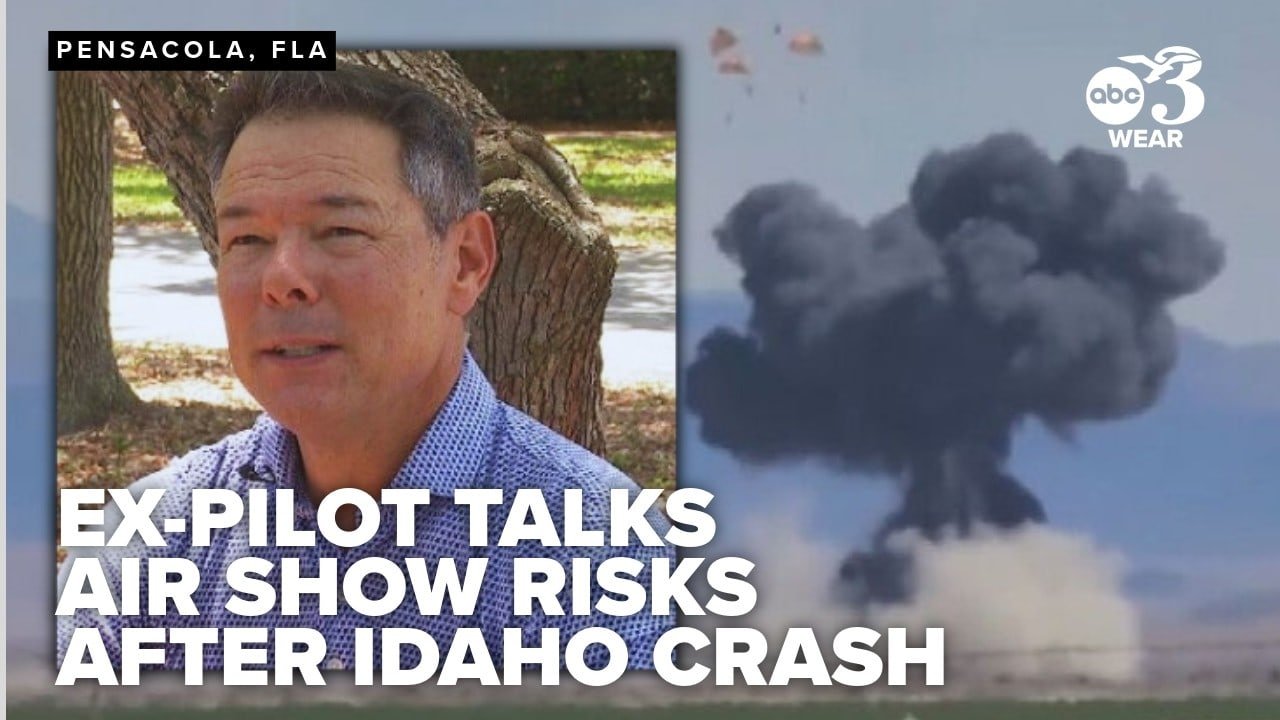
What the former Blue Angels pilot did, in those interviews, was break the terms of that agreement. Not destructively. Not, I think, recklessly. But he named the thing that the institution relies on nobody naming, which is that the conditions under which precision military display flying happens are not always the conditions under which the pilots flying it would choose to operate if the choice were genuinely theirs.
There are CAA officials and display team managers who would argue that this kind of public discussion does measurable harm, to recruitment, to public confidence, to the broader project of keeping military aviation visible and valued in a culture that funds it at arm’s length. I understand that argument. I do not find it convincing. The alternative to honest discussion about risk in display flying is not safety. The alternative is the periodic catastrophic reminder that the silence was not the same thing as the absence of a problem.
I have been in the crowd at events that went wrong. I know what the silence before and after sounds like. I know how quickly a hundred thousand people can become very quiet.
The pilot who spoke deserves more credit than he has received, and the institution he spoke about deserves less comfort than it has been given.

Alex Bradley is a UK-based aviation writer and airshow circuit regular who has spent years attending displays from RIAT at Fairford and the Biggin Hill Festival of Flight to small fly-ins that drew two hundred people and a hot dog van, and values both for entirely different reasons.
He is not a pilot. He is not a PR man for the aviation industry. He is the person in the crowd who has been coming long enough to notice when something has quietly changed, when an organiser is papering over a problem, and when a display is genuinely worth the drive.
His writing on Redhill Airshow covers the British airshow circuit, safety, display team politics, CAA regulations, and the quiet contraction of grass airfield culture that nobody in the industry wants to discuss plainly.
He has stood at Redhill Aerodrome in every kind of English summer weather, watched Tiger Moths bank low over Surrey farmland, and carries strong opinions about what this country is slowly losing one cancelled event at a time.