
The Sales Pitch You Queued Three Hours to Attend
He said it without any particular drama, the way someone states something they have long since stopped considering controversial. We were standing beside the static display at an RAF open day, a Typhoon close enough behind us that you could have reached out and touched the intake, and this former display pilot, whose name I will not use because he did not ask to be quoted, said: the crowd thinks it is watching a performance. What it is actually watching is a capability demonstration for procurement audiences, foreign defence attaches, and potential recruits, with the general public present largely to provide atmosphere and gate revenue.
I had been going to airshows for the better part of twenty years when he said that. I thought I understood what I was looking at. I did not move on particularly quickly.
The quote that has been circulating recently, attributed to a former demo team pilot with American military experience, is essentially the same argument expressed more bluntly. It is not a performance. It is a weapon system. The implication being that the crowd, the families with pushchairs, the retired men with scanner radios, the children with their necks craned back at angles that will ache tomorrow, are present at something whose primary purpose they have fundamentally misunderstood. They think they have come to see something beautiful and exciting. They have also, without having agreed to this, been incorporated into the backdrop of a defence industry communication exercise.
I find myself in an uncomfortable position with this argument, which is that I think it is substantially correct and I am not sure it is the devastating critique its proponents believe it to be.
Consider what actually happens at the large RAF events. The flying is extraordinary. A Typhoon at low level, at speed, with full reheat, is a genuinely violent intrusion on your senses in a way that no recording adequately captures. The noise arrives in your chest before it reaches your ears. The grass flattens. People flinch. And then it pulls vertical and you stand there in the sudden quiet, which smells of avgas and cut grass and whatever someone nearby is eating, and you think: that was extraordinary. That was worth the car park queue and the warm can of Coke and the programme that cost four pounds and contained mostly adverts. You mean all of this sincerely.
But you were also just shown, in the most visceral possible terms, what the RAF can do. The demonstration was calibrated. The manoeuvres were selected. The sequence was designed to produce precisely the response you just had. The foreign delegations in the VIP enclosure were watching the same display and drawing entirely different conclusions about payload, turn radius, and export potential. You and they attended the same event. You were not, in any meaningful sense, the same audience.
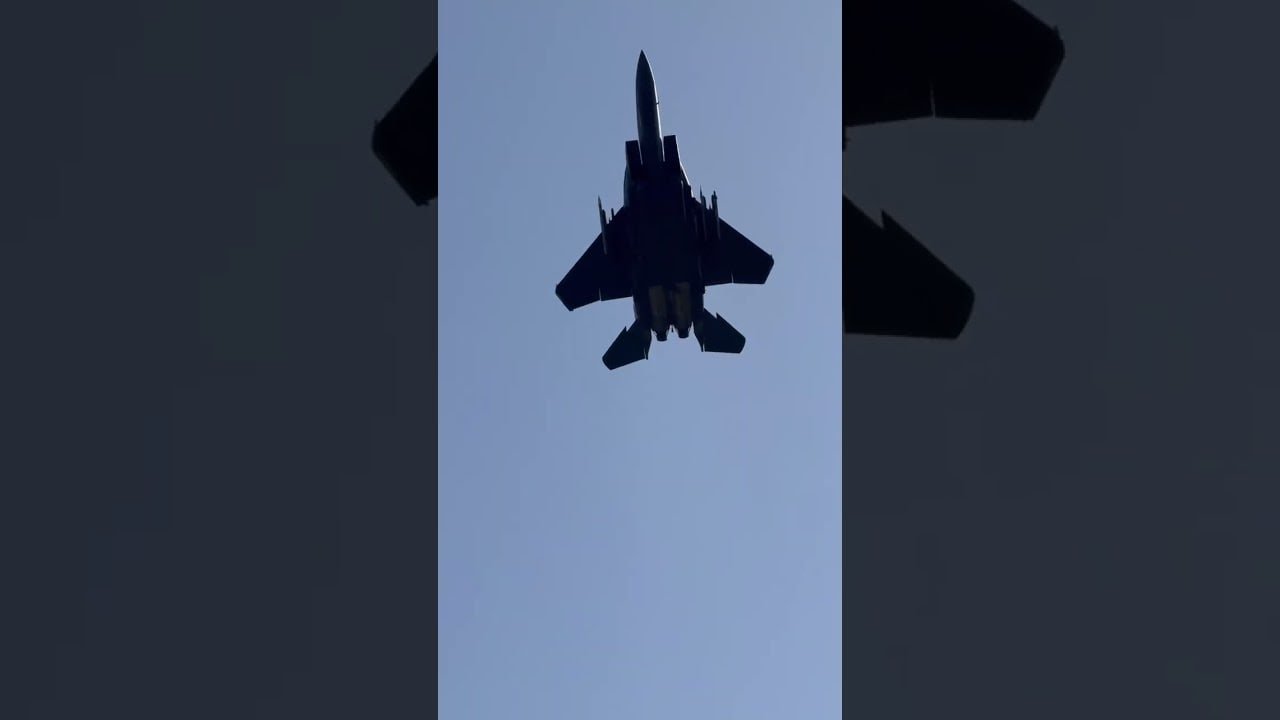
What changed for me, after that conversation at the RAF open day, was not that I stopped going. I kept going. I still go. What changed was that I started paying attention to a different layer of what I was watching. At Fairford, at RIAT, you can see the defence industry presence if you know where to look, the stands running back from the flightline with their scale models and their brochures and their carefully positioned executives. At Biggin Hill, which is a different kind of event with less overt military content, you can feel the heritage angle being deployed quite deliberately as a form of national sentiment cultivation, which is its own kind of soft communication even if nobody would put it in those terms. Even at small grass strip events, the flying club that hosts them is making an argument for general aviation’s right to exist, its social value, its claim on airspace and public sympathy. There is always a purpose. There is always an intended effect.
None of this makes me feel deceived, exactly. It makes me feel more honest about what I am doing when I go. I am not a passive observer of something being done for my benefit. I am a participant in an event that serves multiple interests simultaneously, mine included, and the flying itself is real regardless of what else is also happening around it.
The Spitfire I stood close enough to read the rivet patterns on, at a small show in the Thames Valley three summers ago, was not deployed there to make a procurement argument. The man who flies it does so because it is the most demanding and beautiful thing he has ever done, and that was entirely legible from watching him. But even that aircraft, that specific machine, carries with it eighty years of intentional myth-making about British identity and military capability that someone, at some point, decided was worth maintaining. It did not arrive at its cultural position by accident.
The former demo pilot’s comment is worth taking seriously not because it should make you stop attending airshows, but because it should make you a more accurate witness to what you are actually there to see. The flying is real. The emotion it produces is real. And the event that frames it is serving purposes that extend well beyond your afternoon out.
Knowing that does not diminish the Merlin. It just means you are watching with your eyes properly open.

Alex Bradley is a UK-based aviation writer and airshow circuit regular who has spent years attending displays from RIAT at Fairford and the Biggin Hill Festival of Flight to small fly-ins that drew two hundred people and a hot dog van, and values both for entirely different reasons.
He is not a pilot. He is not a PR man for the aviation industry. He is the person in the crowd who has been coming long enough to notice when something has quietly changed, when an organiser is papering over a problem, and when a display is genuinely worth the drive.
His writing on Redhill Airshow covers the British airshow circuit, safety, display team politics, CAA regulations, and the quiet contraction of grass airfield culture that nobody in the industry wants to discuss plainly.
He has stood at Redhill Aerodrome in every kind of English summer weather, watched Tiger Moths bank low over Surrey farmland, and carries strong opinions about what this country is slowly losing one cancelled event at a time.