
The first time I stood close enough to a Spitfire to hear it properly, I was at a grass strip event in Hampshire that had no official name and no programme and was attended mostly by people who had found out about it through a chain of conversations I was never entirely able to trace back to its origin. The aircraft came in low over the hedge at the northern end of the field and the sound arrived a half-second before I had fully processed what I was seeing, that Merlin note that everyone describes and nobody quite manages to describe accurately because it is not one sound but several, a mechanical complexity that the word growl does not begin to contain. I stood there with my tea going cold and felt something that I would be embarrassed to try to explain to anyone who had not experienced it, and which required no explanation to anyone who had.
The Spitfire turns ninety this year. The first flight was March 1936, Eastleigh Aerodrome, Mutt Summers at the controls, and the aircraft that emerged from that test programme went on to become the most written-about, painted, discussed, and mythologised piece of engineering this country has ever produced. I say that without irony and without the slightly defensive self-consciousness that sometimes creeps into British conversations about the Spitfire, the awareness that the reverence has been so heavily commercially exploited that it can feel faintly compromised. The reverence is real. The aircraft earned it. Those are both true simultaneously.
The return to Clacton is significant for reasons that the standard anniversary coverage has not quite got to yet, or at least not in terms that feel adequate. Clacton Airshow is one of those events that the circuit regulars know and value in a way that does not always translate into the coverage it receives. It runs along the seafront, which gives it a visual context that is quite different from the grass strip events I tend to gravitate toward, and it draws a crowd that includes a substantial proportion of people for whom this is their primary, sometimes their only, airshow of the year. Not the Fairford regulars with their camping chairs and their knowledge of historical display sequences. People who bring their families to the seafront for a day out and find themselves standing in front of something that stops them.
I was at Clacton two summers ago when the weather went sideways in the early afternoon. The cloud base dropped in a way that had been forecast but had arrived faster than expected, and there was a period of perhaps forty minutes when the programme stalled and the crowd, which had been animated and loud, went into the particular waiting mode that English crowds adopt when something is uncertain and nobody official has yet said anything helpful. The commentary filled the gap with historical material, which was sensible, and eventually the ceiling lifted enough for a modified sequence, and the crowd responded with a warmth that told you how much the waiting had built rather than diminished the anticipation.
That moment is what I think about when I read the coverage of the ninetieth anniversary, because it pointed to something about the relationship between this particular aircraft and the people who watch it that goes beyond the usual heritage aviation framework. A Spitfire display over a British seafront in uncertain English summer weather, the light going flat in the way it does by late afternoon when the sea haze thickens and everything takes on a quality that is hard to photograph but very easy to feel, is not just an item on a programme. It is something closer to a collective experience of a specific kind that this country does not have many remaining vehicles for.
I want to say something here that some of the anniversary coverage will not say, because it requires holding two things in tension that the celebratory mode tends to flatten into one. The Spitfire’s symbolic weight in British culture is both genuine and heavily managed. The RAF, the heritage organisations, and the events industry all have strong reasons to maintain and amplify the mythology, and they do so with considerable skill. That does not make the mythology false. But it does mean that the public experience of a Spitfire at an airshow is always, to some degree, a mediated one, and the mediation is not neutral. It serves particular interests. I do not think that is a reason to be cynical about the experience. I think it is a reason to be clear-eyed about it while still allowing yourself to be moved by it.
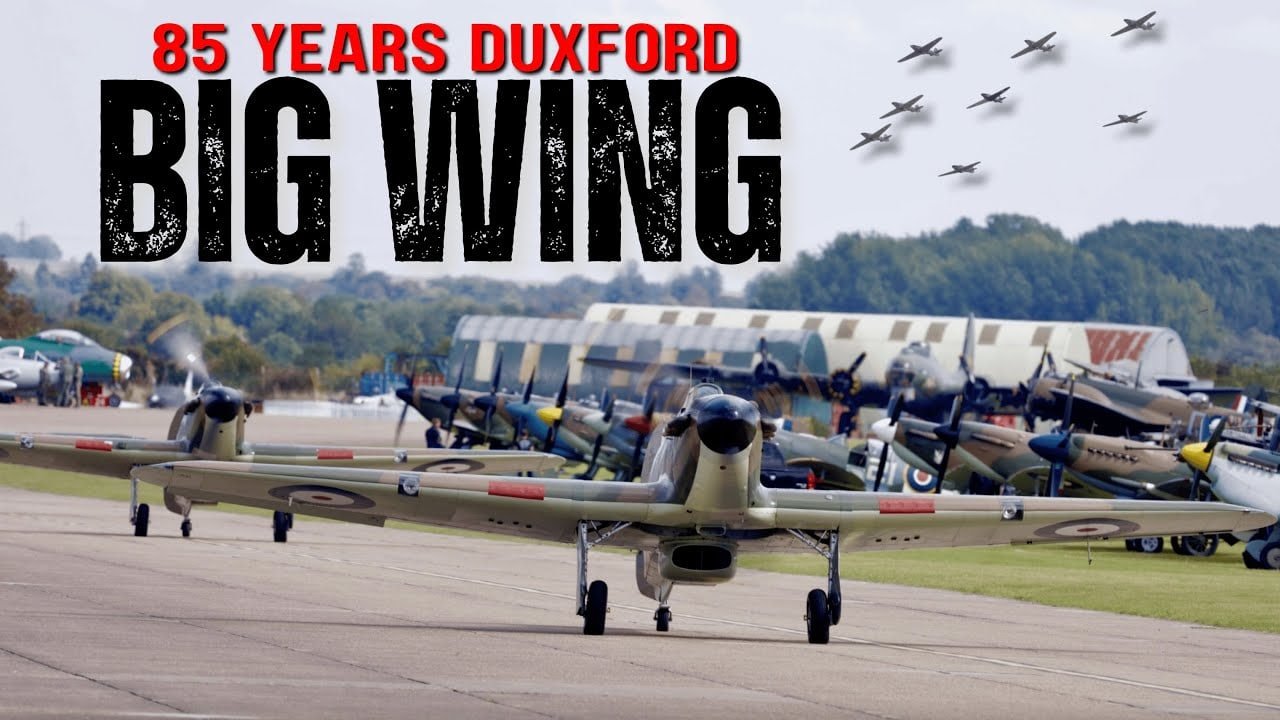
Because the moving part is real. I have watched people see a Spitfire fly for the first time, people with no particular prior interest in aviation history or aircraft recognition, and the response is consistent in a way that I cannot fully account for. Something happens. The aircraft carries a meaning that exists independently of whether the person watching knows anything about its history, and that is an unusual property for a machine to have.
Ninety years from that first flight at Eastleigh. The aircraft that Mutt Summers landed and reportedly told the ground crew required no alterations is now the central exhibit in a national story that shows no signs of releasing its hold.
The display at Clacton will draw the usual crowd and the usual cameras and the usual commentary about what the Spitfire means. Most of it will be true.
Stand somewhere you can hear it properly, and the rest takes care of itself.

Alex Bradley is a UK-based aviation writer and airshow circuit regular who has spent years attending displays from RIAT at Fairford and the Biggin Hill Festival of Flight to small fly-ins that drew two hundred people and a hot dog van, and values both for entirely different reasons.
He is not a pilot. He is not a PR man for the aviation industry. He is the person in the crowd who has been coming long enough to notice when something has quietly changed, when an organiser is papering over a problem, and when a display is genuinely worth the drive.
His writing on Redhill Airshow covers the British airshow circuit, safety, display team politics, CAA regulations, and the quiet contraction of grass airfield culture that nobody in the industry wants to discuss plainly.
He has stood at Redhill Aerodrome in every kind of English summer weather, watched Tiger Moths bank low over Surrey farmland, and carries strong opinions about what this country is slowly losing one cancelled event at a time.