
My mother used to drop my father at the airfield and drive away. Not in distress, not with any visible drama. She would pull up to the gate, he would get out with his bag, they would say whatever they said to each other, and she would leave. She did not watch him fly. Not once in thirty years of displays, as far as I was ever able to establish. When I was old enough to ask about it, she said simply that she had her reasons and that they were hers, and that was the end of the conversation.
My father found this entirely reasonable. He never pressed her, as far as I know. They had arrived at some arrangement, unspoken or at least never spoken about in my presence, and it held for the length of his display career and beyond it. He died thinking it was a private matter between the two of them. I thought the same until Idaho.
The Idaho incident, for those who did not follow it closely, involved a display sequence that ended with an aircraft impacting the ground during what witnesses described as a manoeuvre the pilot had performed hundreds of times before. The pilot did not survive. The investigation is ongoing. The airshow community responded with the mixture of grief and professional analysis that follows these events, the search for the mechanical or procedural explanation that might make the outcome feel less arbitrary. I have watched that search happen before, at Shoreham and elsewhere, and I understand why it is necessary. But it does not answer the question my mother answered in her own way thirty years ago, which is: what does it mean to watch someone you love do this?
I was not close to the pilot in Idaho. I knew his name from programmes and from the circuit, the way you know people you have never spoken to but have watched often enough to recognise something in how they fly. When I heard the news, I sat for a while and did nothing, which is not my usual response to anything, and then I thought about my mother leaving the airfield gate.
She was not a fearful woman. That is the thing I want to be clear about. She was not someone who catastrophised or who could not tolerate risk in the people around her. She had a clear-eyed view of the world and she applied it consistently. What she had apparently decided, early in my father’s display career, was that the act of watching him was not something she could do in a way that was useful to either of them. She could not watch and be neutral. And she had understood, without anyone explaining it to her, that a display pilot needs the people who love them to be somewhere else.
I have been at Redhill on days when the strip is quiet and a single aircraft is doing circuit work, nothing more, and the quality of attention I give it is entirely different from the attention I give a display sequence at a large event. The stakes are different. The emotional register is different. At Biggin Hill or Fairford, surrounded by strangers, I am a spectator with knowledge and a point of view. At a small field, watching something I care about, I am something else. I do not have a clean word for what I am.
What changed for me after Idaho was not my understanding of risk, which has always been clear-eyed to the point that some people find it cold. What changed was my understanding of what the crowd is actually doing when it watches. There is a version of the airshow audience that the industry tends to imagine and cater to, which is a mass of grateful spectators absorbing a spectacle that has been safely packaged for their enjoyment. That version exists. It also coexists with something considerably less comfortable, which is the presence of people for whom the aircraft in the display contains someone specific, and for whom the gap between a completed manoeuvre and an incomplete one is not an abstract risk statistic but an immediate and personal one.
The thing that no display programme, no commentator, and no post-event PR statement has ever adequately acknowledged is that the crowd at a military or warbird display is not a uniform entity. Some of those people are there the way I was at Clacton, cold tea in hand, watching with the particular pleasure of someone who has trained themselves to see what is happening. And some of them are standing very still near the back with their eyes closed, listening rather than looking, having made the calculation that watching is not something they can manage.
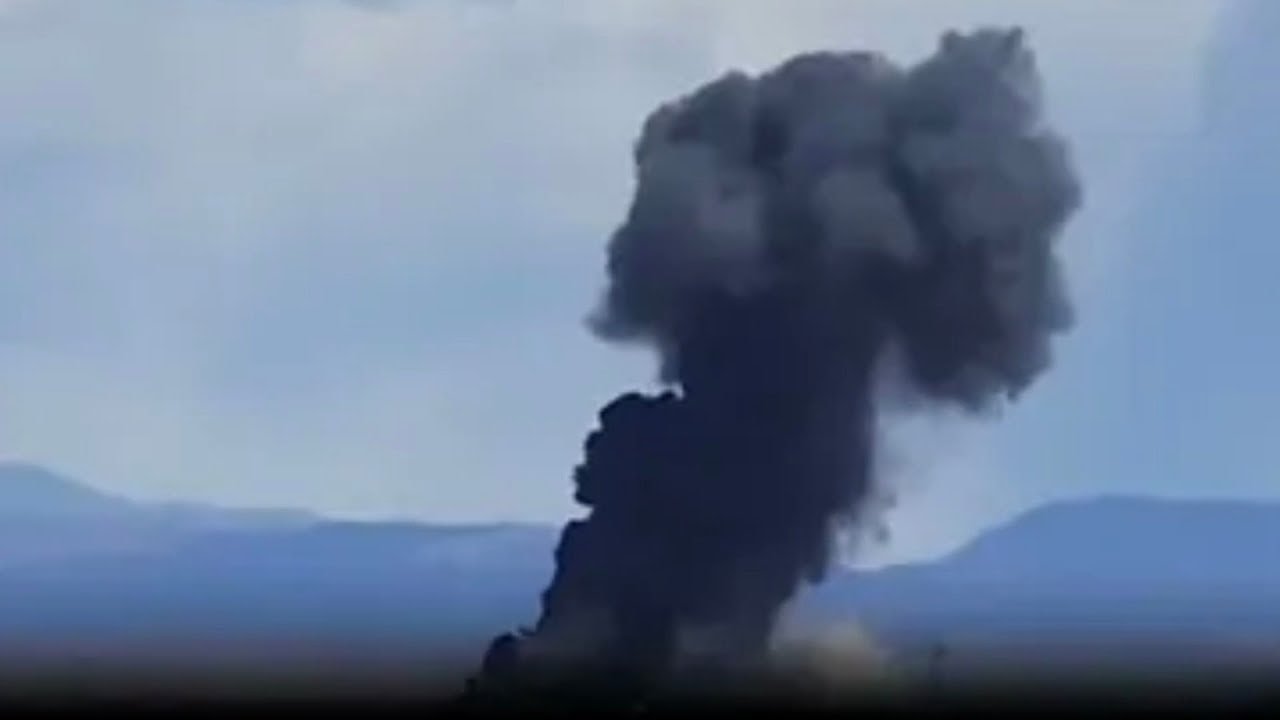
My mother’s solution was spatial. She left. I do not think she was wrong. I think she understood something about the nature of that particular kind of love and the limits of what it could hold simultaneously, and she made a rational decision about it that protected both of them for thirty years.
After Idaho I called her. She did not ask me why I was calling. She just said his name, my father’s name, and then asked if I was all right.
I told her I had finally understood about the airfield gate.
She said she knew I would, eventually.
I do not think there is a way to stand at an airshow and be fully honest about what you are watching and also be fully comfortable. I think the comfort, when it exists, is a form of distance. And I think some people, the ones who know the pilots, the ones who have the most reason to be there, are the ones who most often choose not to be.
My mother understood that before anyone told her. It just took me longer.

Alex Bradley is a UK-based aviation writer and airshow circuit regular who has spent years attending displays from RIAT at Fairford and the Biggin Hill Festival of Flight to small fly-ins that drew two hundred people and a hot dog van, and values both for entirely different reasons.
He is not a pilot. He is not a PR man for the aviation industry. He is the person in the crowd who has been coming long enough to notice when something has quietly changed, when an organiser is papering over a problem, and when a display is genuinely worth the drive.
His writing on Redhill Airshow covers the British airshow circuit, safety, display team politics, CAA regulations, and the quiet contraction of grass airfield culture that nobody in the industry wants to discuss plainly.
He has stood at Redhill Aerodrome in every kind of English summer weather, watched Tiger Moths bank low over Surrey farmland, and carries strong opinions about what this country is slowly losing one cancelled event at a time.