
The Show Must Go On. Until It Shouldn’t.
I was standing on the south side of the Redhill strip on a Tuesday evening in July, watching a Harvard come in low over the tree line in that particular flat English light that makes everything look slightly overexposed, when the man next to me, someone I’d spoken to at half a dozen events over the years, said something I’ve not stopped thinking about since. He said: “We got lucky with Shoreham. Not lucky that it happened. Lucky that it happened loudly enough that someone had to act.”
He meant it seriously. He was right.
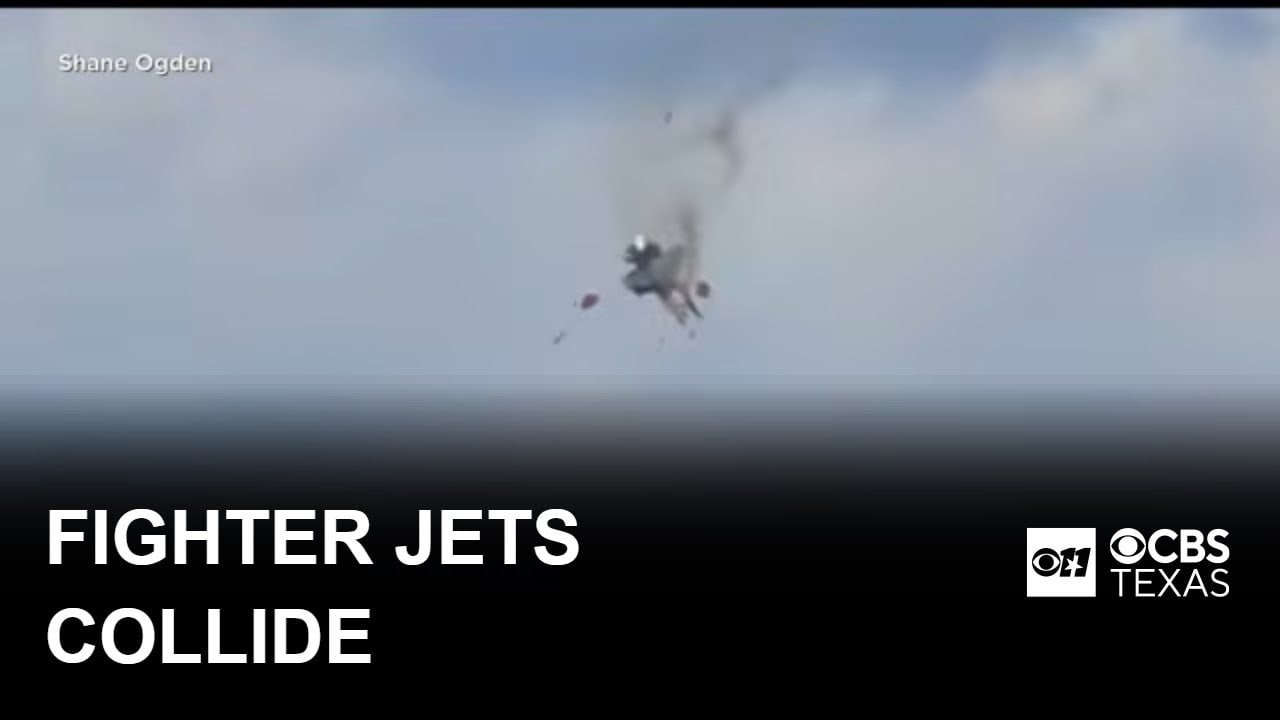
That was three summers ago. I thought about it again last month when I read about Mountain Home Air Force Base in Idaho, and the third fatal crash in twenty-three years at the same installation, and the Pentagon’s effective position that the airshow will continue because airshows are good for recruitment and community relations and the operational calculus does not currently support suspension. Three crashes. One site. Two decades. The show goes on.
I want to be careful here, because I know how this kind of commentary can slide into something facile, and the people who died at these events and the families they left behind deserve better than to be used as props in an argument about institution. But the Idaho situation sits with me in a way I find difficult to put down, partly because of what happened at Shoreham in 2015, and partly because of what happened after.
Shoreham killed eleven people on a Saturday afternoon on the A27. It was not on the airfield. It was on the dual carriageway beside it, which is the detail that changed everything, because suddenly the conversation was not about consenting spectators accepting risk at an event they had chosen to attend. It was about people in cars who had no idea what was happening above them. After that, the CAA rewrote the rulebook for display flying in the United Kingdom in ways that changed the character of British airshows permanently. Some of those changes were overdue. Some of them were reactive rather than considered, and a few good display acts were lost not because they were genuinely dangerous but because the new framework had no tolerance for nuance in the immediate aftermath of a national tragedy.
I have complicated feelings about what followed Shoreham. I have watched events shrink, displays disappear, and organisers cite airspace restrictions for decisions that were really about the cost of compliance, the difficulty of getting waivers approved, or the simple exhaustion of running a small show under a regulatory regime designed for Fairford. The grass-strip events I love most, the ones where you can smell the avgas before the first aircraft taxis and where the crowd is mostly people who genuinely know what they are looking at, have felt the pressure harder than the big shows. That is a real loss, and it has not been honestly discussed in public by the people making the decisions.
But I also remember walking along the Shoreham flightline two years before the crash, when the show still felt like a proper summer event, and thinking that the altitude on some of those manoeuvres looked low. I thought it and said nothing because it is not the done thing to say it, because enthusiasm has a social code that discourages doubt, and because I told myself I was not qualified to judge. That quiet self-censorship costs me something every time I remember it.
The American military relationship with its airshows is a different thing from ours, and I am not going to pretend otherwise. The scale is different, the culture is different, and the institutional inertia of the Pentagon is not comparable to anything the CAA manages. But three crashes at the same installation over two decades is not a statistical anomaly requiring no response. It is a pattern. Patterns require institutional honesty, not press releases about the operational importance of community engagement.
What I find genuinely uncomfortable is the framing that always emerges after these events, on both sides of the Atlantic, which positions any scrutiny of the decision to continue as disrespectful to the crews involved or naively ignorant of military necessity. That framing does a lot of work for the people who benefit from it. It shuts down legitimate questions by associating them with disloyalty or ignorance.
The people I know on the British airshow circuit, the serious ones, the ones who have been coming since before the Vulcan stopped flying and who will drive three hours for twenty minutes of a decent propeller display, do not want airshows to stop. Neither do I. But they are also the first to say, privately, that not every show should continue in its current form, and that the willingness to ask that question honestly is the difference between an event culture that deserves to survive and one that is simply deferring an argument it is afraid to have.
Three crashes in twenty-three years at the same location is an argument that has already arrived. The question is whether anyone with the authority to respond to it is actually prepared to.

Alex Bradley is a UK-based aviation writer and airshow circuit regular who has spent years attending displays from RIAT at Fairford and the Biggin Hill Festival of Flight to small fly-ins that drew two hundred people and a hot dog van, and values both for entirely different reasons.
He is not a pilot. He is not a PR man for the aviation industry. He is the person in the crowd who has been coming long enough to notice when something has quietly changed, when an organiser is papering over a problem, and when a display is genuinely worth the drive.
His writing on Redhill Airshow covers the British airshow circuit, safety, display team politics, CAA regulations, and the quiet contraction of grass airfield culture that nobody in the industry wants to discuss plainly.
He has stood at Redhill Aerodrome in every kind of English summer weather, watched Tiger Moths bank low over Surrey farmland, and carries strong opinions about what this country is slowly losing one cancelled event at a time.