
The programme for the Sail 250 Baltimore event was thicker than some aviation magazines I subscribe to. I was looking at it in a hotel room in Maryland in the kind of early morning light that makes everything feel provisional, having driven down from a contact’s place in Pennsylvania the evening before specifically because someone whose judgement I trust had told me that what was happening along the American eastern seaboard this summer was worth paying attention to. Not just attending. Paying attention to. That is a different thing, and the distinction matters if you are trying to understand what British airshow culture is failing to do with an urgency that is becoming difficult to explain away.
The Spirit of St. Louis Airshow had been the previous weekend. I had stood on the flight line at St. Louis Downtown Airport in heat that was doing something specific and unpleasant to the asphalt and watched an aerobatic sequence that would have constituted the headline act at any British event I can name, delivered as essentially the warm-up. The crowd around me was large, genuinely mixed in age and background, and doing something that British airshow crowds have largely stopped doing, which is treating the event as a destination rather than a pleasant way to spend an afternoon that happened to have some aircraft in it. People had travelled. People had booked accommodation. People were wearing shirts that indicated previous attendance at this specific event, not aviation generally. That last detail is small and it is also everything.
Here is what changed my thinking, and it happened not in the air but on the ground, in a conversation I was not supposed to be overhearing between two people from the event’s sponsorship operation. What I gathered, standing slightly too close to a temporary structure near the hospitality area while pretending to read the programme, was that the local tourism board had contributed at a level that would be described in British terms as extraordinary, not because they love aircraft, but because the economic modelling on a well-run airshow with genuine national profile had convinced them that three days of display flying produced hotel nights, restaurant covers, fuel station revenue, and retail footfall in numbers that justified the investment with room to spare. They were not sponsoring an aviation event. They were buying a tourism engine that happened to involve aerobatics.
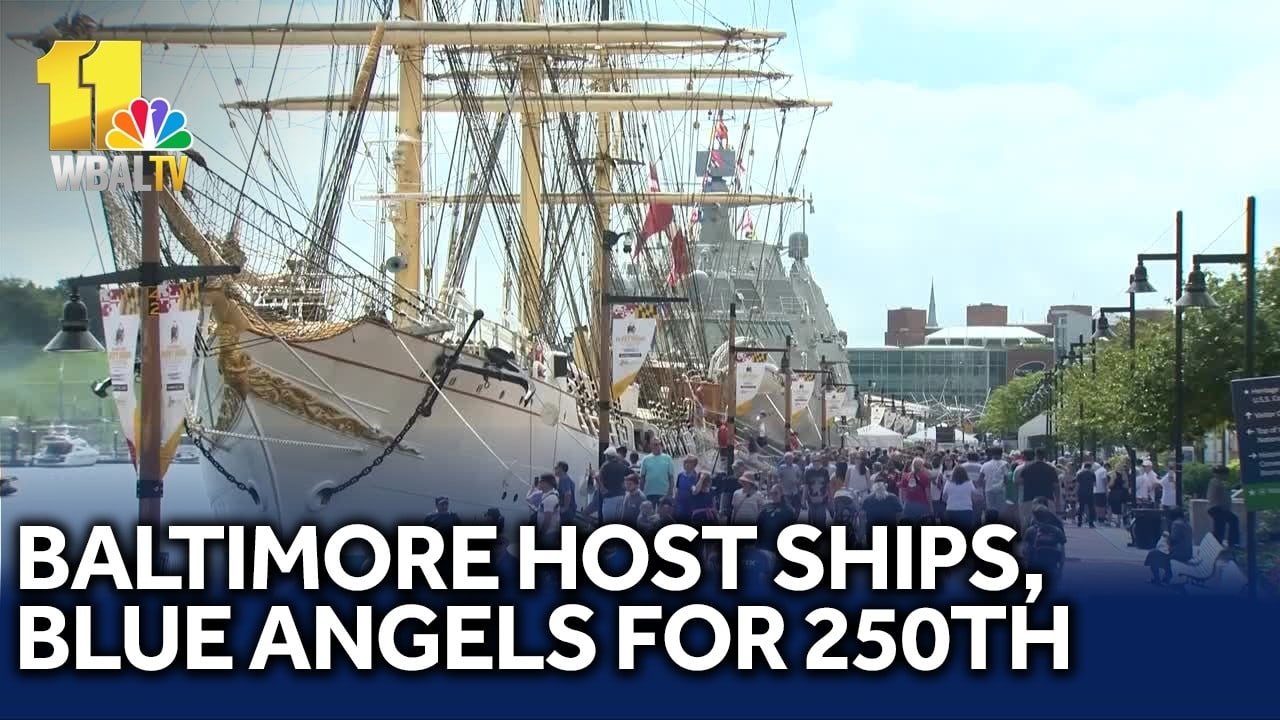
I thought about that quite a bit during the Sail 250 flying display, which was integrated into a maritime festival in a way that I initially found slightly odd and then found genuinely clever. The aircraft were a draw. The ships were a draw. The cumulative effect of both in the same harbour weekend was a draw of an order that neither would have produced independently. Someone with authority had decided that aviation and spectacle and place and occasion could be assembled into something with commercial and civic weight, and then they had done it, and it had worked, and the evidence was visible in the faces of the crowd in the way that evidence usually is when something has been done correctly.
The smell of avgas does not change between continents. I want to say that clearly because sometimes when I write about American events there is an implication that I am simply dazzled by scale and by the American habit of doing things at a volume that makes British equivalents feel like they are apologising for existing. That is not the argument. I came home from Baltimore and two days later I was back at Redhill, sitting in the plastic chairs with the grass strip in front of me and a cup of tea that had gone slightly cold, and I watched a de Havilland Chipmunk do circuits in the particular flat English afternoon light that arrives around four o’clock in July, and I did not wish I was somewhere else. The intimacy of a grass airfield, the way you can walk to within speaking distance of the aircraft, the garden party quality of a good British fly-in, is genuinely irreplaceable and I would not trade it for a larger crowd.
What I would trade is the British tendency to treat that intimacy as a reason not to think bigger in other respects. The thing that American airshow culture has understood and that British aviation events have largely refused to engage with is that the aircraft are not the whole product. The aircraft are the centre of something that can include tourism infrastructure, civic identity, commercial sponsorship, and genuine cross-sector partnership, and when you build that surrounding structure properly, you produce an event that the local economy will defend and fund, which means it continues to exist, which means the aircraft keep flying and the crowds keep coming and the culture does not quietly contract.
I sat in that Redhill afternoon light and thought about an event I had attended in the North of England two years ago, a small show at a regional aerodrome with a genuinely interesting programme that folded halfway through its second year because the local authority withdrew a grant it had never been particularly committed to. Two hundred people standing in a field at three in the afternoon being told over a tannoy that the remaining displays had been cancelled. The aircraft that had been promised on the programme, gone. The explanation given, airspace. The actual reason, money. The difference between that afternoon and what I had seen in Baltimore was not aircraft quality or pilot skill. It was whether anyone with any power had decided the event was worth keeping alive.
Nobody in British public life has made that decision in any systematic way for quite some time now, and the circuit is shorter than it was, and that is not a coincidence.

Alex Bradley is a UK-based aviation writer and airshow circuit regular who has spent years attending displays from RIAT at Fairford and the Biggin Hill Festival of Flight to small fly-ins that drew two hundred people and a hot dog van, and values both for entirely different reasons.
He is not a pilot. He is not a PR man for the aviation industry. He is the person in the crowd who has been coming long enough to notice when something has quietly changed, when an organiser is papering over a problem, and when a display is genuinely worth the drive.
His writing on Redhill Airshow covers the British airshow circuit, safety, display team politics, CAA regulations, and the quiet contraction of grass airfield culture that nobody in the industry wants to discuss plainly.
He has stood at Redhill Aerodrome in every kind of English summer weather, watched Tiger Moths bank low over Surrey farmland, and carries strong opinions about what this country is slowly losing one cancelled event at a time.