
The Future of Military Aviation, Subject to Diplomatic Conditions
I spoke to a defence journalist at Biggin Hill a few summers back, someone who covers the trade side of these events rather than the display flying, and she said something that has stayed with me. She said the most revealing thing about any major airshow is not what is on the static line. It is who is in the hospitality tents talking to whom, and more specifically, who has been very carefully seated on opposite sides of the room from each other. She said Singapore was the most interesting room she had ever had to navigate. She did not say it with admiration exactly. She said it the way you describe a situation that is impressive and exhausting in equal measure.
That conversation came back to me when I read that Singapore Airshow 2028 is already positioning itself as the defining showcase for the next generation of military aviation technology, and that the United States government has, depending on which briefing document you choose to credit, concerns. Not objections on the record. Concerns, expressed through channels, about the nature of the audience that a show like Singapore assembles and the conversations that take place within it.
Let me say plainly what those concerns are, because the diplomatic language around them tends to obscure rather than illuminate. Singapore occupies a position in Southeast Asian geopolitics that is genuinely without parallel. It maintains substantive defence relationships with the United States, with European NATO members, and with China simultaneously, and it does so not through naivety or confusion but through deliberate, sophisticated statecraft that has served the city-state extremely well for decades. The Singapore Airshow is, in part, an expression of that statecraft. It is where the F-35 and the J-20 can theoretically share a postcode for a week, where American primes and Chinese state enterprises can both pay for exhibition space and neither can easily object to the other’s presence because the host has structured the event to make both welcome.
That arrangement worked reasonably well in a world where the US-China defence technology competition, while serious, had not yet hardened into something close to open decoupling. It is considerably more complicated now. The American concern, as I understand it from reading between the lines of what is being said publicly and what is being said in the corridors at events like Farnborough, is not that Singapore is doing anything wrong. It is that the show’s fundamental character, its carefully maintained neutrality, its pride in being a room where everyone sits down together, has become a liability in a moment when Washington would prefer the room to have sides.
I find this genuinely difficult, and I say that as someone who has watched the British airshow circuit spend a decade dealing with its own smaller version of the same problem. After Farnborough 2022, which was the first major Western trade show after the Russian invasion of Ukraine, you could see the seating arrangements in the tents had changed. Nothing dramatic. Nothing that made it into the press coverage. But certain conversations were no longer happening, certain relationships had been placed on hold indefinitely, and the show’s instinct to present itself as a place where the industry gathered regardless of political weather had been quietly set aside without anyone formally announcing it. The room had sides now, whether the organisers wanted it to or not.
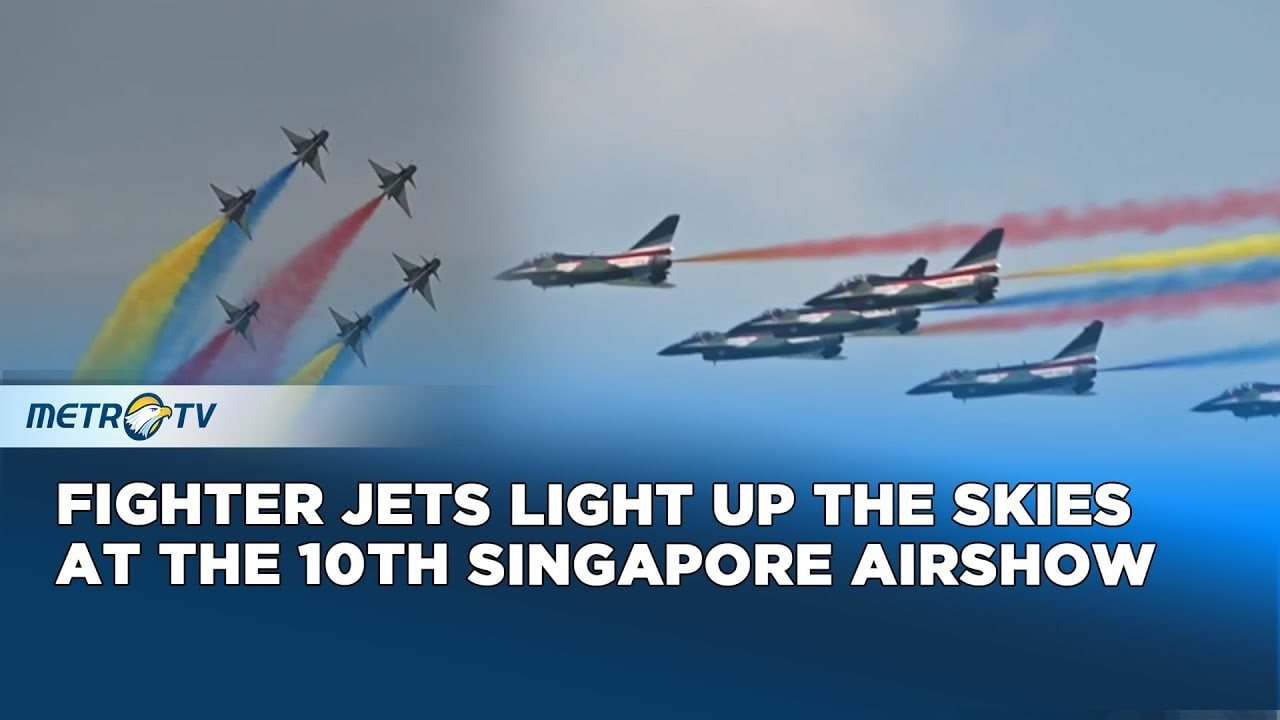
Singapore is facing a version of this that is orders of magnitude more complex, because the relationship it is being asked to compromise is not with a country that has just invaded a neighbour. It is with its largest trading partner and one of the primary strategic realities of its region. The show cannot simply stop being neutral. Neutrality is the product.
What surprised me, reading the coverage of Singapore’s 2028 preparations, was how confidently the organisers are projecting that the show will proceed in something like its current form, with its current mix of exhibitors, its current diplomatic balancing act, its current pitch that this is where military aviation futures are decided. I do not doubt their optimism. I doubt its foundations. The geopolitical architecture that made Singapore Airshow’s particular kind of show possible was constructed in a different era, and it is being dismantled around the event without any of the parties doing the dismantling having to take formal responsibility for what they are doing.
The same thing has happened to smaller shows in this country for years, and the mechanism is familiar. The conditions that made an event possible change gradually and then suddenly, and the organisers are the last people to say so publicly because saying so publicly accelerates the very outcome they are trying to prevent. So the programme is announced, the marketing goes out, the hospitality tents are booked, and the question of whether the fundamental architecture still holds is deferred until it absolutely cannot be deferred any longer.
I do not know what Singapore Airshow 2028 will look like. I know it will not look like 2024, because nothing in this circuit looks the same as it did four years ago. What I am fairly sure of is that the gap between what it is being sold as and what it will actually be is going to be wider than the brochure suggests. It usually is.

Alex Bradley is a UK-based aviation writer and airshow circuit regular who has spent years attending displays from RIAT at Fairford and the Biggin Hill Festival of Flight to small fly-ins that drew two hundred people and a hot dog van, and values both for entirely different reasons.
He is not a pilot. He is not a PR man for the aviation industry. He is the person in the crowd who has been coming long enough to notice when something has quietly changed, when an organiser is papering over a problem, and when a display is genuinely worth the drive.
His writing on Redhill Airshow covers the British airshow circuit, safety, display team politics, CAA regulations, and the quiet contraction of grass airfield culture that nobody in the industry wants to discuss plainly.
He has stood at Redhill Aerodrome in every kind of English summer weather, watched Tiger Moths bank low over Surrey farmland, and carries strong opinions about what this country is slowly losing one cancelled event at a time.