
The livery was what stopped me. Not the flying, which was genuinely and frustratingly good, but the colour scheme, and specifically the logo that occupied most of what would have been, under different commercial arrangements, a clean fuselage.
I was at a large American show, the kind that fills a military base for a weekend and runs a PA system specified by someone who regards restraint as a character flaw. The morning had that quality of heat that builds by nine o’clock in an American summer, and the avgas smell from the flight line had been drifting across the crowd area on a light wind since before the gates opened, which is a smell I associate, wherever I encounter it, with something being about to happen. The aerobatics team came through in a sequence I would be lying to describe as anything other than extraordinary. The precision was real. The sound, when the formation came close, was the kind that removes you temporarily from whatever you were thinking about and replaces it with something more immediate. The skill required to fly that formation at that altitude was beyond reasonable question.
The PenFed Credit Union logo, stretched across the fuselages in the manner of a retail park hoarding, was also real.
I had read about the sponsorship before I arrived. Pentagon Federal Credit Union, a member-owned financial cooperative with a long history of serving American military personnel and their families, had become a principal backer of what was being described, in every piece of promotional material I could find, as the most daring aerial acrobatics team in the United States. The connection, if you work at it, has a certain internal logic: military-adjacent institution supports military-adjacent display. The marketing department’s Venn diagram presumably made sense to everyone in the room when it was drawn.
What the diagram did not account for, or perhaps did not care to, was what the arrangement looks like from the crowd line.
I have been watching aircraft display long enough to have a calibrated response to corporate sponsorship. It is everywhere now, including at events I would not have expected to find it a decade ago. British display teams carry commercial liveries. Events that used to run on gate receipts and volunteer enthusiasm now have naming rights attached. I understand why. The economics of keeping historic aircraft in the air, of maintaining a display authorisation and an engineering team and a full programme of appearances, do not resolve themselves through goodwill alone. I have had the conversation often enough with organisers who are frank about it, usually in somewhere like the Redhill clubhouse cafe, where the plastic chairs face the grass strip and there is no particular reason to perform anything.
But the PenFed arrangement is something slightly different, and it took me a while after that show to articulate why.
A credit union is not a car manufacturer or a fuel company or an aviation services business. It is a financial product aimed at a specific consumer demographic. When a credit union sponsors an aerobatics team, the team’s audience has been identified not as people who enjoy a summer airshow, not as families who drove two hours for the day, but as potential account holders. The crowd has been monetised before anyone has taken off.
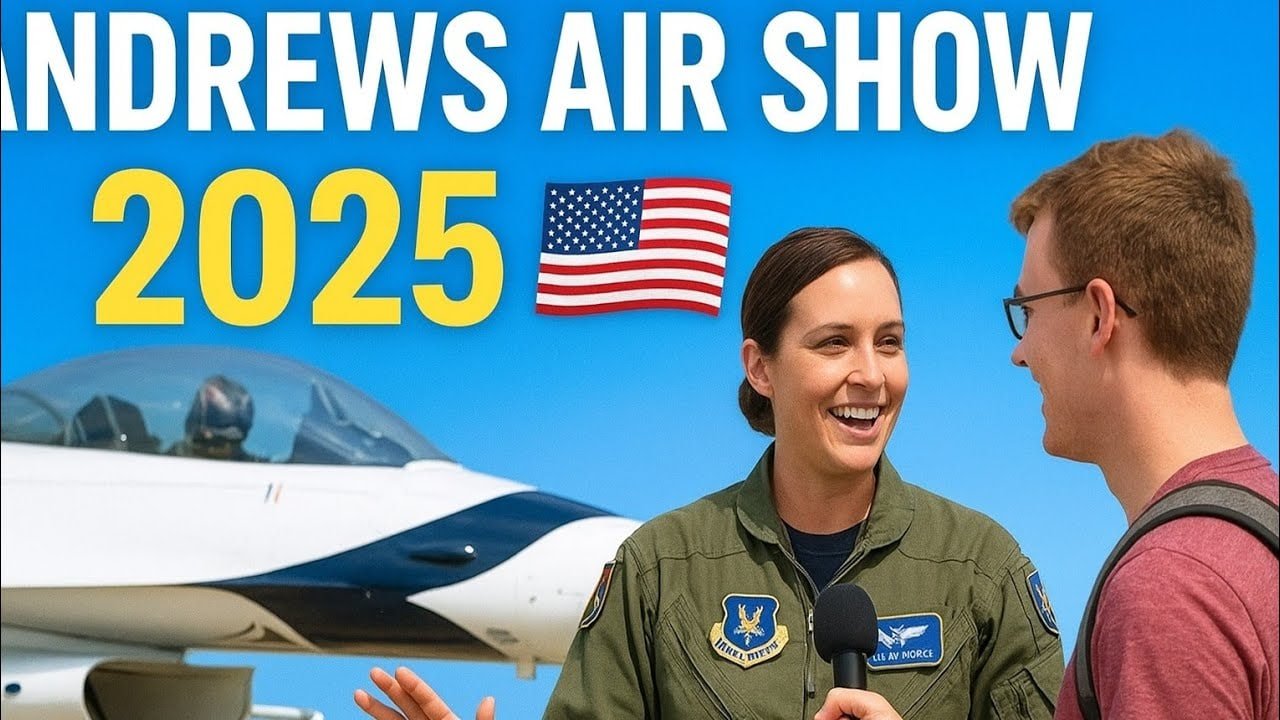
This is the thing the press releases about the partnership, of which there were several and all of them were warm, did not address. The language was about shared values and community and the celebration of excellence, which is the language corporate communications reaches for when it does not want to say anything true. The true thing is simpler: PenFed’s marketing team identified that airshow audiences skew towards the military community and their families, calculated that this demographic overlaps with their target customer base, and funded a sponsorship accordingly. The aerobatics are incidental to that calculation, which is not to say they are unimportant, only that they are the means rather than the point.
What shifted my thinking was not the display but a conversation afterwards with a man from Iowa who had driven four hours with his two sons specifically to see this team. He knew the aircraft by their call signs. He knew the pilots by name. He had been coming to this show for years. He mentioned the PenFed branding with the slightly flat tone of someone who has decided to stop minding about something because minding about it forever is not a viable position.
That tone is familiar to me. I have heard it from British enthusiasts at events where a sponsor’s requirements have quietly reshaped something that used to be simple, and I have felt something close to it myself when a display I drove three hours for was reorganised around what a corporate partner needed from the day rather than what the programme had promised.
I am not arguing against sponsorship. Teams need money, money has conditions, and that is how things work. What I am arguing is that the conditions should be visible, because audiences are not naive, and proceeding as though they are is its own form of disrespect.
The flying was extraordinary. I meant that. It deserved better than a credit union’s marketing strategy, which is not a criticism of credit unions but of the assumption that extraordinary things can be sponsored without being changed by the sponsorship.
They cannot.

Alex Bradley is a UK-based aviation writer and airshow circuit regular who has spent years attending displays from RIAT at Fairford and the Biggin Hill Festival of Flight to small fly-ins that drew two hundred people and a hot dog van, and values both for entirely different reasons.
He is not a pilot. He is not a PR man for the aviation industry. He is the person in the crowd who has been coming long enough to notice when something has quietly changed, when an organiser is papering over a problem, and when a display is genuinely worth the drive.
His writing on Redhill Airshow covers the British airshow circuit, safety, display team politics, CAA regulations, and the quiet contraction of grass airfield culture that nobody in the industry wants to discuss plainly.
He has stood at Redhill Aerodrome in every kind of English summer weather, watched Tiger Moths bank low over Surrey farmland, and carries strong opinions about what this country is slowly losing one cancelled event at a time.