
It was the Tuesday after Shoreham. I remember standing in the car park at Redhill, just watching a Cherokee do circuits in the afternoon quiet, and thinking that the sky looked exactly the same as it always had. No different light. No different sound. Just a small aircraft going round in its patient oval, the way aircraft had been doing over this particular piece of Surrey for the better part of a century. Somewhere in an office in Gatwick South or Aviation House in Kingsway, a series of urgent meetings were happening. Memos were circulating. Language was being chosen very carefully. A stand-down was coming. I already knew it would not do what everyone needed it to do.
I want to be clear about what a stand-down actually is, because the phrase carries a gravity it has not always earned. When an Air Boss issues a nationwide safety review and grounds or curtails display flying pending assessment, it sounds decisive. It sounds like an answer. It draws a clean line between what happened before and what will happen next. The industry needs that line. The public needs it. The families of anyone killed or injured need it most of all. I understand every single reason why the stand-down gets announced and I am not arguing it should not be. What I am saying is that the stand-down and the underlying problem are not the same conversation, and we have consistently confused them for thirty years.
The smell of avgas on a warm morning at Redhill still does something to me that I cannot quite explain to anyone who has not been coming to airfields since childhood. It is not nostalgia exactly. It is more like orientation, the feeling of being in the right place. I mention this because I want to be honest about where I am coming from when I say what I am about to say. I love this world unreservedly. That is precisely why I am unwilling to watch it manage its own problems so poorly.
Display flying is dangerous. It is structurally dangerous. It attracts a certain kind of pilot, selects for a certain temperament, and then places that pilot in an environment where the incentive structure points consistently towards the edge of the envelope rather than away from it. The crowd wants spectacle. The organiser needs spectacle to justify the ticket price or the sponsorship. The pilot knows what is expected and has usually spent years building towards this moment. The CAA’s display authorisation system is genuinely rigorous in many respects. None of that changes what happens at the intersection of an audience of forty thousand people, a very fast aircraft, and a pilot who has decided that today is the day he finds out where the limit actually is.
I was at Biggin Hill the year a display was cancelled midway through the afternoon programme and the explanation given over the PA involved airspace and a transiting civilian flight that had, apparently, caused a scheduling problem. I happened to be standing near enough to the flight line to hear a different version of events from someone who should not have been speaking as freely as he was. The display pilot had briefed a manoeuvre sequence that his assigned display area simply could not safely accommodate, and the decision to stop was correct, and the decision to lie about why was also apparently considered correct by whoever held the microphone. That is the thing I keep coming back to. Not the near-miss, which was handled well. The lie, which was handled as routine.
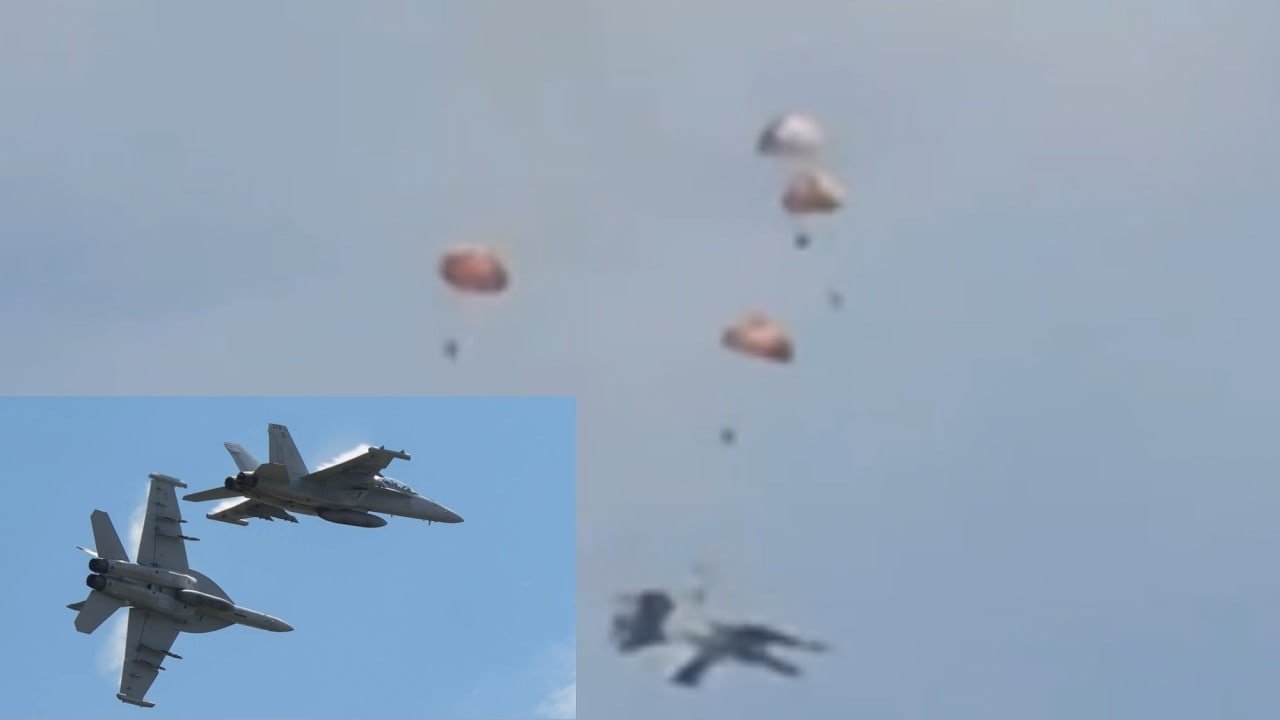
Stand-downs produce paperwork. They produce revised minima, updated crew resource management requirements, additional display authorisation checks, refreshed risk assessment frameworks. Some of those things have genuine value. None of them address the fundamental difficulty, which is that the culture of display flying in Britain, the one that developed on grass strips like this one and at Battle of Britain memorial flights and at a thousand summer Saturdays across six decades, does not naturally produce men and women who are inclined towards caution at the precise moment caution is required. It produces people who are very, very good at flying, and who have learned that the gap between a good display and a transcendent one is usually found by moving a little closer to something.
I watched a Spitfire at Redhill once from a position I should probably not have been standing in, close enough that when it banked away I could see the individual rivets along the wing root and the fabric patches on the control surfaces and what I can only describe as the fundamental improbability of the thing, that a machine designed in 1936 and built to kill was still here, still flying, still making the noise that turns grown adults into something simpler and quieter. That afternoon I stood in the avgas-warm air and felt the grass go slightly soft underfoot from the morning’s rain and I did not think about safety protocols at all. That is honest. I did not think about them once.
Which is exactly what everyone in that crowd was also not thinking about. That is the actual problem. And no stand-down has ever fixed it, because the stand-down is addressed to the wrong people.
The pilots who cause disasters are not the ones reading the updated guidance notes. They already know the guidance notes. They have known them for years, and they got into that cockpit anyway.

Alex Bradley is a UK-based aviation writer and airshow circuit regular who has spent years attending displays from RIAT at Fairford and the Biggin Hill Festival of Flight to small fly-ins that drew two hundred people and a hot dog van, and values both for entirely different reasons.
He is not a pilot. He is not a PR man for the aviation industry. He is the person in the crowd who has been coming long enough to notice when something has quietly changed, when an organiser is papering over a problem, and when a display is genuinely worth the drive.
His writing on Redhill Airshow covers the British airshow circuit, safety, display team politics, CAA regulations, and the quiet contraction of grass airfield culture that nobody in the industry wants to discuss plainly.
He has stood at Redhill Aerodrome in every kind of English summer weather, watched Tiger Moths bank low over Surrey farmland, and carries strong opinions about what this country is slowly losing one cancelled event at a time.