
There is a particular kind of silence that falls in a crowd when a display goes wrong. Not the silence of shock, exactly. Something more considered than that. I was at an event on the south coast several years ago when a solo jet sequence was cut short mid-display, the aircraft climbing away to the east without completing the manoeuvre it had set up for, and the commentator filled the gap with some professional smoothness about a precautionary procedure, and the crowd around me went quiet in a way that meant everyone had noticed and nobody was quite sure what they had just seen. It lasted perhaps four seconds. Then the applause started anyway, because that is what crowds do, and the moment sealed over.
I thought about that afternoon when I read the interview with the former Blue Angels pilot. His name has been in circulation for a few weeks now among the people who follow these things, and the reason is straightforward: he left the team, waited what he apparently considered a sufficient interval, and then gave a detailed account of what the experience had actually involved. Not the choreography. Not the distances and the sight lines and the physics of it, though he covers those too. What he talked about most was the culture. The management of information. The gap between the version of the Blue Angels that the crowd receives and the version that exists inside the team.
He is not the first person to have said something of this kind. There is a small body of testimony from former military display team members, mostly American, occasionally British, that has accumulated quietly over the years in places that do not receive much mainstream attention. What makes this particular account different, and what I think explains why it has travelled further than most, is the specificity. He is not speaking in generalities about pressure or expectations. He is describing particular decisions, particular moments when information was managed in particular ways, and the effect of that management on the people inside the team and on the public understanding of what was happening above them.
I want to be careful here, because I think there is a version of this story that tips into something I am not interested in, which is a straightforward demythologising exercise dressed up as public interest journalism. The Blue Angels are extraordinary. I have seen them perform twice, once at an American event I attended for reasons unconnected to the airshow and once in footage that does not do them justice but does at least convey the basic fact of what they achieve. The formations are not a trick of camera angle. The proximity is real. The skill required to maintain those separations at those speeds is of a category that resists casual description. None of what this pilot is saying changes that.
What it does is ask a question that I think the display community, British as much as American, is not very good at asking. Which is: what do we owe the crowd in terms of honest information about what they are watching?
I have been going to airshows long enough to have developed a reasonably calibrated sense of when a commentator is telling me something true and when they are performing reassurance. The distinction matters. When a display sequence is modified or cancelled and the explanation given is airspace or weather, sometimes that is simply accurate. And sometimes it is the available language for something else entirely, whether that is a technical issue, a team disagreement, a decision made for reasons that the organisers have judged the crowd does not need to know. I do not think this is always cynical. I think it is often protective. But protection and honesty are not the same thing, and crowds are not as undiscriminating as event organisers sometimes appear to believe.
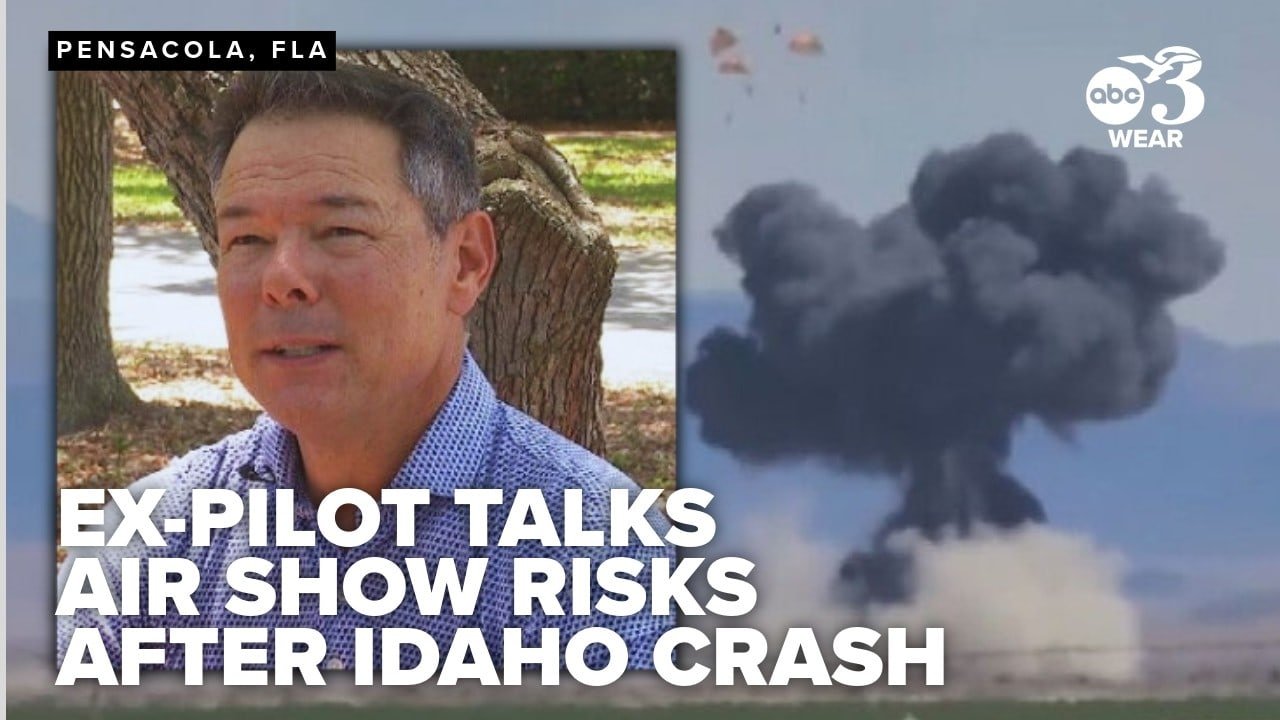
What the Pensacola pilot is describing, at its core, is an organisation that became very skilled at managing its own narrative and less skilled, over time, at examining whether the narrative was accurate. That is not unique to the Blue Angels. It is not unique to military display teams. It is a feature of any institution that operates under intense public scrutiny and has learned that controlling the story is easier than engaging with its complications.
The uncomfortable thing, which I will say plainly, is that the civilian airshow circuit in Britain has its own version of this. Smaller in scale, different in character, but recognisable. The tendency to cite regulatory constraint rather than acknowledge commercial failure. The habit of framing every incident as a system working correctly rather than examining what the incident reveals about the system. The assumption that the people watching are there for the spectacle and do not require, or want, the more complicated account.
I was at Redhill last summer on a quiet afternoon, nothing scheduled, just a few aircraft moving in and out of the circuit. A Cherokee on a long final, a taildragger doing something neat on the crosswind leg. A CFI standing near the cafe watching the circuit with the expression of someone grading an exam paper. He said something about one of the approaches that I did not fully follow technically but understood in tone. It was direct. It was honest. It was the kind of thing you only say when you are not performing for anyone.
That register, the one that does not perform, is what I keep returning to when I think about what this former Blue Angels pilot is actually offering.
Whether people in the institutions he is describing are listening to it is a different question entirely.

Alex Bradley is a UK-based aviation writer and airshow circuit regular who has spent years attending displays from RIAT at Fairford and the Biggin Hill Festival of Flight to small fly-ins that drew two hundred people and a hot dog van, and values both for entirely different reasons.
He is not a pilot. He is not a PR man for the aviation industry. He is the person in the crowd who has been coming long enough to notice when something has quietly changed, when an organiser is papering over a problem, and when a display is genuinely worth the drive.
His writing on Redhill Airshow covers the British airshow circuit, safety, display team politics, CAA regulations, and the quiet contraction of grass airfield culture that nobody in the industry wants to discuss plainly.
He has stood at Redhill Aerodrome in every kind of English summer weather, watched Tiger Moths bank low over Surrey farmland, and carries strong opinions about what this country is slowly losing one cancelled event at a time.