
The year RIAT was cancelled for COVID, I drove to Fairford anyway. Not to the airfield. Just to the town. I am not entirely sure why. Some combination of habit and the inability to spend a July weekend doing something sensible, probably. I parked near the market square and walked around for an hour, and the thing that struck me was not how quiet it was, though it was very quiet, but how many small signs of preparation were still visible. A pub had a handwritten board in the window advertising a special menu that was no longer being served to the crowds that were no longer coming. A B&B had a full car park, which took me a moment to understand, before I realised they had probably already taken deposits and had nowhere to redirect the bookings. A camping field on the edge of town had its entrance marked with orange cones and a padlocked chain, and the grass inside was neatly mown, ready for tents that were never pitched.
The economic architecture of a major airshow is not something that appears in the programme notes. It is not something the organisers discuss publicly, because the moment you start explaining how much a surrounding community depends on a single annual event, you have also started explaining how catastrophic the failure of that event would be, which is not a conversation the sponsors want to be having in the programme notes.
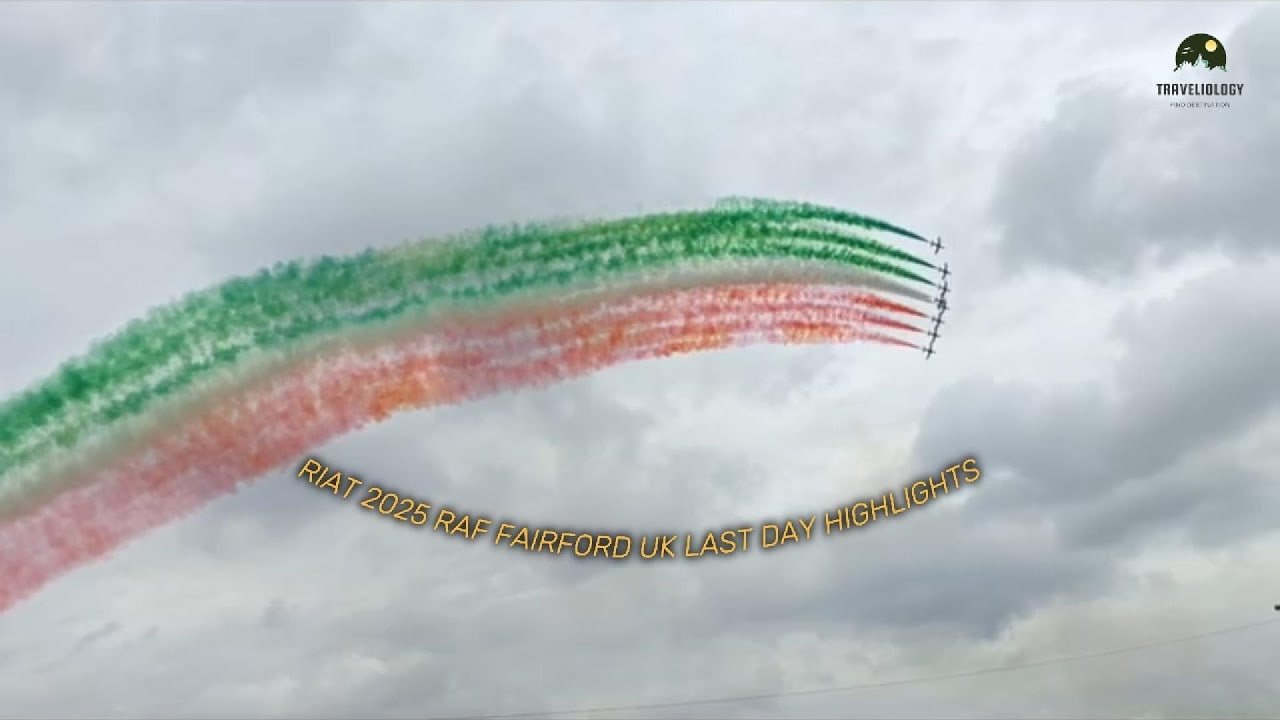
RIAT is the largest military airshow in the world by most reasonable measures. In a normal year the attendance runs to the mid-hundred-thousands across the weekend. Fairford is a small Gloucestershire town. The arithmetic is not complicated. Hotels within thirty miles fill months in advance. The pubs and restaurants in a radius of fifteen miles run on staffing levels they maintain specifically around the event. Local transport, local trades, local catering suppliers, all of them have built RIAT into their annual planning in the same way that any business builds a reliable large-scale contract into its projections.
Which means that when it does not happen, they absorb the loss in a way that does not appear in any official impact assessment.
I am thinking about this now because of what has been happening on the American airshow circuit, where a combination of budget pressures, base closure considerations, and the kind of institutional cost-benefit analysis that treats community economic impact as an externality rather than a core calculation has been quietly removing shows from the calendar. Not dramatically. Just steadily. An airshow that has been running for twenty years at a military installation announces, usually in late autumn when nobody is paying attention, that it will not be returning the following season. The official reason is almost always operational requirements or budget reallocation. The actual reasons, when you speak to people close to the decision, tend to be more complicated and considerably less presentable.
What the American situation maps onto the RIAT model is the question of what happens to a community when the event that structures its summer economy is removed with less than a year’s notice and with no serious plan for what replaces it. The answer, which I have watched play out in miniature at smaller British events that folded quietly over the past decade, is that the damage is disproportionate to the size of the event. Small businesses that extended themselves on the basis of a contracted relationship, formal or otherwise, with the show and its audience do not recover cleanly. They absorb the loss quietly, reduce their exposure next year, and the year after that they simply do not staff up for an event they have stopped believing will materialise. The cautious calculation that follows a cancellation is, in the long run, more damaging than the cancellation itself.
I raised this once, indirectly, with someone who had been involved in the planning of a now-defunct British airshow. He said something I have not forgotten, which was that the organisers had always known the event was economically important to the local area but had never felt it was their responsibility to quantify it, because if they quantified it they would have to carry it. That is, in its way, a perfectly honest description of how most large events are actually managed. The community benefit is cited when it is convenient and treated as someone else’s problem when it becomes inconvenient.
The avgas smell on a warm July morning at Fairford carries further than you would expect. You can catch it in the camping fields before you have even cleared the access road, this particular sweet-sharp combination of fuel and cut grass and aircraft that have been running since early morning, and it is one of the most reliably transporting sensory experiences I know. It means the show is happening. Everything has worked. The aircraft are here, the crowd is here, and the small Gloucestershire town behind you is doing its best August in either direction from that weekend.
The towns that have lost their equivalent of that morning do not get a formal announcement. They just notice, eventually, that the thing they had structured themselves around is no longer coming back.
American military communities are learning that lesson now. Britain learned it quietly, at a series of events that closed without ceremony, and never quite had the honest conversation about why.

Alex Bradley is a UK-based aviation writer and airshow circuit regular who has spent years attending displays from RIAT at Fairford and the Biggin Hill Festival of Flight to small fly-ins that drew two hundred people and a hot dog van, and values both for entirely different reasons.
He is not a pilot. He is not a PR man for the aviation industry. He is the person in the crowd who has been coming long enough to notice when something has quietly changed, when an organiser is papering over a problem, and when a display is genuinely worth the drive.
His writing on Redhill Airshow covers the British airshow circuit, safety, display team politics, CAA regulations, and the quiet contraction of grass airfield culture that nobody in the industry wants to discuss plainly.
He has stood at Redhill Aerodrome in every kind of English summer weather, watched Tiger Moths bank low over Surrey farmland, and carries strong opinions about what this country is slowly losing one cancelled event at a time.