
I saw it for the first time on a phone screen, held by a man in a folding chair at a small fly-in somewhere in Oxfordshire. He was showing it to his companion, who was watching with the particular focused attention that people give to something they are not sure they should be watching. I walked past without stopping. I had seen enough of the thumbnail to know what I would see if I watched it, and I was not ready to watch it yet.
I watched it that evening, alone, at home, which is the correct way to watch footage of an airshow accident and also not an option available to the people who encountered it as it moved through social media at a velocity that no amount of platform flagging or editorial restraint was going to interrupt. By the time I watched it, something in the region of forty million people had already done the same.
The Idaho crash. You know which one. It became, without any particular effort from anyone, the most-watched piece of military aviation footage of the year, and the way it became that tells you something about where we are that no official statement from an airshow organiser or a base public affairs office is going to address directly.
I want to be careful here, because it is easy to adopt a comfortable moral position about viral footage that does not survive contact with honesty. The footage exists. People watched it. I watched it. The impulse to watch footage of something catastrophic is not a failure of character. It is a very old human response to extreme events, and it has been part of what draws people to airshows since the earliest days of display flying, when risk was understood by organiser and spectator alike to be inseparable from the spectacle. You cannot run events that depend on the thrill of powerful machines at low altitude and then express surprise that audiences have an appetite for footage of what happens when things go wrong.
But there is a difference between that old, honest transaction and what happened with the Idaho footage, and the difference lives in the word “military.”
The incident was categorised, by the platforms that distributed it and the audiences that shared it, not as an airshow accident but as military footage. This is not a small distinction. Military footage sits in a different part of the internet’s taxonomy: it attracts a different audience, it carries different emotional freight, it sits alongside deliberate military filming of strikes and operations, things that have been recorded specifically for their impact. An airshow accident, reframed as military footage, stops being about aviation and becomes something else: content for an audience that has calibrated its responses to extreme imagery in a particular direction, served by an algorithm that knows nothing about display seasons or CAA authorisations or the difference between a crash and a controlled emergency.
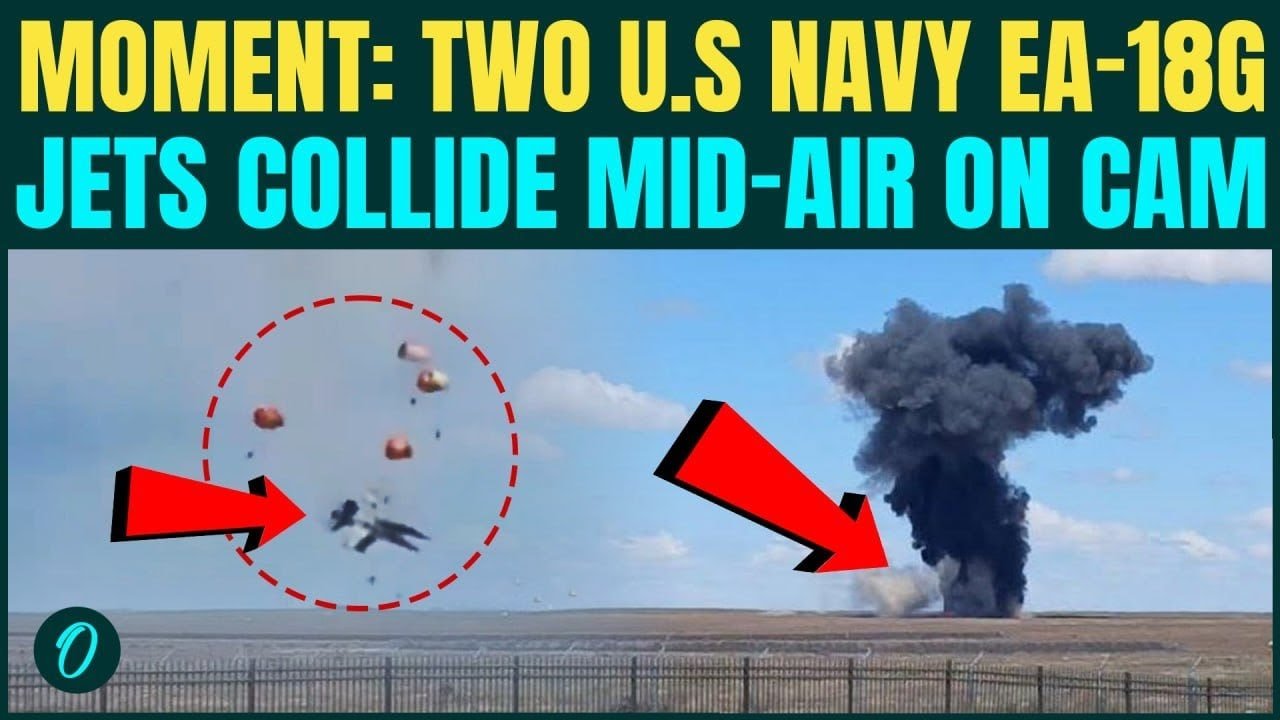
The people who were there, in Idaho, in the crowd, have a fundamentally different relationship to what happened than the forty million who watched it on a screen. I know this because I have been close enough to airshow incidents to understand the gap between experiencing an event and watching footage of an event. They are not the same thing, and the forty million people who watched the Idaho footage did not attend the Idaho airshow. They attended a two-minute clip, stripped of context, stripped of the smell of the morning and the sound of the PA and the feel of the ground, served to them by a system that classified it as military content and distributed it accordingly.
What I keep returning to is a morning at Redhill, some years ago, when a display went slightly wrong in a way that resolved without harm but that left everyone on the flight line silent for a moment that felt considerably longer than it was. Flat grey light, avgas smell, the sound of something that should not have happened almost happening. Nobody filmed it. People looked at each other, then looked back at the sky, then looked at each other again.
That experience belongs to the people who were there. It will never be forty million people’s content. And there is something in that difference that matters, though I struggle to state it precisely without sounding as though I am simply arguing that things were better before smartphones, which is not my argument.
My argument is this. The Idaho footage became what it became not because of anything the airshow industry did or failed to do on that specific day, but because of the category it was placed into by systems that make no distinction between a deliberate military strike video and footage of an accident at a public event involving spectators and families and a pilot who had a life outside the cockpit. The airshow community needs to think seriously about what it means to operate in an environment where the footage of its worst day will be classified as military content and served to audiences that consume military content, without permission, without context, and without condolences.
That is not a question a CAA working group is going to resolve. It is a much harder one, and the industry has not yet worked out that it needs to ask it.

Alex Bradley is a UK-based aviation writer and airshow circuit regular who has spent years attending displays from RIAT at Fairford and the Biggin Hill Festival of Flight to small fly-ins that drew two hundred people and a hot dog van, and values both for entirely different reasons.
He is not a pilot. He is not a PR man for the aviation industry. He is the person in the crowd who has been coming long enough to notice when something has quietly changed, when an organiser is papering over a problem, and when a display is genuinely worth the drive.
His writing on Redhill Airshow covers the British airshow circuit, safety, display team politics, CAA regulations, and the quiet contraction of grass airfield culture that nobody in the industry wants to discuss plainly.
He has stood at Redhill Aerodrome in every kind of English summer weather, watched Tiger Moths bank low over Surrey farmland, and carries strong opinions about what this country is slowly losing one cancelled event at a time.