
I was standing at Fairford in 2003 when a B-1B Lancer came through on a pass so low you could feel the pressure change in your chest before the sound arrived. The man next to me — retired RAF, he’d said, though I had no reason to verify it — turned and said nothing for a moment. Then: “That’s not a display. That’s a dare.” I didn’t fully understand what he meant at the time. I do now.
I’ve been thinking about that comment again recently, prompted by what’s been happening on the American airshow circuit. A pattern that anyone paying honest attention has been watching develop for years, and which the official language around it has been consistently, almost impressively, failing to describe accurately.
The United States military airshow display programme is enormous by any measure. Dozens of events annually, the Thunderbirds and Blue Angels accounting for the headline slots, with a supporting cast of heritage aircraft, tactical demonstrations, and the kind of low-level fast jet passes that justify the drive and the sunburn. It is, by the standards of the civilian display world I spend most of my time in, extraordinarily well-resourced. And it has a safety problem that nobody in a position of authority seems quite willing to name plainly.
The accidents have not been frequent enough to constitute a crisis in the statistical sense. But they have been frequent enough, and serious enough, to raise a question that the approval architecture appears structurally resistant to answering: who, exactly, is empowered to say no?
At Redhill on a damp Saturday last September, I watched a vintage Harvard conduct a display that was, by any reasonable measure, modest. Careful. The pilot knew the aircraft, knew the crowd line, knew the margins. Afterwards I spoke briefly with one of the marshals who’d been doing it for fifteen years, and he said something that stuck: “The ones that worry me aren’t the ones who push it. It’s the ones who feel like they can’t not push it.” He was talking about display culture in general. He could have been talking about the US military specifically.
What concerns me about the American system is not the aircraft or the pilots. Both are, by any technical standard, extraordinary. What concerns me is the institutional environment in which display approval decisions are made — one in which the pressure to perform, to deliver the spectacle that was promised, to not be the person or the committee that grounded a Blue Angel demonstration in front of forty thousand people, creates a kind of approval momentum that is very difficult to interrupt. Events are planned years in advance. Sponsors are committed. Local governments have staked civic pride on the afternoon. Cancellation carries costs that are not only financial. In that environment, the word “approved” can start to mean something closer to “nobody said stop” than “somebody genuinely assessed this and decided it was safe.”
I’ve seen a version of this on a much smaller scale in Britain. An organiser at a show I attended — I won’t say which — told me after the fact that a particular display had been cleared to go ahead despite conditions he wasn’t happy with, because pulling it would have meant refunding tickets and the insurance position was unclear. The display went fine. It very nearly didn’t. He seemed, telling me this three months later over a pint, like a man who had decided to be honest about something he’d spent weeks not being honest about, even to himself.
The difference is that in Britain, the CAA’s display authorisation framework, whatever its flaws and occasional tendency toward bureaucratic self-protection, at least operates on a logic that is nominally independent of the event’s commercial interests. The military in America is approving its own demonstrations. It is, in effect, regulating itself. And it is doing so within an institutional culture that prizes capability, that equates spectacular performance with readiness and pride, and that has not always made it easy for individuals inside that culture to be the person who recommends scaling back.
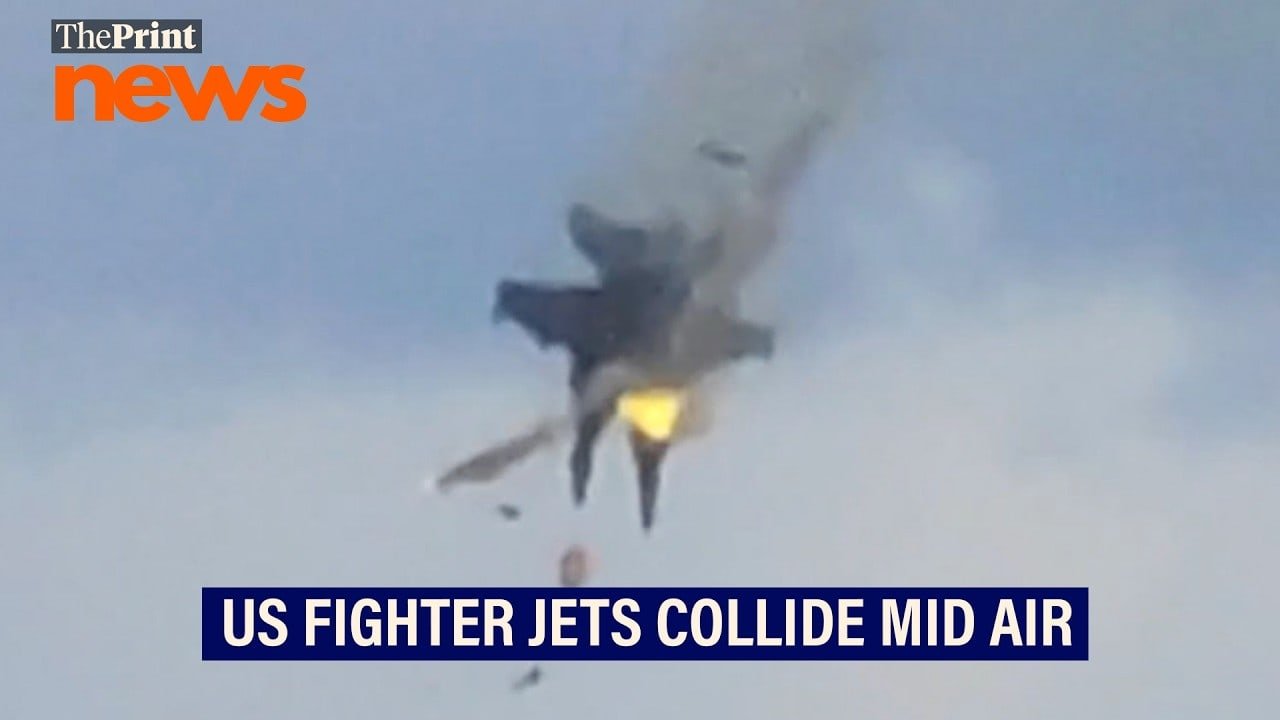
There have been fatal accidents at American airshows involving military aircraft. The Reno disaster in 2011 was not a military display, but its shadow falls across the entire conversation. More recently there have been incidents and near-incidents that received coverage roughly proportional to their severity — which is to say, brief and quickly concluded. The machinery of approval continues. The shows go on.
What I keep returning to is something structural rather than individual. The pilots are not reckless. The engineers are not careless. But the system in which they operate does not, as far as I can see from the outside, have a robust mechanism for the kind of honest, consequence-free dissent that genuine safety culture requires. Someone needs to be able to say, without career implications, without the weight of the event and the crowd and the sponsors pressing on the decision: this is too much. Not today.
At Redhill, you can see the aircraft park from the cafe. You can walk over and talk to people. The scale makes honesty easier. I am not pretending that a grass strip in Surrey is a template for anything. But the question being asked at a small fly-in and a major military display is the same question.
Who is actually allowed to say no, and what happens to them when they do.

Alex Bradley is a UK-based aviation writer and airshow circuit regular who has spent years attending displays from RIAT at Fairford and the Biggin Hill Festival of Flight to small fly-ins that drew two hundred people and a hot dog van, and values both for entirely different reasons.
He is not a pilot. He is not a PR man for the aviation industry. He is the person in the crowd who has been coming long enough to notice when something has quietly changed, when an organiser is papering over a problem, and when a display is genuinely worth the drive.
His writing on Redhill Airshow covers the British airshow circuit, safety, display team politics, CAA regulations, and the quiet contraction of grass airfield culture that nobody in the industry wants to discuss plainly.
He has stood at Redhill Aerodrome in every kind of English summer weather, watched Tiger Moths bank low over Surrey farmland, and carries strong opinions about what this country is slowly losing one cancelled event at a time.