I found out the way most people did. A message in a group chat, no context, just a link and a single word from someone who had been going to Fairford since the late nineties. The word was “extraordinary.” He did not mean it as a compliment.
I sat with it for a few minutes before I read the full statement. There was a part of me, and I am not proud of this, that ran through the usual list of explanations before I got to the actual one. Weather window. Funding shortfall. MOD scheduling conflict. The kind of thing that happens to airshows and gets dressed up in language that means something else entirely when you read it twice. I have learned to do that translation automatically. But this was none of those things. This was the United States government deciding that the threat environment created by Iranian state activity made deploying its aircraft and personnel to a public event in the English countryside an unacceptable risk. And once you understand that, the cancellation stops being an airshow story and becomes something considerably harder to process.
RIAT without the American contingent is not RIAT. I want to be precise about that, not dismissive of everything else the event contains, because there are British and European elements of the programme that deserve more credit than they typically receive in conversations dominated by the transatlantic hardware. But the honest truth is that the identity of the event, the thing that makes it genuinely unlike anything else on the European calendar and worth the drive up the A417 at half past six in the morning, is inseparable from the American military presence. The static line with the F-35s and the B-52 and whatever the USAF has decided to bring across that year. The display sequences that remind you, whatever your politics, that there is a category of aircraft performance that exists outside what civilian operators ever attempt. You strip that out and you have a different event. A good event, possibly, but a different one.
What I keep returning to is not the cancellation itself but the reason, and specifically what the reason implies about the future. The threat assessment that produced this decision did not arrive from nowhere. It sits within a pattern of Iranian activity that has been escalating for several years and that shows no particular sign of resolving itself on a timeline convenient for airshow planners. Which means the question is not really whether RIAT can recover from one cancelled year. The question is whether the conditions that produced this cancellation are temporary or structural. And I do not think anyone is being honest about that in public.
I have a memory from Fairford, three or four years ago, standing near the American static line early on the first public day when the light was still good and the crowds had not yet thickened into the kind of mass that makes movement difficult. There was an airman standing by one of the aircraft, young, doing the job with the patient competence of someone who has explained the same thing to strangers many times and is prepared to explain it again. A small boy asked him something about the ejection seat. The airman crouched down to answer properly. I stood far enough away that I could not hear the words, just the tone, which was unhurried and kind. It is a small thing to remember but I have kept it because it stood for something about what that presence at the event actually meant, which was not just hardware but contact. Human contact between the people who operate these machines and the public who come to see them.
That contact is what gets lost when the security calculus changes. And I think we should be honest about the fact that it may be lost for longer than one summer.
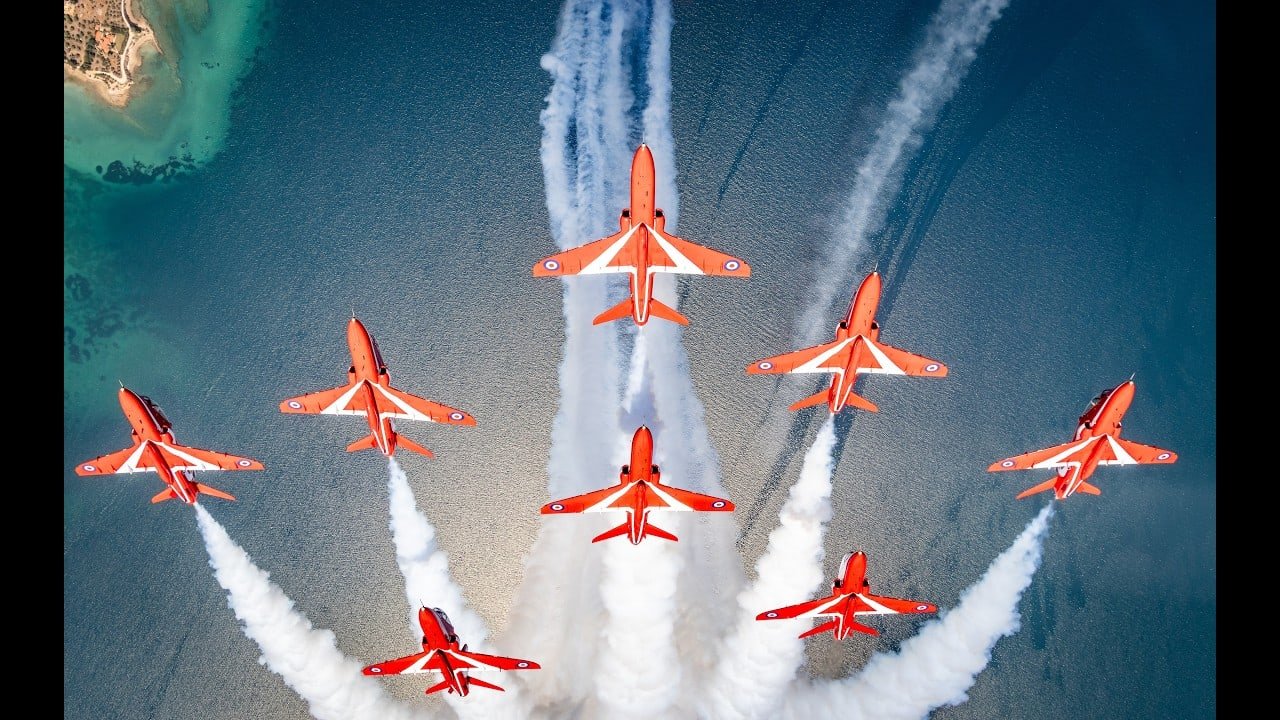
The American airshow calendar is now having the same conversation. Events that have built their identity around USAF and Navy participation are looking at their programmes and their commitments and asking questions that do not have comfortable answers. The infrastructure of the military airshow, the logistics agreements, the insurance frameworks, the diplomatic clearances that allow aircraft to perform over civilian crowds, all of it operates on a presumption of stability that the current threat environment is quietly undermining. I am not saying the events will not happen. I am saying the presumption is no longer as solid as it was, and pretending otherwise helps nobody.
There is a grass strip event I go to every September. It is never advertised anywhere I can find and I only know about it through someone who knows someone. Two fields over from a village in Surrey, a handful of vintage types, a man with a thermos asking if you want tea before you have even parked. Nothing that would register in any official account of the British airshow season. It will happen this year regardless of what is unfolding in the Middle East, because its existence does not depend on diplomatic clearances or threat assessments or the considered views of the US Department of Defense. I will be there.
But that is not a solution to what is happening to the larger events. It is just the part that still works.
The honest thing to say is this: RIAT has been cancelled before and recovered. What is different now is that the reason sits outside anything that organisers, regulators, or the aviation community can influence, manage, or talk their way around. That is new. And it is worth sitting with rather than explaining away.

Alex Bradley is a UK-based aviation writer and airshow circuit regular who has spent years attending displays from RIAT at Fairford and the Biggin Hill Festival of Flight to small fly-ins that drew two hundred people and a hot dog van, and values both for entirely different reasons.
He is not a pilot. He is not a PR man for the aviation industry. He is the person in the crowd who has been coming long enough to notice when something has quietly changed, when an organiser is papering over a problem, and when a display is genuinely worth the drive.
His writing on Redhill Airshow covers the British airshow circuit, safety, display team politics, CAA regulations, and the quiet contraction of grass airfield culture that nobody in the industry wants to discuss plainly.
He has stood at Redhill Aerodrome in every kind of English summer weather, watched Tiger Moths bank low over Surrey farmland, and carries strong opinions about what this country is slowly losing one cancelled event at a time.