
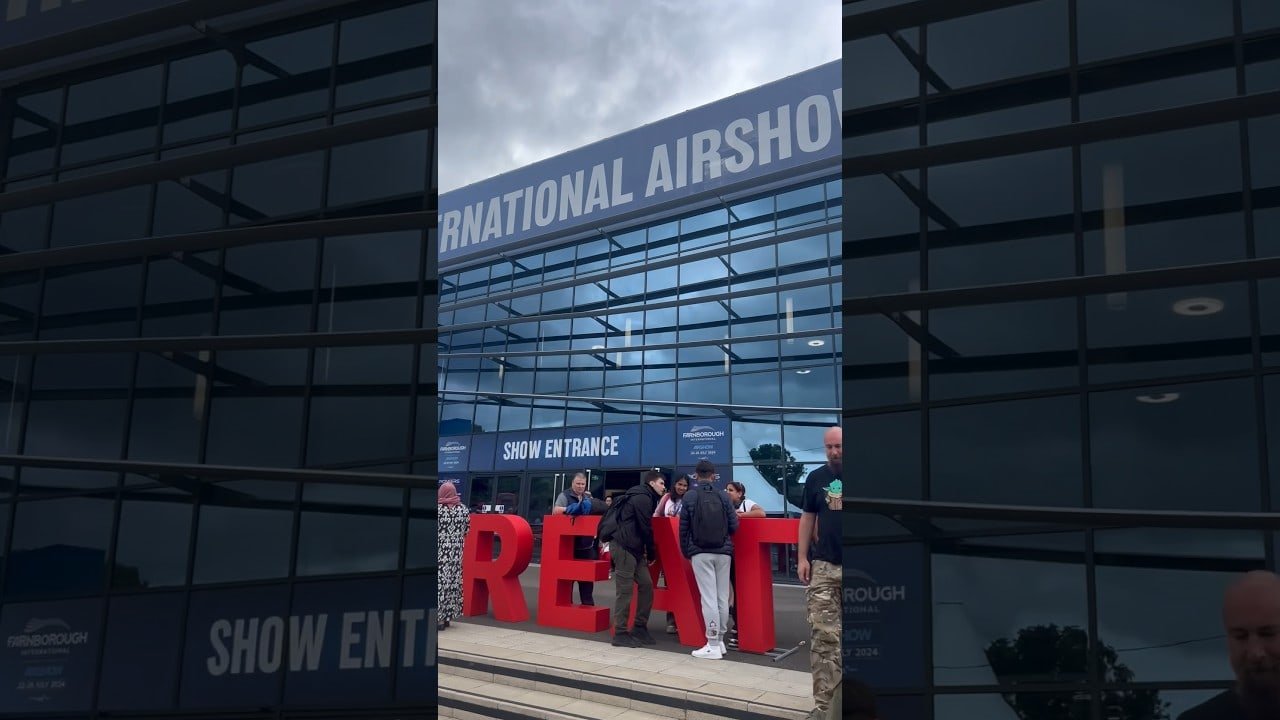
I was at Farnborough in 2022, standing in the public enclosure on the Tuesday, when I understood for the first time what the event actually is. The flying was excellent, the static display substantial, and the crowd thin in a way that felt structurally intentional. Farnborough is not thin because it is not popular. It is thin because the public is not really the point.
RIAT at Fairford draws around a hundred and seventy thousand visitors across three days. The feeling on the ground there is different from any other airshow I attend. The damp grass underfoot after overnight rain, the avgas smell across the apron at dawn, the crowd that has driven three hours and intends to stay. Fairford has a weight to it that trade events rarely produce.
RIAT 2026 has been cancelled because RAF Fairford is inaccessible during Operation Epic Fury. The Fighter Meet theme planned around new combat aircraft will not happen this year. The public display programme, the trade dimension, and the community aviation function RIAT performs have all evaporated together. Farnborough is now the only remaining major UK military aviation showcase event of the year.
Farnborough is the world’s premier aerospace business event. The flying display is significant, but it is secondary to the trade halls and the contract signings. The public access days exist because an airshow without any public would look strange, not because public access is the event’s primary reason for being.
Asking Farnborough to absorb what RIAT does for public-facing British aviation is asking something it was not built to do. The architecture is different, the audience is different, and the experience is different in ways that matter. The simplest way to describe the difference is this: RIAT builds its programme around the crowd, and Farnborough builds the crowd around the programme.
The moment that clarified this for me was watching a display at Farnborough while the commentary addressed the trade delegates in the chalets. The commentary explained the aircraft’s export potential and operational capability in detail. It was accurate, and none of it was directed at the people standing where I was standing.
The Fighter Meet concept RIAT had planned for 2026 would have drawn a strong contingent of new combat aircraft from NATO and partner nations. That kind of gathering does not happen at Farnborough, where international participation is shaped by sales cycles rather than display programming. The aviation community that would have gone to Fairford to see those aircraft together has no equivalent event this year.
A hundred and seventy thousand people attended RIAT across three days at its last full event. Most will not travel to Farnborough, partly because the logistics differ and partly because the experience is genuinely not the same. Some will find smaller events on the calendar. Many will simply have no major military aviation display to attend in 2026.
The pressure this places on the rest of the British airshow calendar is not being acknowledged openly enough. Redhill, Biggin Hill, the small fly-ins that draw two hundred people and a single hot dog van: none of these are substitutes for what Fairford provides. They are different things serving different purposes, and the gap is real.
Farnborough will have good flying in July. The display programme will include aircraft that justify the journey, and the static line will be worth attending. But it will not feel like RIAT, because it is not RIAT and was never supposed to be. The light goes flat at four in the afternoon at Farnborough too, but the crowd thins differently, because many of them have meetings to return to.
The loss of RIAT for a single season reveals something that British aviation circles tend not to say plainly. The public-facing dimension of military aviation display culture in this country is more concentrated in a single event than anyone has been comfortable admitting. When that event goes, there is no infrastructure to absorb what it does.
RIAT will return when Fairford is accessible again, and 2026 is one season rather than a permanent condition. But the shape of what has been lost this year is worth understanding clearly, rather than papering over with reassurances about what Farnborough will provide. They are not the same thing.

Alex Bradley is a UK-based aviation writer and airshow circuit regular who has spent years attending displays from RIAT at Fairford and the Biggin Hill Festival of Flight to small fly-ins that drew two hundred people and a hot dog van, and values both for entirely different reasons.
He is not a pilot. He is not a PR man for the aviation industry. He is the person in the crowd who has been coming long enough to notice when something has quietly changed, when an organiser is papering over a problem, and when a display is genuinely worth the drive.
His writing on Redhill Airshow covers the British airshow circuit, safety, display team politics, CAA regulations, and the quiet contraction of grass airfield culture that nobody in the industry wants to discuss plainly.
He has stood at Redhill Aerodrome in every kind of English summer weather, watched Tiger Moths bank low over Surrey farmland, and carries strong opinions about what this country is slowly losing one cancelled event at a time.