
I heard about the Mountain Home collision the way most people in the airshow community hear about incidents. A message in a group chat, no context, just a link and a single line saying two jets were down. I put the tea down and read it twice.
Two EA-18G Growlers. Mid-air collision during a formation display. Four crew members ejected successfully, all stable. The show cancelled immediately, the base locked down. Two aircraft valued at a combined $136 million destroyed on the second day of the Gunfighter Skies Air Show in Idaho.
The relief that everyone survived sits alongside something harder to name. It is the feeling of a number being confirmed. Mountain Home has now seen three incidents in twenty-three years. That is not a streak of bad luck. That is a pattern.
I want to be careful here, because the investigation is ongoing and I was not there. What I can speak to is what the incident reveals about a conversation the display flying world has been avoiding. The question is not whether military airshow demonstrations are dangerous. Everyone in this community already knows they are. The question is whether the institutions running them have been honest about what the risk looks like when measured against the stated purpose.
The CNN analysis that surfaced after the crash referenced a 2012 US Navy study. That study reportedly found a negative 99% return on investment for the Blue Angels when measured purely against recruiting outcomes. Congress required a new Pentagon cost-benefit analysis in 2024. It has not been publicly released. That gap between a mandated study and a missing publication is not a bureaucratic oversight. It is a decision.
I have been at British airshows where the gap between the stated purpose and the actual function of a military display was obvious to anyone paying attention. The recruiting tent beside the static park. The branded lanyards. The liaison officers who talked about community engagement and then, when pressed, talked about the pipeline. None of that makes the flying less extraordinary. But it does make the institutional justification easier to scrutinise.
What changed for me after Mountain Home was not my view on military display flying itself. It was my patience with the framing that surrounds it. When two $68 million aircraft are destroyed and four crew members eject, the instinct of the institutions involved is to describe the incident as a testament to training, to note the successful ejections, and to move toward resumption as quickly as public sentiment allows. That instinct is understandable. It is also a way of not answering the question.
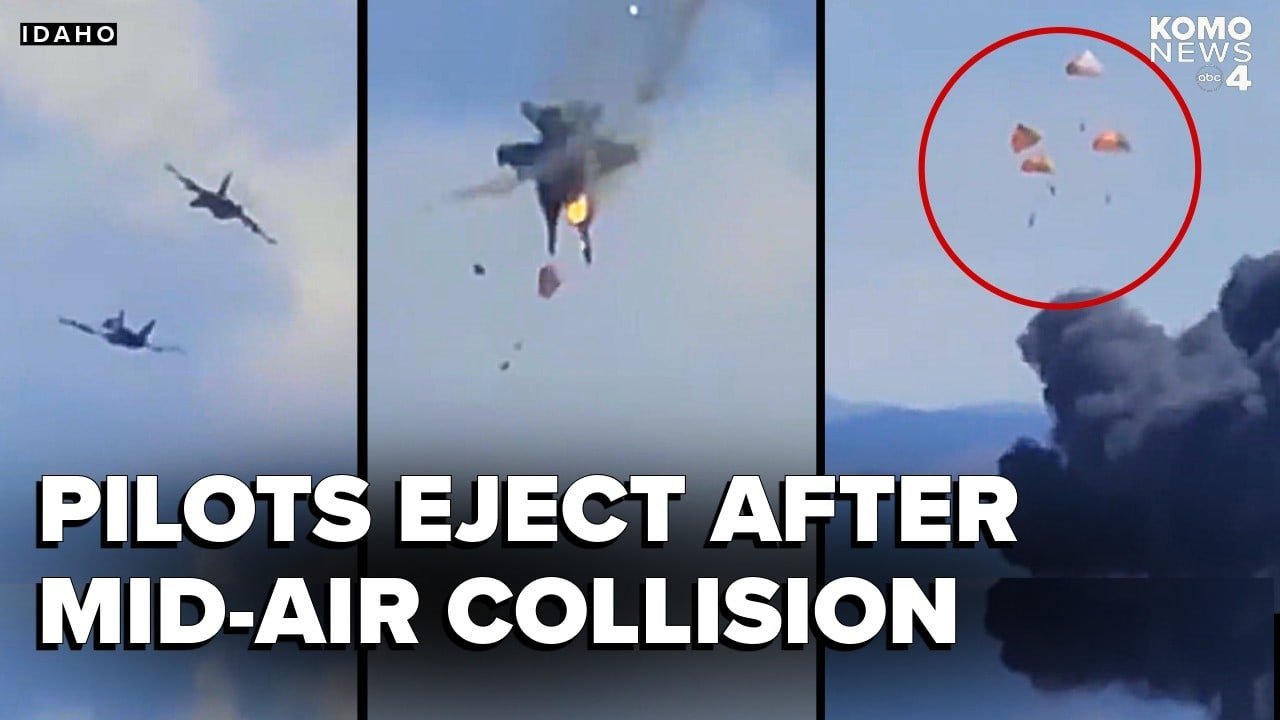
The question is straightforward. If the purpose of these demonstrations is recruiting and public relations, and if a 2012 study suggested the return on that investment is negative, and if the cost of a single bad day is now north of $136 million plus the investigation, the medical care, the reputational management, and the grounding of related aircraft: does the arithmetic work? And if it does not work, who is responsible for saying so?
At Redhill, when something goes wrong, even something small, the scale of consequence is different. A prop strike on a grass strip is not two electronic warfare jets. But the underlying dynamic, the one where institutions absorb incidents and continue without public accounting, is recognisable at every level of this activity. I have watched British airshow organisers cite CAA airspace restrictions for decisions that had nothing to do with airspace. The vocabulary of mitigation is fluent across the entire industry.
The four crew members who ejected over Idaho are, by every account, in stable condition. That outcome reflects genuine excellence in training and equipment. It should not be used to close the conversation that the incident opened. The airshow world, on both sides of the Atlantic, has a habit of treating successful ejections as resolutions rather than as the closest possible version of a much worse outcome.
The Pentagon study that Congress commissioned two years ago still has not appeared. When a government body mandates a cost-benefit analysis of a high-profile programme and the analysis remains unpublished, the absence is itself informative. It tells you something about what the analysis found, or about how the institution intends to respond to what it found.
Display flying at the highest level is extraordinary. The skill is real, the spectacle is real, and the effect on a crowd is genuinely unlike anything else in public life. None of that changes the arithmetic. And the arithmetic, in Idaho on May 17th, was $136 million and four ejection seats.
The study should be published. The public paid for it, and the public was watching when the jets came down.

Alex Bradley is a UK-based aviation writer and airshow circuit regular who has spent years attending displays from RIAT at Fairford and the Biggin Hill Festival of Flight to small fly-ins that drew two hundred people and a hot dog van, and values both for entirely different reasons.
He is not a pilot. He is not a PR man for the aviation industry. He is the person in the crowd who has been coming long enough to notice when something has quietly changed, when an organiser is papering over a problem, and when a display is genuinely worth the drive.
His writing on Redhill Airshow covers the British airshow circuit, safety, display team politics, CAA regulations, and the quiet contraction of grass airfield culture that nobody in the industry wants to discuss plainly.
He has stood at Redhill Aerodrome in every kind of English summer weather, watched Tiger Moths bank low over Surrey farmland, and carries strong opinions about what this country is slowly losing one cancelled event at a time.