
I noticed it on a Tuesday morning while scrolling through the International Council of Air Shows calendar. Selfridge Open House and Air Show, Michigan, May 30-31. Status: cancelled. No explanation attached, no statement linked, just the word sitting there in the column where a date used to be.
I have seen this before. Not the Selfridge cancellation specifically, but the pattern it belongs to. An event disappears from the calendar and no formal announcement follows. The silence is the announcement.
Selfridge Air National Guard Base has been running public open house events for decades. These are the shows that build the next generation of airshow crowds. They happen at working military bases, close enough to the aircraft that the sound is physical. Cancelling one without explanation is not a minor administrative matter.
The same weekend carries the Atlantic City Soar and Shore Festival, the English Riviera Airshow, and the Midlands Air Festival. It is a crowded weekend across both markets. The Selfridge cancellation adds to a list that has been quietly growing for several years.
I was at a grass strip event in Kent last September that drew maybe two hundred people and a hot dog van. The organiser told me the event had come close to not happening three times in the previous twelve months. Insurance costs, fuel costs, display authorisation costs — all pressing simultaneously on a budget that had never been generous. He said it without drama, the way people say things they have already made peace with.
That conversation kept returning to me when I read about Selfridge. The pressures at the community level are not unique to small British grass strip events. They are structural, and they operate across the airshow calendar on both sides of the Atlantic.
What bothers me about Selfridge is not the cancellation itself. Events get cancelled for legitimate reasons that sometimes cannot be publicly disclosed. What bothers me is the absence of any communication whatsoever. The people who plan their Memorial Day weekend around their local Air National Guard base deserve more than a quietly updated calendar entry.
The avgas smell on a warm morning, the static line at a base show, the moment a fighter taxis close enough to feel the engine heat — these are not trivial experiences for the families who come. They are often the first serious encounter a young person has with military aviation. Losing those events without acknowledgement is a genuine cultural cost that nobody in authority is pricing in.
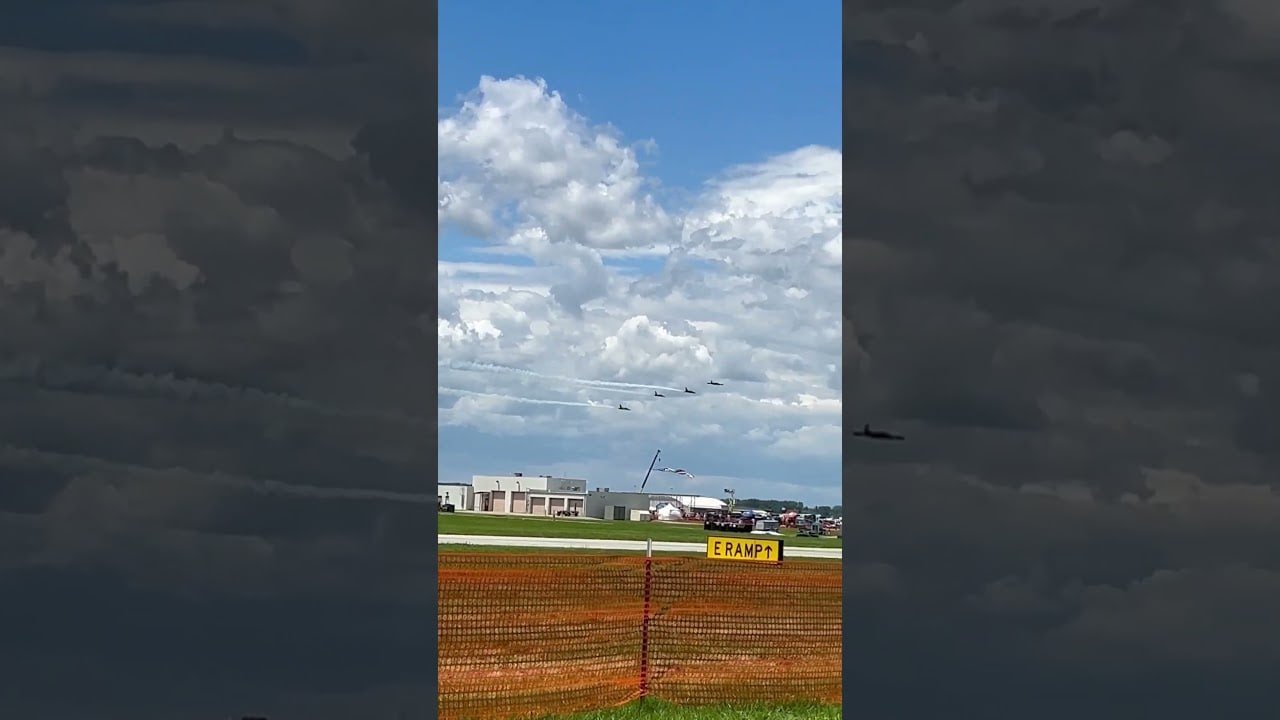
I track these cancellations because I have watched the British airshow circuit contract long enough to recognise the early signs. It starts with events that do not make the printed publications, the ones that survive on word of mouth and local loyalty. They go first and they go quietly. Then the mid-tier events follow, citing weather or airspace or cost when the honest reason is usually all three compounded by declining sponsorship.
RIAT is cancelled this year for reasons connected to the Iran conflict. That is an exceptional circumstance with a publicly stated explanation. Selfridge is cancelled this weekend with nothing at all. Both are losses. One has been reported on. The other has not.
The English Riviera Airshow is running this weekend alongside the Midlands Air Festival. Those events will draw crowds and generate coverage. Selfridge will not exist in any meaningful media record of this airshow weekend. That asymmetry is part of the problem.
I was sitting at Redhill last week watching a taildragger make repeated approaches in damp early morning quiet. The grass smelled like June regardless of the calendar. A man next to me was explaining to his daughter what the aircraft was doing and why. She was maybe ten, watching with the fixed attention that means something is genuinely landing.
That is what base open houses and regional airshows reliably produce. They just need to still exist to produce it.
The quiet erosion of the accessible, community-level airshow is not a story anyone in the industry is publicly telling. The organisations that could tell it are too close to the problem to say it plainly. When an event disappears without explanation, it takes more than a flying display with it. It takes the people who would have come and who may not find another reason to return.
That accumulation does not show up in any published attendance figure. It just shows up, years later, in the size of the crowd.

Alex Bradley is a UK-based aviation writer and airshow circuit regular who has spent years attending displays from RIAT at Fairford and the Biggin Hill Festival of Flight to small fly-ins that drew two hundred people and a hot dog van, and values both for entirely different reasons.
He is not a pilot. He is not a PR man for the aviation industry. He is the person in the crowd who has been coming long enough to notice when something has quietly changed, when an organiser is papering over a problem, and when a display is genuinely worth the drive.
His writing on Redhill Airshow covers the British airshow circuit, safety, display team politics, CAA regulations, and the quiet contraction of grass airfield culture that nobody in the industry wants to discuss plainly.
He has stood at Redhill Aerodrome in every kind of English summer weather, watched Tiger Moths bank low over Surrey farmland, and carries strong opinions about what this country is slowly losing one cancelled event at a time.