The Tickets Were Always the Tell
There is a particular moment at a certain class of British airshow, usually around mid-afternoon on the Saturday, when you notice the hospitality area. Not the public enclosure with its plastic cups and queuing families, but the other one. The one with the proper marquee and the cars parked slightly too close to the flightline and the people inside it who are not quite watching the display because they have not really come to watch the display. I have seen this at events ranging from modestly-sized county affairs to shows that draw forty thousand people over a weekend, and the geometry is always the same. The crowd pays. The guests do not. The guests are often the people who, in one form or another, made the event possible or chose not to obstruct it. The arrangement is understood by everyone and discussed by almost no one.
So when I read about what happened at Huntington Beach, I recognised the shape of it immediately, even if the particulars were entirely American.
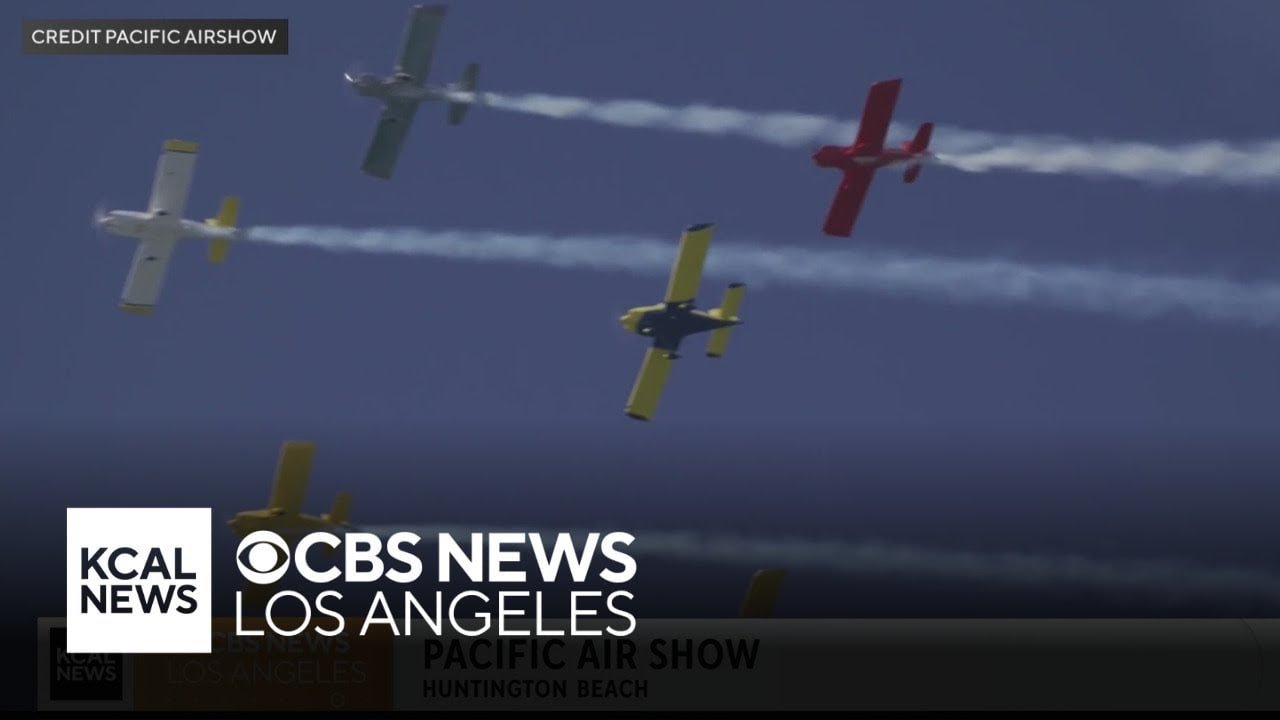
The short version, for anyone who missed it, is that elected officials in Huntington Beach, California received complimentary tickets to the city’s air show, and then found themselves on the wrong end of their own ethics rules for having accepted them. The city’s ethics commission issued fines. The officials contested this. The situation then accumulated layers of procedural strangeness that would be genuinely funny if it did not illuminate something fairly depressing about how airshows and local governance tend to intersect. I read several accounts of it over the course of a few days and came away with the distinct impression that nobody involved had covered themselves in glory, including the ethics process itself, which appeared to have been applied with the kind of rigid literalism that ignores the spirit of what it is supposedly protecting.
But here is the thing I kept returning to. The underlying arrangement, the one that started all of this, is not unusual. It is not a Californian peculiarity or an American excess. Complimentary tickets to airshows flow toward people with planning authority, licensing discretion, and local political influence with a consistency that any regular attendee of British events would recognise without needing it explained. I have stood in public enclosures at shows where the hospitality list would have made interesting reading, and I have watched the show get approved for another year shortly afterward with remarkably little friction. The connection is never stated. It does not need to be.
What Huntington Beach managed to do, accidentally, was make the arrangement visible. The ethics machinery caught something that is normally allowed to remain in the background, and the result was a small institutional crisis in which everyone involved seemed primarily concerned with establishing that their particular acceptance of tickets had been within the rules, rather than whether the practice itself was appropriate. This is, in miniature, a fairly precise diagram of how these things usually work.
I have been going to airshows long enough to have developed a fairly calibrated sense of when an event is genuinely community-spirited and when it is primarily a vehicle for the people running it to feel important and well-connected while occasionally also providing aviation content to the paying public. The two things are not mutually exclusive. A show can be well-run, genuinely exciting, and still serve interests that have nothing to do with the crowd standing on the damp grass at half past nine waiting for the flying to start. Most shows are some mixture. A few are almost entirely the latter, and you can usually tell within the first hour if you are paying attention to the right things.
The smell of avgas on a warm morning, the moment a Merlin fires up somewhere behind the static display and the sound reaches you before you have found the aircraft, the particular quality of light over a grass strip in July when the haze is just thick enough to soften everything without obscuring it, these are the things that keep me coming back. None of them have anything to do with the governance structure of the organising committee or what was in the hospitality marquee. But the governance structure of the organising committee determines whether the event exists next year and how much of the budget actually reaches the flightline, and that matters rather more than people tend to admit in public.
Huntington Beach’s peculiar drama will resolve itself somehow. Fines will be paid or appealed, procedures will be reviewed, officials will issue statements about their commitment to ethical conduct, and the air show will presumably continue. American municipal politics has a remarkable capacity to generate heat without producing light, and this story has the texture of something that will exhaust everyone involved without changing anything structural.
What I find useful about it, sitting here watching a Cherokee do touch-and-goes at Redhill on a Tuesday afternoon, is that it named something plainly that usually goes unnamed. The tickets are not incidental. They are relational. Understanding who gives them, who gets them, and who decides that the rules apply to whom tells you quite a lot about whose show it really is.
That is true in Huntington Beach. It is also true rather closer to home than most people in British aviation are willing to say out loud.

Alex Bradley is a UK-based aviation writer and airshow circuit regular who has spent years attending displays from RIAT at Fairford and the Biggin Hill Festival of Flight to small fly-ins that drew two hundred people and a hot dog van, and values both for entirely different reasons.
He is not a pilot. He is not a PR man for the aviation industry. He is the person in the crowd who has been coming long enough to notice when something has quietly changed, when an organiser is papering over a problem, and when a display is genuinely worth the drive.
His writing on Redhill Airshow covers the British airshow circuit, safety, display team politics, CAA regulations, and the quiet contraction of grass airfield culture that nobody in the industry wants to discuss plainly.
He has stood at Redhill Aerodrome in every kind of English summer weather, watched Tiger Moths bank low over Surrey farmland, and carries strong opinions about what this country is slowly losing one cancelled event at a time.