
What the Crowd Carries Home
I was at a grass strip event in Hertfordshire when I first heard someone describe watching an aircraft go in. Not a collision. A single aircraft, a privately owned warbird doing a low pass that went wrong in a way that took perhaps four seconds from beauty to catastrophe. The man telling me about it had been there twelve years earlier and he was still choosing his words carefully, the way people do when they have decided that precision is the only form of respect left available to them. He said it did not look real. He said the crowd went quiet in a way he had never heard a crowd go quiet before or since.
I thought about him when the news came through about Mountain Home.
Two United States Navy jets. A collision during what appears to have been a routine training exercise rather than a public display, though the distinction felt almost beside the point given that the witnesses were ordinary people going about ordinary lives who looked up and saw something that will not leave them. The eyewitness accounts in the coverage share a particular quality that anyone who has spent enough time around aviation will recognise immediately. People describe the sound first, then what they saw, then the silence after, and then the strange administrative collapse of the mind trying to process what the eyes have sent it. One woman said she kept thinking it was a demonstration. That the aircraft would pull up.
They did not pull up.
I do not write about accidents from a position of technical expertise. I am not a pilot, not an investigator, not qualified to read a flight data recorder or reconstruct what happened in those final seconds. What I am is someone who has stood in a great many fields and car parks and grassy hillsides watching aircraft operate at the edge of their performance envelope, close enough on some occasions to see the fuel staining on a wing root, and I have thought, more than once, about what it means for a crowd to be present when things go wrong.
The honest conversation about that is one that the British airshow community has been having quietly for years, ever since Shoreham, ever since the CAA tightened the display authorisation framework and the argument shifted from whether controls were adequate to whether the culture around display flying had ever been entirely honest about the thing it was asking crowds to accept. I have sat in briefings, stood in queues for tea, overheard conversations between display pilots and their wives, and the subject of risk is always present even when it is not being discussed directly. It is in the way an experienced display pilot talks about margins. It is in the way the CAA paperwork has grown. It is in the way some organisers stopped inviting certain aircraft types not because the pilots were unsafe but because the insurance position had become untenable.
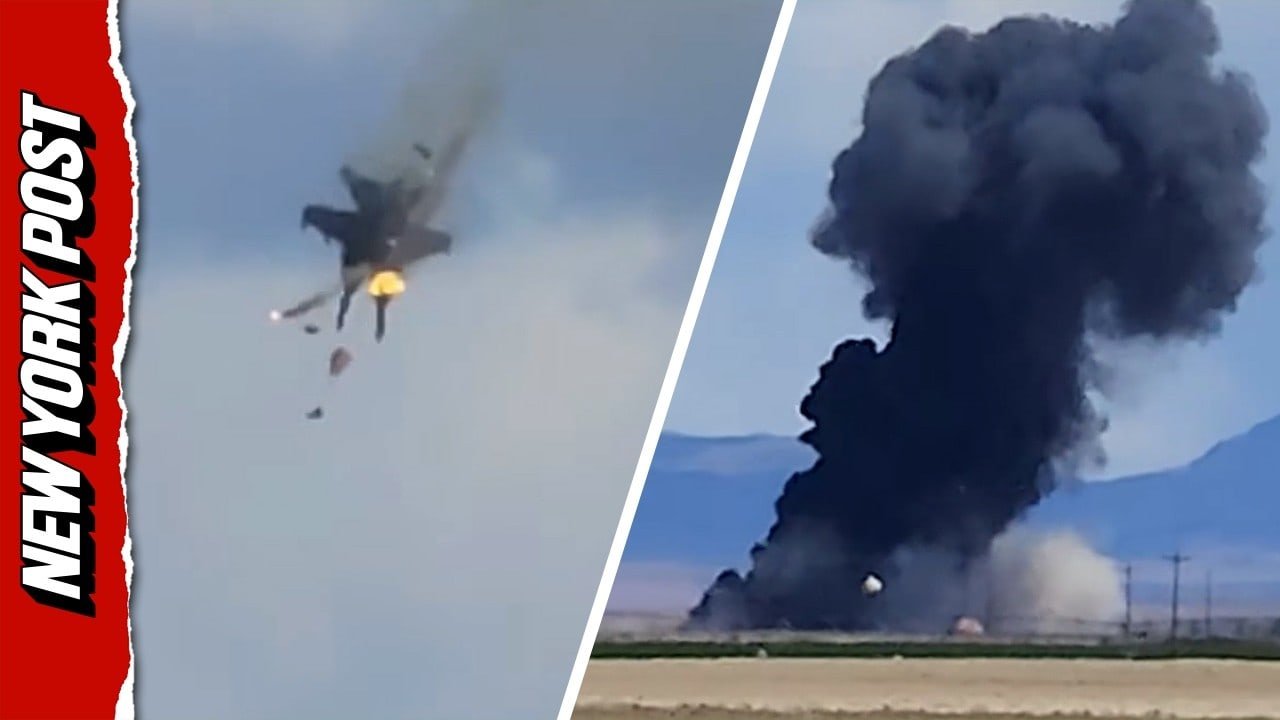
What Mountain Home brings back, for me, is something simpler and harder to argue with. The witnesses. The people who were simply there. A collision over a military airbase in Idaho is not, in any direct sense, the same as a display accident at a British airshow. The regulatory context is different, the circumstances are different, and it would be wrong to conflate them carelessly. But what is not different is the experience of the person on the ground who watches something happen in the sky that cannot be undone. That experience does not respect the distinction between a training flight and a display slot. The crowd at Mountain Home did not sign any implicit understanding of risk by showing up. They were just there.
There is something that does not get said often enough in the aviation community, and I will say it plainly because I think it matters. The culture around display flying and military aviation has sometimes treated the risk of witnessing a catastrophe as something the public has, by virtue of their presence, tacitly accepted. I do not believe that is true and I do not think it is a sustainable position. People who stand in a field to watch an aircraft are not consenting to see someone die. They are doing something that ought to be safe enough that the question never needs to arise. When it does arise, we owe it to the people who were standing in that field to be honest about what happened and why, not to reach first for the language of operational complexity or unavoidable circumstance.
The eyewitnesses at Mountain Home described what they saw with a clarity that will stay with some of them for the rest of their lives. That is not melodrama. That is just what witnessing something like that does to a person. The least the institutions involved owe them is an account of what happened that is at least as clear as what they saw with their own eyes.
Aviation is not inherently safe. The people who love it know this, and most of them accept it for themselves. The harder question, the one that events like Mountain Home force back to the surface, is what we owe to the people who were just standing nearby when something went wrong.
That question deserves a more honest answer than it usually gets.

Alex Bradley is a UK-based aviation writer and airshow circuit regular who has spent years attending displays from RIAT at Fairford and the Biggin Hill Festival of Flight to small fly-ins that drew two hundred people and a hot dog van, and values both for entirely different reasons.
He is not a pilot. He is not a PR man for the aviation industry. He is the person in the crowd who has been coming long enough to notice when something has quietly changed, when an organiser is papering over a problem, and when a display is genuinely worth the drive.
His writing on Redhill Airshow covers the British airshow circuit, safety, display team politics, CAA regulations, and the quiet contraction of grass airfield culture that nobody in the industry wants to discuss plainly.
He has stood at Redhill Aerodrome in every kind of English summer weather, watched Tiger Moths bank low over Surrey farmland, and carries strong opinions about what this country is slowly losing one cancelled event at a time.