The Merlin was already on finals when I checked my phone, and I remember thinking afterwards that it was an odd moment to be reading about dead men. The aircraft came over the hedge at Redhill, low enough to feel the prop wash change the air around you, and my eyes went back where they belonged. But the phrase from the NTSB preliminary summary stayed with me for the rest of that afternoon. Crew resource management breakdown in the final seconds before impact. The Merlin banked away over the treeline and I stood in the damp grass thinking about what those final seconds actually contain, and what it takes to end up inside them.
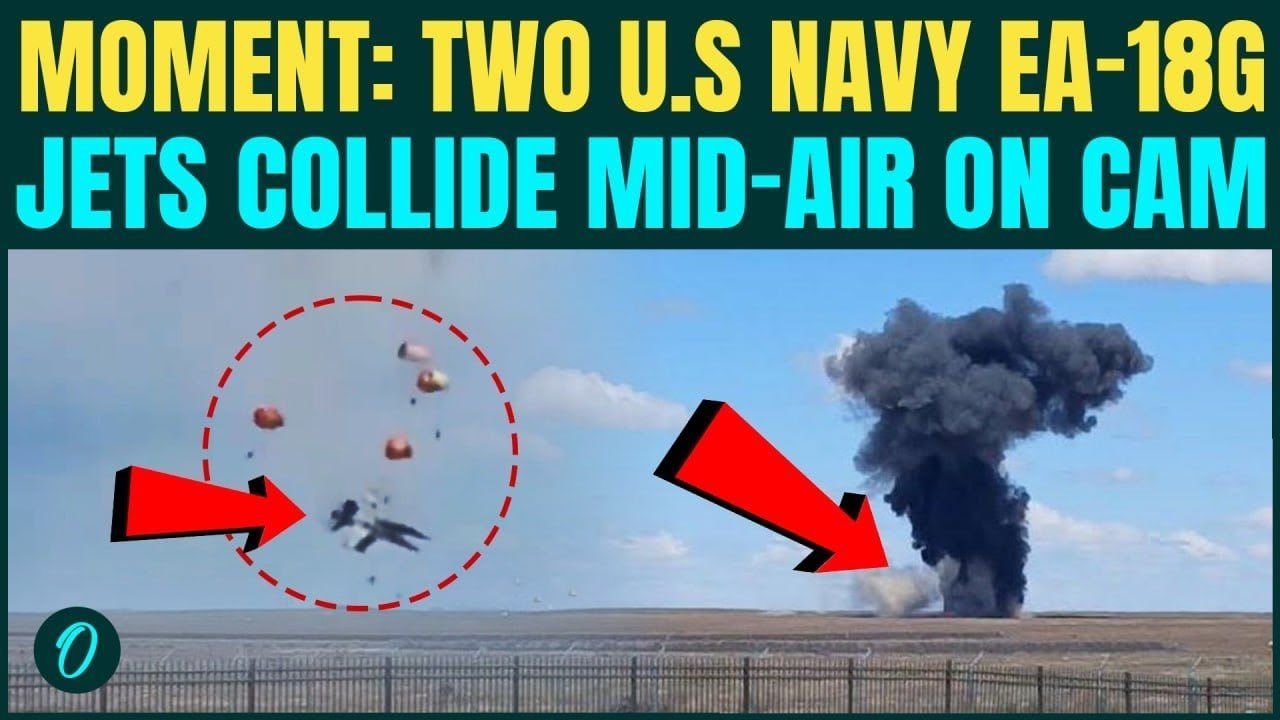
I have been following the Idaho collision since the first reports came out, and I want to be careful about how I describe it, because I was not there and the full investigation is not concluded, and one of the things that coverage of airshow accidents does consistently and badly is reach conclusions before the data supports them. What I can say is that the flight recorder information that has entered the public domain paints a picture that is not, at its root, a story about pilot error. It is a story about a system operating at the edge of its own tolerances and a culture that had quietly normalised that edge.
Two aircraft. A timing sequence that existed on paper and did not exist in practice. Radio calls that were made and not responded to in the way the programme required. And underneath all of it, the specific pressure of a display environment where the crowd is assembled, the commentator is talking, and the cost of going around or pulling out is felt differently than it would be in any other operating context. Airshow flying has always asked pilots to make decisions in public, in real time, in front of people who have paid for the outcome. The Idaho data shows what happens when the margin between that performance and a catastrophic outcome has been narrowed without anyone formally acknowledging that it has been narrowed.
That is the sentence that airshow organisers on both sides of the Atlantic will not enjoy reading, and I am going to let it stand.
I have been coming to airshows since I was young enough that my father had to put me on his shoulders at Farnborough to see over the crowd barriers. I have watched displays at Fairford and Duxford and Yeovilton and a dozen grass strip events that will never appear in any aviation glossy. I have seen genuine cancellations and I have seen organisers dress up poor planning as a weather or airspace decision. I have watched crowds stand in a field for two hours while a commentator fills time with archive footage descriptions because the headline act had a technical issue that was foreseeable forty-eight hours earlier. None of that is new, and none of it is what worries me now.
What worries me is the gap between how airshow risk is discussed publicly and how it is actually managed. In Britain, the CAA’s display authorisation framework is frequently cited whenever questions are raised about safety, and it is a real framework with genuine requirements. But a framework for individual pilot authorisation does not, by itself, address the systemic conditions of a display sequence: the slot pressure, the communication protocols between multiple aircraft operating in a defined airspace with a crowd at one edge of it, the culture around deviation from a programme that has been promised and sold. The Idaho data, whatever the final NTSB findings say, makes this gap visible in a way that ought to prompt serious conversation. I am not certain it will.
I said something like this to a display team manager I have known for several years, standing beside a hangar at a southern England event last summer, and his response was careful and considered and it amounted, underneath the courtesy, to: we know our risk environment, we manage it professionally, and external criticism based on American incidents is not directly applicable to how we operate. I understood the response. I also noticed that it did not actually engage with the systemic question I had raised. That non-engagement is its own kind of data point.
The avgas smell was heavy that morning, the way it gets when tanks have been recently topped and the sun has not yet had time to thin it. A Harvard was running up at the far end and the sound carried flat across the field. These are the details I notice because I have been standing in fields like this long enough for them to feel like a language I know. And part of what that language tells me, lately, is that the conversation we need to have about display safety is being conducted too quietly and among too few people.
The Idaho collision will produce findings. Recommendations will follow. Some of them may be implemented. What is harder to produce is an honest reckoning with the commercial and cultural pressures that narrow the margins in the first place, and that reckoning does not happen through a regulatory process alone.
Eleven seconds is a very short time to understand what went wrong. The conditions that produced those eleven seconds take years to build.

Alex Bradley is a UK-based aviation writer and airshow circuit regular who has spent years attending displays from RIAT at Fairford and the Biggin Hill Festival of Flight to small fly-ins that drew two hundred people and a hot dog van, and values both for entirely different reasons.
He is not a pilot. He is not a PR man for the aviation industry. He is the person in the crowd who has been coming long enough to notice when something has quietly changed, when an organiser is papering over a problem, and when a display is genuinely worth the drive.
His writing on Redhill Airshow covers the British airshow circuit, safety, display team politics, CAA regulations, and the quiet contraction of grass airfield culture that nobody in the industry wants to discuss plainly.
He has stood at Redhill Aerodrome in every kind of English summer weather, watched Tiger Moths bank low over Surrey farmland, and carries strong opinions about what this country is slowly losing one cancelled event at a time.